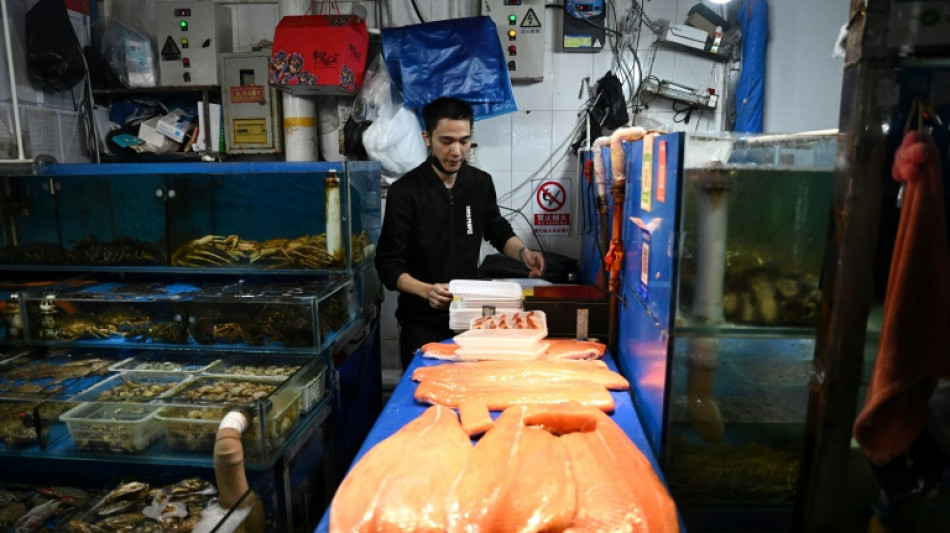
Beijing fishmongers worry as Japan begins Fukushima water release / Photo: © AFP

 Ed Sheeran returns to stage after Palestinian controversy

 Asian Games to open in Japan after troubled build-up
 Drone owners rush to offload devices ahead of Beijing ban
 Trump's beef policies irk Texas ranchers, testing their loyalty
 Nvidia, OpenAI CEOs to attend Xi dinner at White House
 Anthropic picks Accenture for in-house AI safety evaluation
 Balogun returns as Monaco beat Lens to continue strong Ligue 1 start

 'Pause' on overt repression in Venezuela, but reforms still needed: HRW

 Global stocks mixed as yen falls despite Bank of Japan rate hike
 Cuba hit with seventh major blackout of the year
 Murray out with concussion so Wentz will start for Vikings
 UN chief 'deeply regrets' US visa refusal to Abbas for annual meeting
 England quick Carse to face no charges over alleged nightclub assault

 Mancini brings nine newcomers into the first squad of his Italy comeback

 Czechs level Davis Cup tie against USA as South Korea eye Finals

 New France boss Zidane confirms Mbappe as captain after naming first squad

 California governor signs order to explore AI 'kill switch'
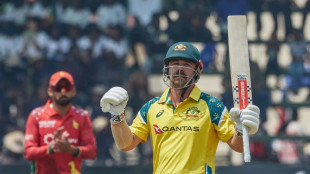 Head leads run spree as Australia win Zimbabwe ODI series

 In-form Raphinha wants to finish career at Barcelona

 Warren Buffett steps down as Berkshire Hathaway chairman

 Carrick confident Man Utd can 'work through' tough time

 Mbappe ends Nike partnership to join Swiss brand On

 Liverpool boss Iraola puts Bournemouth love affair on hold

 'A disaster' if Man City do not win says Maresca after flawless start

 Kerry James Marshall: American 'blackness' painter celebrated in Europe

Seafood sellers in Beijing expressed consternation Thursday over Japan's gradual release of wastewater from the disaster-hit Fukushima nuclear plant into the ocean.
Hours before the release began, a store manager named Wang Jinglong in one of the Chinese capital's biggest seafood markets told AFP that there had already been a "major impact" on his business, especially tuna sales.
"We used to get some fresh Japanese fish, but due to customs bans we stopped receiving them two months ago," Wang said, referencing the import controls imposed last month.
Wang showed AFP frozen Japanese seafood products that he will be unable to restock once sold -- if customers are still interested.
"There's a large gap in our sales volume compared with before. In the past, such as during the pandemic, we had to kill three to five tuna every week," Wang said.
"Now we kill very few fish, and they are not from Japan, but from Australia, New Zealand and Spain."
The 53-year-old said the quality of these products is "very poor, and not comparable to that of Japan".
But in the face of "great resistance" from the public to Japanese products, he said he has little choice.
"This pollution topic is being closely followed."
The release plan has been endorsed by the International Atomic Energy Agency -- the UN's nuclear watchdog -- which said it meets international standards and "will not cause any harm to the environment".
And the overriding consensus among international experts is that the operation is safe.
But shortly after the discharge of wastewater began on Thursday, China said it would suspend the import of all Japanese aquatic products.
And elsewhere in the Beijing market, workers said the impact of the water release plan had been significant.
Many recently stopped selling all seafood from Japan.
"The plan to release the water is causing trouble for Japan and all other countries," said Huang Xiaohao, the boss of a store advertising imported products.
"If you look around at what we're selling, you'll find that most of these things are actually domestic products," he said.
Pressure has come both from official customs restrictions, others said, as well as from consumers who worry about the impact of Japanese seafood products on their health.
One merchant who declined to be named told AFP that tuna from places other than Japan -- where he usually sourced products -- are simply not as good.
N.Fournier--BTB



