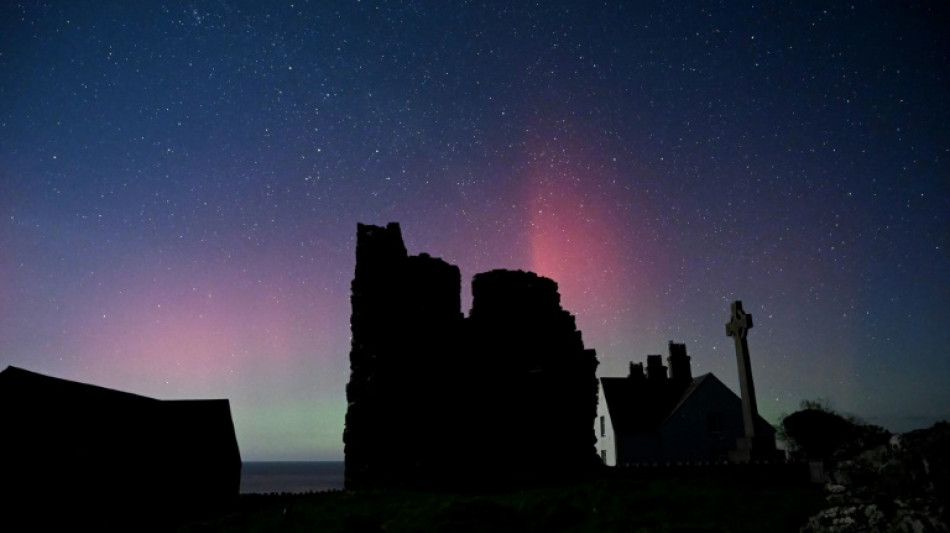
Tiny Welsh island wins world stargazing fame / Photo: © Emyr Owen/AFP

 Hushing and hedging: US companies retreat on climate

 Springboks to face Fiji before 2027 Rugby World Cup

 Nigeria miners struggled to breathe in cell before 37 died: survivors

 McIlroy on the charge at PGA Championship as Reed withdraws

 McIlroy on the charge at PGA Championship

 Crisis-wracked Volkswagen warns of 10-bn-euro hit to profits

 Costa Rica's Grynspan tops third informal poll for UN chief: diplomat

 Stock markets retreat after central bank rate hikes

 Russia labels director of Cannes Grand Prix winner a 'foreign agent'

 Macron warns of Russian 'hybrid' threat after meeting presidential hopefuls

 UN holds third informal poll for new chief
 Kulusevski return can spark Spurs: De Zerbi

 Shakira to cap off world tour with Madrid 12-gig run

 Isolated Syrian-Druze city blames Damascus for shortages
 Isolated Syrian-Druze city shortages

 Dutch drop Depay for Germany match in Xavi's first pick

 Ronaldo named in Portugal squad for Nations League

 Stock markets diverge after central bank rate hikes
 Anti-Assad music star makes triumphant return to Syria

 In-form Fernandez included in Spain Nations League squad

 Arteta buries hatchet with Hurzeler ahead of Brighton clash

 Alexander-Arnold and Palmer return to England squad for Nations League

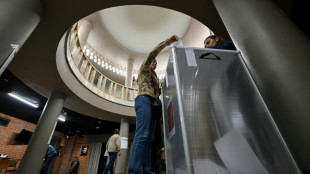 Russians vote as Ukraine war drags on for fifth year
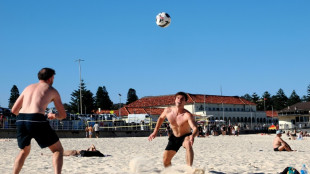 Backpackers fret over Australian visa crackdown

 Most Asian stocks track Wall St rally, yen drops after BoJ rate hike
Night falls over Ynys Enlli. The remote Welsh island's sky turns impossibly black.
Planets rise and shooting stars streak overhead, while the Northern Lights send flares of green and red across the sea.
The rugged outcrop has become Europe's first "Dark Skies Sanctuary", one of just 17 places around the world to achieve international recognition for their ultra-low light pollution and peerless stargazing.
The award puts Enlli on a par with atolls in the South Pacific and the isolated Gabriela Mistral observatory site in Chile.
The island is two miles (three kilometres) off the Welsh coast. A mountain blocks glare from the mainland, so the only artificial light is the faint glow of Dublin across the Irish Sea.
Enlli's newfound fame has thrilled the surrounding community. The island itself has just two permanent residents, and they're both over the moon.
Mari Huws, 30, and her partner Emyr Owen, 36, have spent four years living on Enlli -- known in English as Bardsey -- as its resident wardens.
"We're chuffed -- it's momentous for the island," says Huws, who spearheaded the bid for the designation by the International Dark Sky Association.
- Rush for telescopes -
People on the nearby Llyn peninsula in northwest Wales, around four hours' drive from Cardiff, have long known their skies are special. Now, they have a chance to tell the world.
In the town of Pwllheli, the outdoor equipment shop is stocking up on heavy-duty telescopes.
"It's put Ynys Enlli on the map," says Caroline Jones, administrator for the Bardsey Island Trust, which manages the site.
"Now the secret's out, people just want to know more."
Jones has had to fire off a template response to field a flood of emails from eager stargazers.
In the meantime, amateur astronomers have been taking up position on the highest point overlooking the island, hoping to get as close as they can.
As light pollution skyrockets in towns and cities around the world, clear skies are becoming rarer and more sought-after.
But there's little chance tourists will overwhelm Enlli.
Numbers are limited on the island, which is around half the size of New York's Central Park, and its 10 holiday cottages are already fully booked this season.
- Sea crossing -
Colin Evans is Enlli's boatman. He loads his small ferry with supplies for the islanders, straps on his waders, and takes the wheel. It's a rough winter crossing.
The boat thuds past turquoise blue coves and cliffs coated with bird droppings.
Enlli will soon be home to puffins, and nocturnal Manx shearwaters make their nests on the island, relying on its intense darkness for protection.
The sanctuary status is constantly reviewed, and the wardens do everything they can to keep light pollution down.
They use sensors to switch off bulbs during the day, and the lighthouse is fitted with red LEDs which keep interference to a minimum.
Once a month, when the moon is at its darkest, Huws wakes up in the middle of the night and points a gadget at the heavens to measure the quality of the night sky.
Keeping hold of the sanctuary badge is vital for protecting the island's nature and environment.
There are several other dark sky reserves in Wales, but the stricter sanctuary status comes with extra emphasis on boosting awareness and long-term conservation.
The management trust has been encouraging people on the mainland to get on board and use warm lighting with covers to stop rays spilling into the night.
By spreading the news about the island's skies, "we can protect something fragile and truly valuable for the future", Huws says.
"When the sky is dark enough, you can see the whole universe above your head."
M.Furrer--BTB



