Acid attack on woman doctor sparks fear, protests in Pakistan / Photo: © AFP

 Global stocks rally on lower oil prices, US-China hopes

 EU proposes energy rating for data centres
 Schoolgirl Yu scorches to second gold as doping case rocks Games

 Putin's party secures record score in Russia election

 Haupt Koleksiyonu: Paranın Biz İnsanlar Hakkında Anlattıkları

 Spanish PM says unregulated AI could be 'devastating'

 Yu, 13, smashes record again with second Asian Games gold

 Switzerland to play without Xhaka over fake Covid certificate

 From Korean Chipmakers to Leveraged Semiconductor ETFs: STARTRADER Launches 49 New 24/7 Stock and ETF CFDs

 Thai badminton player first doping case at Asian Games: testers

 Колекція Гаупта: Що гроші розповідають про нас, людей
 German far-right AfD poll winner says Merz 'twilight' has begun

 Flights scrapped, evacuations urged as Typhoon Dujuan nears Japan

 China confirms Xi to visit US this week for Trump talks
 مجموعة هاوبت: ما يكشفه المال عنا نحن البشر

 Colecția Haupt: Ce ne dezvăluie banii despre noi, oamenii

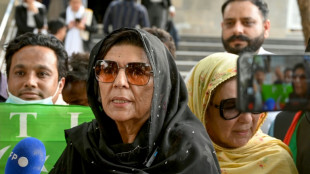 Sisters of jailed Pakistan ex-PM Imran Khan arrested

 African players in Europe: Semenyo brace helps City top table

 'For my family': India boxer beats hardship, injury to go for Games gold
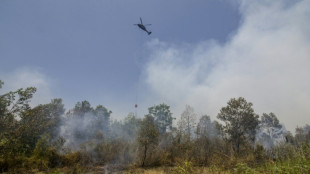 Indonesia doing 'everything' but still struggling to curb fires
 Once decried as 'human cockfighting', MMA wants Olympic spot

 China's Yu, 13, great for swimming says multiple Olympic medallist

 Putin's party set to retain power after Russia vote hit by cyberattacks, drones

 Germany's Merz under pressure after bruising state election losses

 Messi, Miami frustrated in 2-2 draw with San Diego

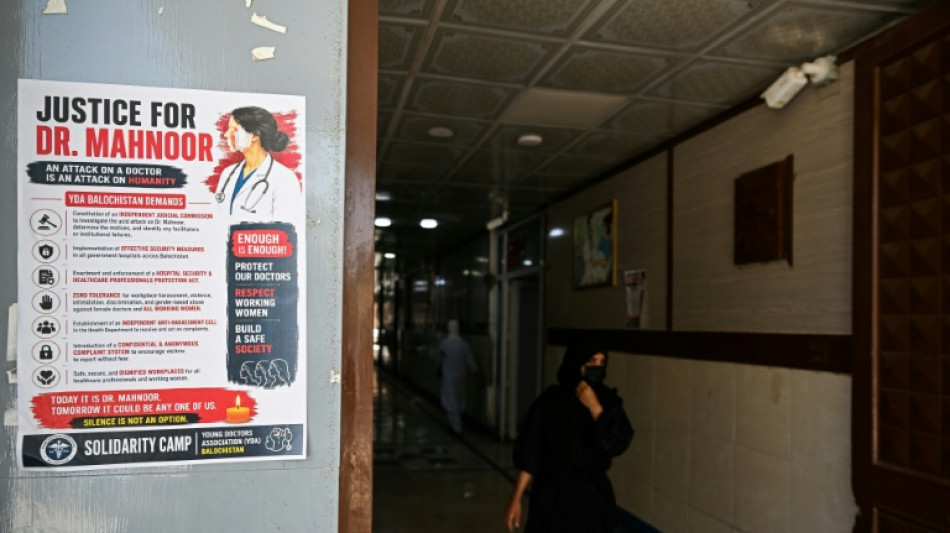
An acid attack against a woman doctor has sent shockwaves through Pakistan's medical sector, sparking strikes and a protest Tuesday demanding safety and justice for the victim.
A man threw acid at Mahnoor Nasir at her hospital in the southern city of Quetta on Saturday, causing burns to seven percent of her body, according to the provincial chief minister's office.
Officers killed the suspected perpetrator, Humayun Shah, a lift operator at the medical facility, at a bus station as he tried to escape, authorities said.
Nasir was receiving specialised treatment in Pakistan's largest city of Karachi and may require skin transplant abroad, said Shahid Rind, spokesman for the chief minister of Balochistan province.
The case has highlighted the risk of violence and social disparities women face in Pakistan, where fears of harassment and attack have exacerbated a fast-growing doctor shortage.
Surveys suggest around a third of women drop out of the profession after graduating despite outnumbering men in medical schools.
"It is a tragic incident but will have negative effects on female education as when the hospitals are not safe, who will dare to send their daughters for medical practice and education," Balochistan-based doctor Zeenat Shawani told AFP.
While the South Asian nation has criminalised acid attacks -- which often target women -- with heavy penalties, an organisation representing early career doctors decried a "catastrophic security failure".
"The incident took place due to insufficient security arrangements in the hospital, and it should thoroughly be investigated how a lift operator brings acid and throws it on a lady doctor in daylight," Hai Baloch, chairman of the Balochistan branch of the Young Doctors Association, told AFP.
- 'State of fear' -
Members of the association stopped work and protested at the hospital where the attack took place on Tuesday, with dozens sitting beneath a banner that read "Justice for Dr Manoor".
They said they would strike from non-emergency care until their demands for better security and an investigation were met.
Quetta's police inspector general Imran Shaukat told AFP that an investigation was underway.
But the official inquiry or the suspected assailant's death have done little to quell many women's concerns over violence at work.
"Female doctors and paramedics are in a state of fear of being harassed, raped, subjected to violence in these hospitals," Quetta-based doctor Shazia Khapulwak told AFP.
"One Mahnoor is fighting for her life in Karachi while hundreds of Mahnoors are forced to live under exploitative systems," she said.
The Human Rights Commission of Pakistan organised a protest in Quetta, demanding security for women working in government hospitals and stricter regulation of acid sales.
"Why doesn't the government take action against the free sale of acid in the open market?" said Kashif Panezai, vice-president of the organisation's Balochistan chapter.
- 'Survival mode' -
The United Nations also condemned the "brutal" violence.
"Acid attacks are among the most devastating forms of gender-based violence, leaving survivors with lifelong physical and psychological scars," UN Women Pakistan said in a statement.
Far from Quetta, news of the attack on social media left Islamabad-based medical officer Naima Arshad in tears.
"I couldn't sleep that night. The moment I saw the video I imagined myself," said Arshad, a private clinic employee who has gone into what she called "survival mode".
"No one in the world should feel that unsafe in their profession," she added.
Around 70,000 women -- almost a fifth of Pakistan's 370,000 registered doctors -- are listed in official registries but not practicing, according to medical associations.
There is no recent reliable data on the exact number of acid attacks in Pakistan, but advocacy group Acid Survivors Foundation reported around 1,180 violent incidents involving acid and other burn-causing substances such as petrol and boiling water between 2011 and 2018.
L.Maurer--VB