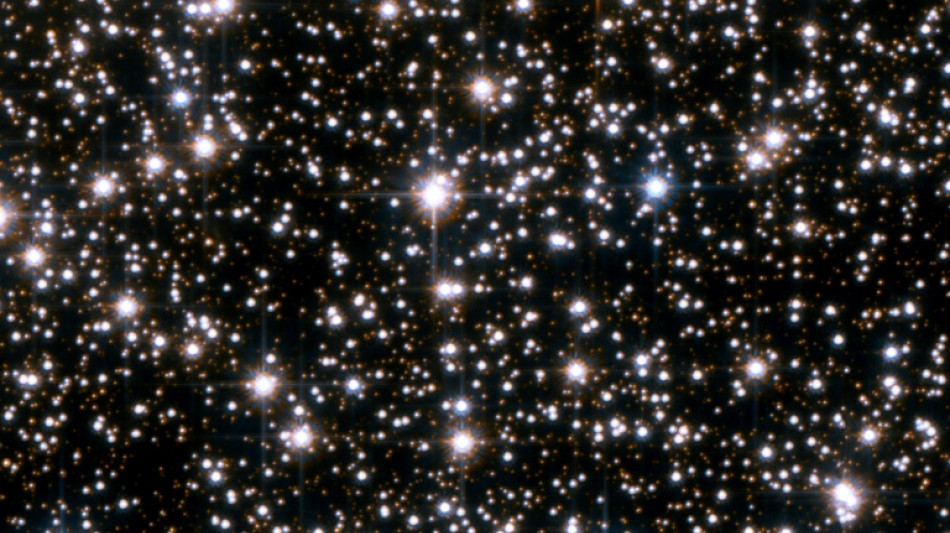
Lost in space: Sperm struggles to navigate during weightless sex / Photo: © ESA/AFP/File

 Global stocks rally on lower oil prices, US-China hopes

 EU proposes energy rating for data centres

 Schoolgirl Yu scorches to second gold as doping case rocks Games

 Putin's party secures record score in Russia election

 Haupt Koleksiyonu: Paranın Biz İnsanlar Hakkında Anlattıkları

 Spanish PM says unregulated AI could be 'devastating'

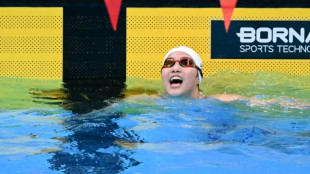 Yu, 13, smashes record again with second Asian Games gold

 Switzerland to play without Xhaka over fake Covid certificate

 From Korean Chipmakers to Leveraged Semiconductor ETFs: STARTRADER Launches 49 New 24/7 Stock and ETF CFDs

 Thai badminton player first doping case at Asian Games: testers

 Колекція Гаупта: Що гроші розповідають про нас, людей

 German far-right AfD poll winner says Merz 'twilight' has begun

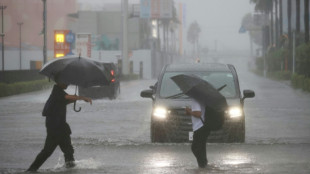 Flights scrapped, evacuations urged as Typhoon Dujuan nears Japan

 China confirms Xi to visit US this week for Trump talks

 مجموعة هاوبت: ما يكشفه المال عنا نحن البشر

 Colecția Haupt: Ce ne dezvăluie banii despre noi, oamenii

 Sisters of jailed Pakistan ex-PM Imran Khan arrested

 African players in Europe: Semenyo brace helps City top table

 'For my family': India boxer beats hardship, injury to go for Games gold
 Indonesia doing 'everything' but still struggling to curb fires

 Once decried as 'human cockfighting', MMA wants Olympic spot

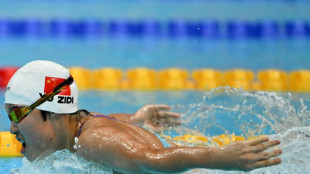 China's Yu, 13, great for swimming says multiple Olympic medallist

 Putin's party set to retain power after Russia vote hit by cyberattacks, drones
 Germany's Merz under pressure after bruising state election losses
 Messi, Miami frustrated in 2-2 draw with San Diego

Scientists have used a tiny plastic "obstacle course" to test how much sperm would struggle to navigate during sex in the weightlessness of space.
Some particularly resilient sperm still made it through the course, suggesting that conceiving children in space will still be possible, according to research published on Thursday.
However a bigger problem could be that the development of embryos after fertilisation was harmed by a lack of gravity, the Australian team of researchers found.
With humanity setting its eyes on colonising space -- next week NASA hopes to launch its first crewed mission around the Moon in half a century -- scientists have been studying how difficult it will be to procreate on spaceships or other worlds.
One of the biggest challenges is that sperm will no longer be pulled downwards by Earth's gravity.
"Sperm need to actively find their way to an egg, and this study is the first to put that ability to the test under space-like conditions," Nicole McPherson, a researcher at Adelaide University in Australia, told AFP.
The scientists used a plastic chamber that resembles the female reproductive tract to act as a "miniature obstacle course", the senior author of the new study said.
"Think of it as a tiny race track... sperm are introduced at one end and have to swim their way through to the other."
- Filtering out weak runners -
Both human and mice sperm were sent down the course, which was inside a device that uses constant rotation to simulate the microgravity of space.
The sperm was about 50 percent worse at navigating through the course compared to how they perform under Earth's gravity.
This worked out to be roughly a 30-percent drop in successful fertilisation, according to the study in the journal Communications Biology.
However the sperm that did make it through seemed to produce better-quality embryos, which could turn out to be "beneficial", McPherson said.
It appeared that the stress of microgravity acted as a "filter" that effectively cleared the field, "leaving only the most capable sperm in the running," she explained.
A bigger problem came in the first 24 hours after sperm had fertilised the eggs.
"The results reversed sharply, with fewer embryos formed, and those that did were of poorer quality," McPherson said.
This suggests that microgravity "may not be the deal-breaker we feared, but protecting the embryo from weightlessness in those critical first hours will likely be essential for reproduction in space," she added.
Some including billionaire SpaceX founder Elon Musk have ambitious plans to make humans an interplanetary species by establishing settlements on the Moon then Mars.
There has also been speculation that the first baby conceived outside the bounds of Earth could be the result of a couple having sex on a flight launched by the booming space tourism industry.
McPherson emphasised that much more research is needed to understand how reproduction works in space, adding that fertilisation is "only one small piece of a very long and complex puzzle".
"We are still a long way from seeing the first space baby."
P.Staeheli--VB