Chikungunya in China: What you need to know / Photo: © AFP/File

 All Blacks strike late to secure opening win against Stormers
 Saudi Arabia, Turkey, Pakistan sign defence pact amid regional war

 Trump renews effort to remove US Fed Governor Lisa Cook

 Abelardo de la Espriella, the flamboyant millionaire taking power in Colombia

 Germany holds security meeting over explosive drone amid Russia protest

 Austrian writer Stefan Zweig, who fled Nazis, honoured in London

 Mexico and Peru reestablish ties after asylum spat

 Dollar drops, stocks climb as weak US jobs data eases rate fears

 Japan defender Tomiyasu joins Crystal Palace
 Celtic boss O'Neill out of hospital after 'small procedure'

 Man City reject Barcelona bid for Rodri - reports

 US unexpectedly loses jobs in blow to Trump ahead of midterms

 Dollar drops, stocks climb after surprise US jobs miss

 Thai students in disbelief after deadly school shooting

 McLaren boss glad of 'harmony' between F1 teammates Norris and Piastri
 Saudi Arabia, Turkey and Pakistan sign defence pact amid regional war

 Maradona bloated, bedridden and resigned before death, says icon's masseur

 Infantino and the failed investment plan -- What they said

 Thailand teen kills seven in home, school shooting

 Volt Funded Launches Globally with Evaluation Program Offering Up to 90% Profit Share

 Indonesia battles Mount Bromo wildfire as El Nino takes root

 STARCARES Revamps Basketball Court at the University of Lagos for Future Healthcare Professionals

 Eight dead, including teen suspect's grandparents, in Thailand shooting
 Indonesia traps monkey to end rampage that wounded 18 people
 Food security fears mount as UK farmers battle drought
Cases of chikungunya fever are rising in southern China, prompting local authorities to take measures to curb its spread.
Here is what you need to know about the disease:
- What is chikungunya? -
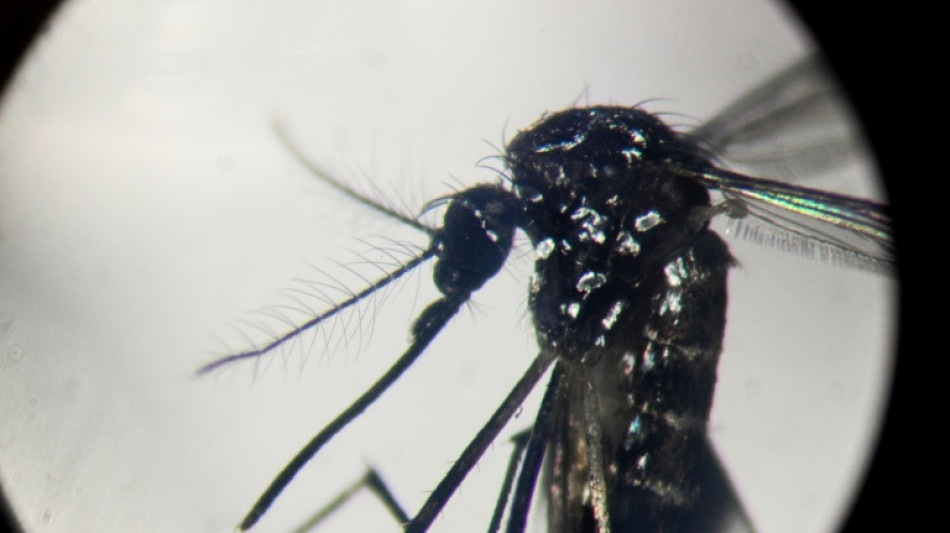
Chikungunya is caused by a virus that can be passed to humans by infected mosquitoes, with most cases occurring in Africa, Asia and the Americas.
Symptoms include fever and joint pain, which may persist for some time but are rarely fatal.
Because the symptoms of chikungunya resemble other mosquito-borne diseases like dengue and Zika, it can sometimes be hard to determine the extent of an outbreak.
Two vaccines for chikungunya have been approved in some countries but are not yet widely used.
Infected people are typically given medicines like paracetamol to ease their symptoms.
- How serious is China's outbreak? -
More than 7,700 people in the southern province of Guangdong have been infected in recent weeks, according to an article by the China Association for Science and Technology that was widely carried by state media.
Most cases have occurred in the industrial centre of Foshan, where 2,770 people fell ill between July 27 and August 2, the provincial disease control office said on Sunday.
Dozens of infections have also been detected in neighbouring Guangzhou, while semiautonomous Hong Kong reported its first case on Saturday.
Chief expert Kang Min said "the rapid rise of the epidemic has been preliminarily curbed" in Guangdong, according to a statement from the province's disease control office.
But Kang warned that officials still faced "complex and severe challenges" due to the high risk of imported cases in the international trade hub as well as rain and typhoons that help mosquitoes to thrive.
- What are authorities doing? -
Top officials in Guangdong agreed at a meeting on Saturday to "go all out to win the... war of annihilation against the epidemic", according to an official statement.
They stressed the need to "mobilise the public" to eliminate the conditions in which mosquitoes breed, for example, by removing pots and cans, unblocking ditches and clearing pools of stagnant water.
Footage by state news agency Xinhua showed doctors at a hospital in Foshan's Shunde district tending to a ward of chikungunya patients lying on beds surrounded by mosquito nets.
Other interventions seemed more dramatic.
The New York Times reported that some infected people in Foshan were "given no choice" but to go to hospital, while others had workers enter their homes without consent in search of stagnant water.
State media and local governments have published images of workers in helmets and face masks spraying insecticide in parks, gardens and overgrown buildings, where mosquitoes can linger.
Law enforcement officers have threatened fines of up to 1,000 yuan ($140) for businesses that do not take adequate steps to prevent mosquitoes from breeding, according to the provincial disease control office.
And one subdistrict in Foshan cut power to the homes of some residents who failed to comply with disease controls, according to an online statement from a local government committee.
- Should people be worried? -
The United States has issued a travel advisory urging increased caution when going to affected areas in China.
Some of China's measures evoke its pandemic strategy, when Beijing wielded city-wide lockdowns, lengthy quarantines and travel bans to curb the spread of Covid-19.
But comparisons to the pandemic are overblown.
Unlike Covid, chikungunya is caused by a known pathogen, is not transmitted via human contact and very rarely proves fatal.
Chinese authorities have stressed that the disease is "preventable, controllable and treatable" and the World Health Organization has not issued any special guidance on China's outbreak.
S.Leonhard--VB