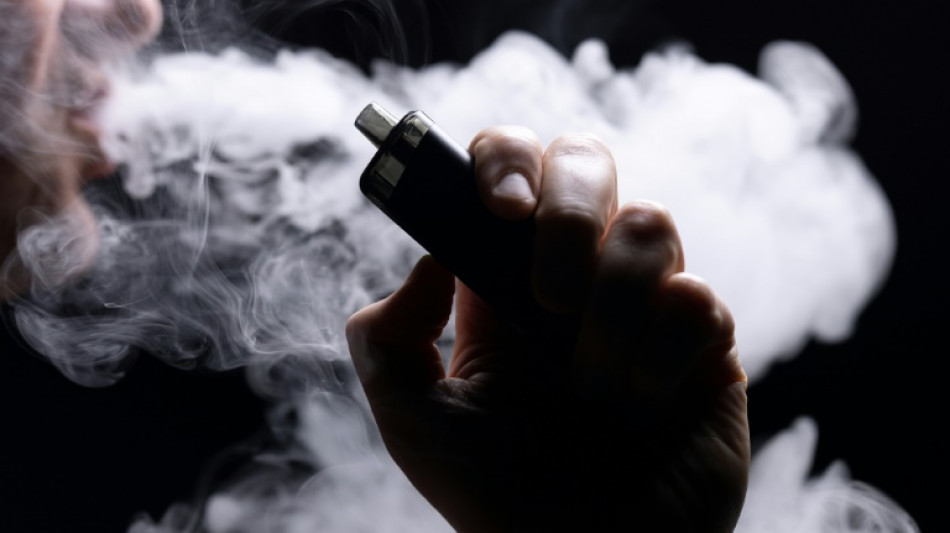
Vaping: lighting up, stubbing out / Photo: © AFP

 Hurricane Polo strengthens to top category 5 off Mexico

 11 hurt as teen opens fire outside school in western Turkey

 UN chief says 'Big Oil' treats atmosphere as open sewer

 Tunisia says 2026 summer hottest on record

 England's Rashid out of Sri Lanka ODIs with hand injury

 Houthis accuse Saudi Arabia of deadly strikes as thousands flee

 Stocks climb as oil slides, AI buzz returns

 India cricketers win in style as Afghan savours 'special' Games silver

 La Liga president hits out at Real Madrid refereeing 'conspiracy' claims

 MEXC Launches “Real Stocks, Real Friends” with Rewards for Bringing Friends to Wall Street

 Mbappe continues media push for Ballon d'Or recognition

 Stocks rise on AI buzz, oil prices cool

 India narrowly survive huge scare against minnows Japan

 Missing F-35 fighter parts 'not sensitive', says Australia minister

 Cambodia showcases scams crackdown with global conference

 Afghan cyclist who disguised herself as man wins Asian Games silver

 Typhoon Dujuan leaves four dead in Japan, 45,000 houses without power

 G7 leaders condemn Houthi strikes on Saudi Arabia

 Google data centre sparks protests in Austria

 Shin Ohashi: Junk food-loving teen and Japan's next big swimming hope

 Stocks rise on AI buzz, drop in oil prices

 China's robot dancers limber up for America's Got Talent final

 Despite military might, Saudi struggles to crush the Houthis
 Trump to tout deals, defend Iran war in UN speech

 Sri Lanka to issue verdict in landmark Easter attack trial

Two decades after they first appeared, e-cigarettes have been widely credited with helping people quit smoking.
But concerns are growing over the risk of teens becoming hooked on nicotine through candy-coloured disposable vapes, with flavours such as chocolate and bubblegum.
AFP looks back at the highs and lows of the vaping vogue:
- Born in China -
In 2003, Chinese pharmacist Hon Lik, a heavy smoker hoping to kick the habit, develops the first electronic alternative to cigarettes.
A year later, the firm he works for brings out the first e-cigarettes, called Ruyan ("like smoke").
The birth of vaping comes in the year that Ireland bans smoking in workplaces, including pubs and restaurants, sparking a global clampdown on smoking indoors.
E-cigarettes arrive on the EU market in 2006 and a year later in the United States.
- Early doubts -
Many doctors welcome the devices, which are tar-free, as a potential life-saver in the fight against cancer, heart disease, strokes and other diseases caused by the toxins in traditional cigarettes.
But the UN health agency, the World Health Organization, is sceptical about their benefits.
"As far as WHO is aware, no rigorous, peer-reviewed studies have been conducted showing that the electronic cigarette is a safe and effective nicotine replacement therapy," it says in 2008.
From the mid-2010s on, there are growing reports of the dangers of teens inhaling vapour containing nicotine, which can harm the developing adolescent brain.
More than 30 countries, including Argentina, Brazil, Egypt, Ethiopia, India, Iran, Iraq, Mexico, North Korea and Singapore ban the sale of e-cigarettes.
- Enters the dictionary –
In 2014, "vape" is designated word of the year by the Oxford University Press and enters the dictionary.
The habit takes off in the US, Europe and parts of Asia.
The number of users shoots up from around seven million in 2011, according to Euromonitor market research group, to 82 million a decade later, according to the US NGO Global State of Tobacco Harm Reduction.
- Deadly lung illness -
In 2019-2020, the US is at the centre of a health crisis tied to vaping, with at least 68 people dying and over 2,800 others falling sick with an acute lung illness linked to vaping products containing cannabis.
In February 2020, the US Food and Drug Administration bans the sale of many flavoured e-cigarettes, with the exception of tobacco and menthol flavours.
US e-cigarette giant Juul is hit with a string of lawsuits accusing it of glamourising vaping among young people with flavours such as creme brulee and of lying about how addictive it is.
In 2022, the company agrees to pay $462 million (425 million euros) to settle cases across the US, leaving it nearly bankrupt.
- Growing bans -
In 2023, Western countries go to war against teen vaping.
New Zealand in August bans e-cigarettes that do not have a removable or replaceable battery -- a way of targeting disposable vapes -- and bars manufacturers from using enticing flavour names.
On November 28, Australia announces it will ban imports of disposable vapes from January 1, 2024.
Late on Monday, French MPs back a proposal to ban single-use electronic cigarettes, amid warnings they could act as a gateway to smoking. The legislation still needs backing from France's upper house Senate and clearance from the EU Commission.
Britain, Germany and Ireland are considering similar moves.
R.Buehler--VB