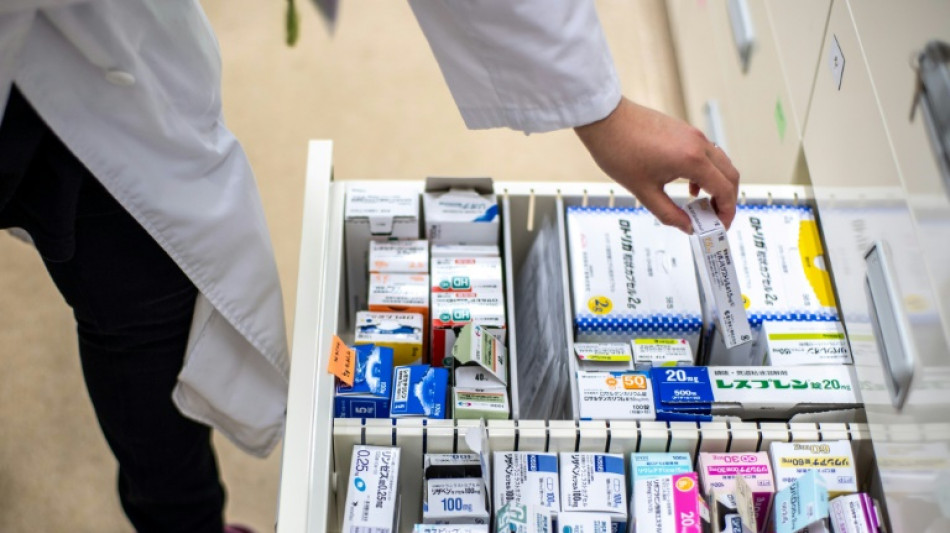
Japan trials over-the-counter sales of 'morning-after' pill / Photo: © AFP/File

 Carney Welcomes U.S. Trade Reversal After Democratic Midterm Victory

 Armenian FM Discusses EU Accountability for Palestinian Rights in Madrid

 Trump and Vance Pursue Secret Diplomacy with Iran Amid Military Pressure

 Classic Car Values Surge: De Tomaso Vallelunga Leads 190% Gain

 Microsoft Ends Oracle AI Computing Rental Deal Amid Cloud Strategy Shift

Japan on Tuesday began trial sales of over-the-counter "morning-after" contraceptive pills, according to the country's pharmaceutical association, in a partial victory for campaigners.
Rights groups have long complained that the treatment was only available in socially conservative Japan with a doctor's prescription and a trip to a clinic or pharmacy.
This put many women off, particularly rape victims and teenage girls, according to campaigners.
Under the pilot project, the pill, which can prevent pregnancy within 72 hours of sex but becomes less effective with time, was set to be available at 145 pharmacies.
However, women still have to show ID and take the medication in front of a pharmacist, according to the website of the Japan Pharmaceutical Association.
The minimum age for over-the-counter purchase is 16 years old, though those under 18 must be accompanied by a parent or guardian.
The price was set between 7,000-9,000 yen ($47-61).
The Emergency Contraceptives at Pharmacies Project campaign group criticised the trial as too small and said it has asked the government to widen it.
It follows an overwhelmingly positive reaction to a health ministry public consultation this year, with 97 percent of the 46,000 respondents in favour.
The World Health Organization says on its website that emergency contraception "should be routinely included within all national family planning programmes".
More than 90 other countries allow the morning-after pill without a prescription, according to campaigners.
R.Kloeti--VB