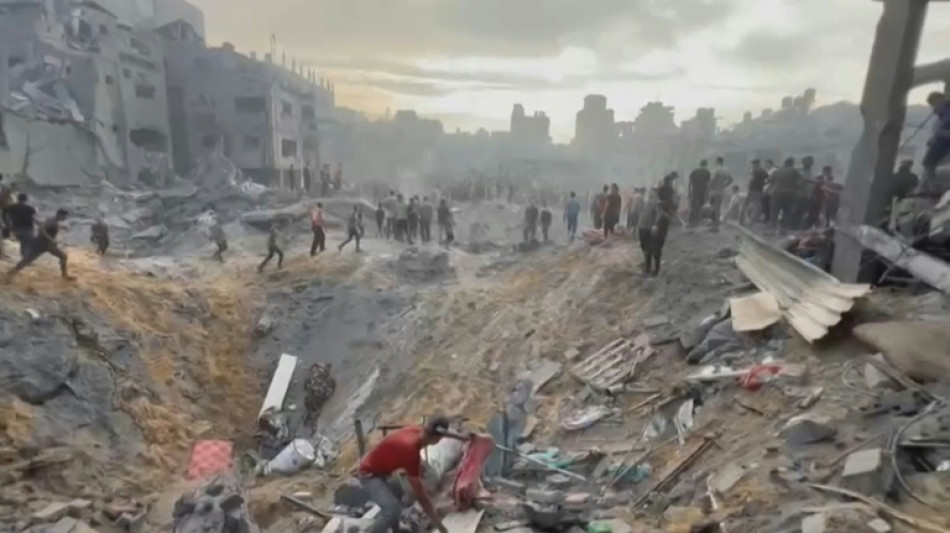
As Israel bombs Gaza, huge blasts kill dozens in refugee camp / Photo: © AFP

 Trump renames AI "super intelligence," rejects international oversight

 Trump rejects international regulation of AI

 How is the EU approaching record fuel prices?

 Sri Lanka's Colombage strikes on debut as England dismissed for 265 in first ODI
 Hurricane Polo strengthens to top category 5 off Mexico

 11 hurt as teen opens fire outside school in western Turkey

 UN chief says 'Big Oil' treats atmosphere as open sewer

 Tunisia says 2026 summer hottest on record
 England's Rashid out of Sri Lanka ODIs with hand injury

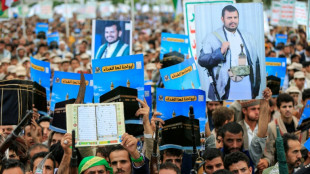 Houthis accuse Saudi Arabia of deadly strikes as thousands flee

 Stocks climb as oil slides, AI buzz returns

 India cricketers win in style as Afghan savours 'special' Games silver

 La Liga president hits out at Real Madrid refereeing 'conspiracy' claims

 MEXC Launches “Real Stocks, Real Friends” with Rewards for Bringing Friends to Wall Street

 Mbappe continues media push for Ballon d'Or recognition
 Stocks rise on AI buzz, oil prices cool
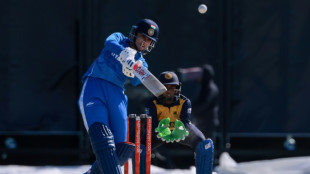
 India narrowly survive huge scare against minnows Japan

 Missing F-35 fighter parts 'not sensitive', says Australia minister
 Cambodia showcases scams crackdown with global conference
 Afghan cyclist who disguised herself as man wins Asian Games silver

 Typhoon Dujuan leaves four dead in Japan, 45,000 houses without power

 G7 leaders condemn Houthi strikes on Saudi Arabia

 Google data centre sparks protests in Austria

 Shin Ohashi: Junk food-loving teen and Japan's next big swimming hope

 Stocks rise on AI buzz, drop in oil prices
As Israel rained bombs on Gaza in its war with Hamas on Tuesday, huge explosions ripped through a crowded Palestinian refugee camp, killing dozens and leaving two giant craters in the densely populated area.
Wails filled the dusty air as volunteers clawed through the concrete blocks and twisted metal in a desperate search for survivors and bodies, with AFP video footage showing at least 47 corpses being recovered.
Gaza's Hamas-run health ministry reported an initial toll of more than 50 dead, 150 wounded and dozens buried under the rubble, and condemned what it called "a heinous Israeli massacre" at the Jabalia camp.
Israel did not immediately comment on the blasts or the reported toll in Jabalia, which is located in the territory's north outside Gaza City, an area where ground battles have raged nearby and Israel has told Palestinians to flee.
Israel launched its most intense military campaign ever on Gaza after suffering the bloodiest attack in its history when Hamas gunmen on October 7 killed some 1,400 people in a brutal cross-border raid, according to Israeli officials.
One refugee camp resident, Ragheb Aqal, 41, likened the explosion to "an earthquake" and spoke of his horror at seeing "homes buried under the rubble and body parts and martyrs and wounded in huge numbers".
The carnage came amid international warnings about the spiralling bloodshed and mounting humanitarian crisis in Gaza, on a day Israeli troops and Hamas militants had engaged in "fierce battles" in the north.
Israel reported two of its soldiers were killed inside Gaza.
Warplanes kept up a relentless barrage of strikes on Gaza, where the Hamas-run health ministry said -- before the Jabalia blasts -- that 8,525 people had died, including over 3,500 children.
Israel's Prime Minister Benjamin Netanyahu has dismissed growing calls for a ceasefire with the Hamas group he has vowed to destroy while also seeking to liberate at least 240 hostages.
"Calls for a ceasefire are a call for Israel to surrender to Hamas, to surrender to terrorism, to surrender to barbarism," he said late Monday.
"This will not happen."
Ahmed al-Kahlout, a Gazan living near an Orthodox church cultural centre destroyed in another strike, voiced the growing desperation inside the war-torn, crowded and besieged coastal territory.
"We want to live like any other people in this world, to live quietly," he said.
"We don't know what to do. The least they can do is give us a truce, give us three hours, a temporary truce or a ceasefire."
- 'Stop these massacres' -
The humanitarian toll has sparked global concern, with aid groups and the United Nations warning time is running out for many of the territory's 2.4 million people denied access to food, water, fuel and medicine.
Surgeons are conducting amputations on hospital floors without anaesthetic, and children are forced to drink salty water, said Jean-Francois Corty, vice-president of Medecins du Monde, which has 20 staff on the ground.
Israel has accused Hamas of using hospitals as military headquarters and civilians as "human shields" -- charges the group dismisses as "baseless" propaganda.
At a funeral in southern Gaza, tearful mourners cradled the bodies of relatives wrapped in white shrouds before burying them with their bare hands.
"We ask the world to show sympathy for the children to stop these massacres," Yusef Hijazi, the grandfather of one victim, told AFP.
As even Israel's staunchest allies voiced concern about the humanitarian crisis, the UN agency for Palestinian refugees UNRWA said there was not nearly enough aid to meet the "unprecedented" needs.
"When an eight-year-old tells you that she doesn't want to die, it's hard not to feel helpless," said UN humanitarian chief Martin Griffiths.
Hisham Adwan, Gaza director of the Rafah crossing with Egypt where some aid has been allowed in, said 36 trucks had been waiting there since the previous day.
"I feel that it's extremely slow and there's disruption to UNRWA's work, and we don't know why," he said.
Israel said it is inspecting cargo to make sure weapons are not being smuggled in, and monitoring to guarantee Hamas does not seize the supplies.
- 'Great sorrow' -
The army on Monday rescued Private Ori Megidish, an Israeli soldier in Hamas captivity who was reunited with her family.
But there was heartbreak for relatives of another missing woman, 23-year-old German-Israeli Shani Louk, abducted from a music festival then "tortured and paraded around Gaza", according to Israel's foreign ministry.
Her remains were found Monday, with her sister Adi voicing her "great sorrow" as she shared news of her death on social media.
Other families have endured an unbearable wait for news of relatives seized by Hamas and thought to be held in a labyrinth of tunnels deep below Gaza.
Hadas Kalderon walked through the scorched homes of the Nir Oz kibbutz, near Israel's border with Gaza, where gunmen killed her mother and niece and kidnapped her 12-year-old son and 16-year-old daughter.
"I don't have any control and knowledge about army actions, I just know my children are still there in the middle of a war," said the 56-year-old.
"It's a disaster. It's really hell. There is no word to express this."
- 'Very primitive' -
Meanwhile, in a sign that the conflict risked spiralling throughout the region, Yemen's Iran-backed Huthi rebels fired drones and missiles towards Israel and vowed to keep up attacks.
Israel's army also said it had intercepted a missile fired from the Red Sea region.
Israel's military has struck targets in Syria and traded cross-border fire with Hezbollah militants in Lebanon, whose caretaker prime minister Najib Mikati told AFP it was his "duty to prevent Lebanon from entering the war".
Anis Abla, head of Lebanon's Civil Defense Centre in Marjayoun, near the Israeli border, said they were completely unprepared for war.
"Our equipment is very primitive and there is a shortage of all tools, such as fire suits and extinguisher cylinders," he told AFP.
burs-ric-fz/dv
A.Ammann--VB