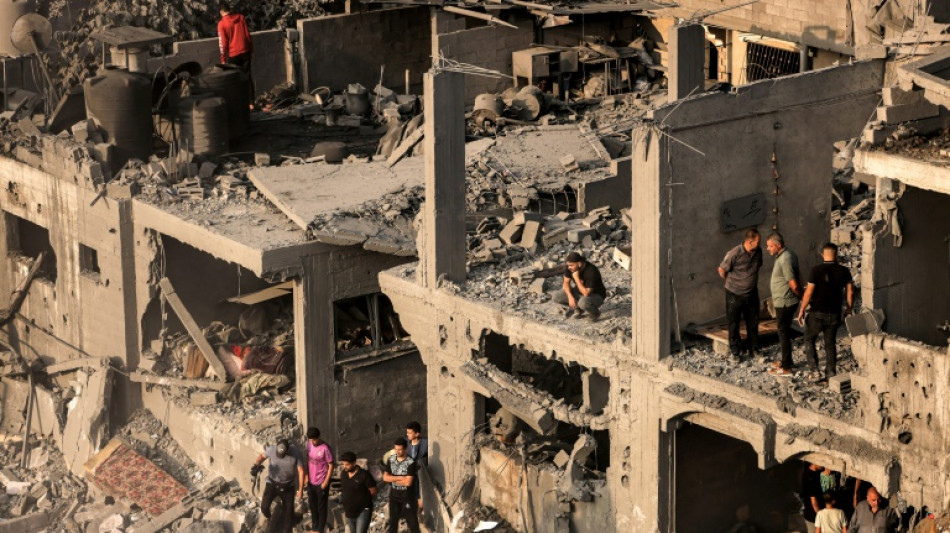
Gaza hospitals in crisis as Israel-Hamas conflict rages on / Photo: © AFP

 Trump renames AI "super intelligence," rejects international oversight

 Trump rejects international regulation of AI

 How is the EU approaching record fuel prices?

 Sri Lanka's Colombage strikes on debut as England dismissed for 265 in first ODI
 Hurricane Polo strengthens to top category 5 off Mexico

 11 hurt as teen opens fire outside school in western Turkey

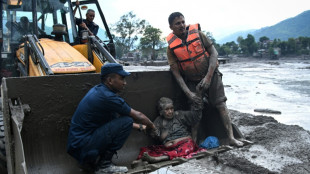 UN chief says 'Big Oil' treats atmosphere as open sewer

 Tunisia says 2026 summer hottest on record

 England's Rashid out of Sri Lanka ODIs with hand injury

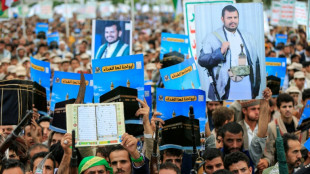 Houthis accuse Saudi Arabia of deadly strikes as thousands flee

 Stocks climb as oil slides, AI buzz returns

 India cricketers win in style as Afghan savours 'special' Games silver

 La Liga president hits out at Real Madrid refereeing 'conspiracy' claims

 MEXC Launches “Real Stocks, Real Friends” with Rewards for Bringing Friends to Wall Street

 Mbappe continues media push for Ballon d'Or recognition

 Stocks rise on AI buzz, oil prices cool

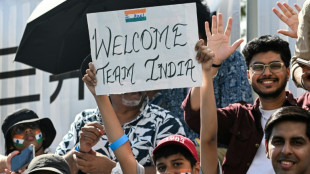 India narrowly survive huge scare against minnows Japan

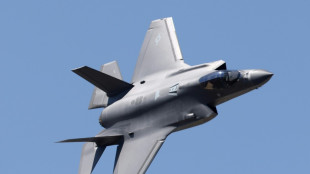 Missing F-35 fighter parts 'not sensitive', says Australia minister
 Cambodia showcases scams crackdown with global conference

 Afghan cyclist who disguised herself as man wins Asian Games silver

 Typhoon Dujuan leaves four dead in Japan, 45,000 houses without power

 G7 leaders condemn Houthi strikes on Saudi Arabia

 Google data centre sparks protests in Austria

 Shin Ohashi: Junk food-loving teen and Japan's next big swimming hope

 Stocks rise on AI buzz, drop in oil prices
Gaza's hospitals were facing "complete collapse", Palestinian medics warned Wednesday as the UN said supplies were running critically low and the Hamas-run health ministry reported 700 deaths in Israeli strikes in 24 hours.
Alarm is growing over the spiralling humanitarian crisis in the Gaza Strip, which Israel has been bombing since October 7 when Hamas gunmen poured across its border beginning an attack that killed more than 1,400 people, mostly civilians, while also kidnapping more than 220 others, according to Israeli officials.
UN figures show over a third of the narrow Palestinian territory's 35 hospitals have closed due to damage or insufficient fuel, and one doctor said he was forced to perform surgeries without anaesthetic.
"The hospitals are in a state of complete collapse," said Mohammed Abu Selmeya, head of Shifa, Gaza's biggest hospital.
He told AFP "more than 90 percent of medicines" had run out and "we urgently need fuel to run the generators and to operate hospital departments and operating theatres."
His words came as the UN agency for Palestinian refugees UNRWA warned it could be forced to halt its operations by nightfall if it didn't receive any deliveries of fuel.
Israel has cut off Gaza's usual water, food and other supplies, and fewer than 70 relief trucks have entered the impoverished territory since the war began. But none have contained fuel, which Israel fears Hamas will use for weapons and explosives.
Israeli Prime Minister Benjamin Netanyahu has vowed to "eliminate Hamas" and Gaza's Hamas-run health ministry says Israeli strikes since October 7 have killed more than 6,500 people, an increase of over 700 since Tuesday.
"They're not waging war on Hamas, they're waging war on children... It's a massacre," raged Abu Ali Zaarab, after his family home was bombed in the southern town of Rafah.
Tempers flared at the United Nations where Guterres decried the "epic suffering" in Gaza and the "collective punishment" of its 2.4 million people, drawing a furious response from Israel's top diplomat Eli Cohen, who recounted grisly details of how civilians, including children, had been killed in the deadliest single attack in Israel's history.
Violence has also risen sharply in the occupied West Bank, where health officials said more than 100 Palestinians had been killed, mostly in raids by Israeli troops or in clashes with Israeli settlers.
- 'Severe pain but no anaesthetic' -
According to UN figures, 12 of Gaza's 35 hospitals and nearly two-thirds of its 72 primary healthcare clinics have shut down after being damaged by Israeli air strikes or due to fuel shortages.
Fuel is used to power vital services such as hospitals in Gaza which rely on generators, and aid agencies have warned that more people will die if medical equipment, water desalination plants and ambulances stop running.
Once the generators stop running, hospitals will "turn into morgues", the Red Cross has warned.
Hospitals are also struggling with a dramatic shortage of medicines and equipment.
"There's not enough anaesthetic," said Ahmad Abdul Hadi, an orthopaedic surgeon working at Nasser hospital in Khan Yunis.
"The wounded are in severe pain but we can't wait for the procedure so we're forced to do the operation. We performed a number of surgeries without anaesthetic. It's tough and painful, but with the lack of resources, what can we do?"
UNRWA has also said its operations were at breaking point from the shortage of fuel.
"If we do not get fuel urgently, we will be forced to halt our operations in the Gaza Strip as of (Wednesday) night," it said on Tuesday.
Petrol stations in the southern town of Rafah had also run dry.
"We ask God for the fuel to arrive so cars, tractors, ambulances and UNRWA operations can function to help the people," taxi driver Ibrahim Namla told AFP.
"If fuel doesn't enter Gaza today or tomorrow, it will be a disaster."
And there has been no let-up in the strikes, with one hitting a building in Rafah where many children were inside, residents said.
"We saw the children being bombarded while their mother was hugging them," said Umm Omar al-Khaldi, whose neighbours were killed. "Where are the Arabs? Where is the humanity? Have mercy on us!"
- 'Double standard' -
The Gaza war has sparked fears of a regional conflagration if it draws in more of Israel's enemies -- especially Lebanon's Hezbollah, a close ally of both Iran and Hamas, which has already traded deadly cross-border with Israeli forces along the border.
As the fighting raged on, Hezbollah leader Hassan Nasrallah held talks with senior Hamas and Islamic Jihad representatives in Beirut about how to achieve "real victory... in Gaza and Palestine" and stop Israel's "brutal aggression", the Lebanese movement said.
Jordan's King Abdullah became the latest regional leader to warn that ongoing violence could "lead to an explosion" in the wider Middle East after talks with visiting French President Emmanuel Macron.
And his wife Queen Rania accused Western leaders of a "glaring double standard" for not condemning Israel's killing of Palestinian civilians in its bombardment of Gaza.
Earlier on Wednesday, Israeli strikes killed eight soldiers in southern Syria with its airforce later hitting Aleppo airport for the fourth time in a fortnight, the defence ministry in Damascus said.
burs-hmw/ami
D.Schaer--VB