Drugmakers agree to US govt price talks amid pushback / Photo: © GETTY IMAGES NORTH AMERICA/AFP/File

 Trump renames AI "super intelligence," rejects international oversight

 Trump rejects international regulation of AI

 How is the EU approaching record fuel prices?
 Sri Lanka's Colombage strikes on debut as England dismissed for 265 in first ODI
 Hurricane Polo strengthens to top category 5 off Mexico

 11 hurt as teen opens fire outside school in western Turkey

 UN chief says 'Big Oil' treats atmosphere as open sewer

 Tunisia says 2026 summer hottest on record

 England's Rashid out of Sri Lanka ODIs with hand injury

 Houthis accuse Saudi Arabia of deadly strikes as thousands flee

 Stocks climb as oil slides, AI buzz returns

 India cricketers win in style as Afghan savours 'special' Games silver

 La Liga president hits out at Real Madrid refereeing 'conspiracy' claims

 MEXC Launches “Real Stocks, Real Friends” with Rewards for Bringing Friends to Wall Street

 Mbappe continues media push for Ballon d'Or recognition

 Stocks rise on AI buzz, oil prices cool

 India narrowly survive huge scare against minnows Japan

 Missing F-35 fighter parts 'not sensitive', says Australia minister

 Cambodia showcases scams crackdown with global conference

 Afghan cyclist who disguised herself as man wins Asian Games silver

 Typhoon Dujuan leaves four dead in Japan, 45,000 houses without power

 G7 leaders condemn Houthi strikes on Saudi Arabia

 Google data centre sparks protests in Austria

 Shin Ohashi: Junk food-loving teen and Japan's next big swimming hope

 Stocks rise on AI buzz, drop in oil prices

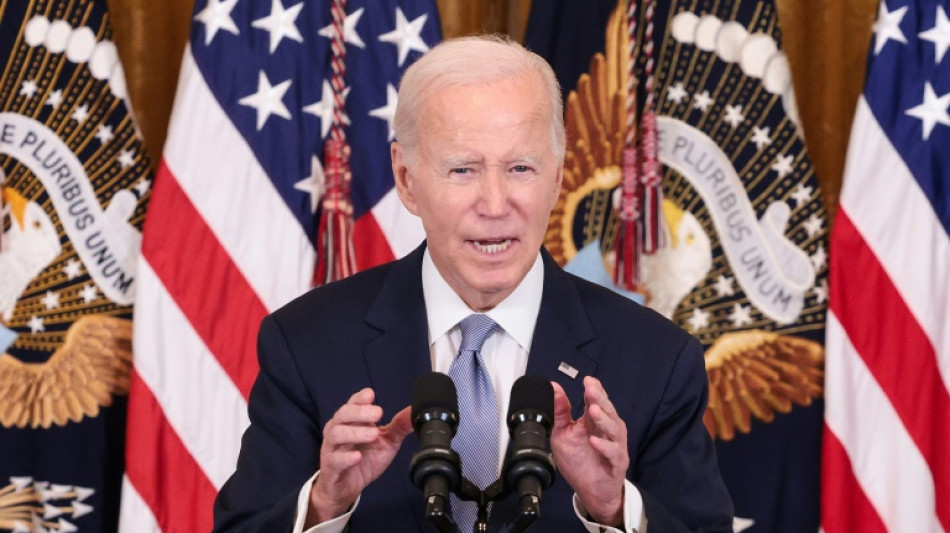
Major drugmakers have grudgingly agreed to negotiate on reducing prices for 10 medicines, the White House said Tuesday, a key element in President Joe Biden's push to lower healthcare costs ahead of the 2024 election.
Under the initiative, the federal government is using new powers to negotiate the prices of drugs covered by Medicare, the massive health insurance program for people 65 and older.
Biden's landmark Inflation Reduction Act (IRA), the major legislative package of energy transition policy and social reforms he signed last year, allowed Medicare to begin negotiating drug prices for the first time in its nearly 60-year existence.
The White House said makers of 10 medicines for serious illnesses, selected earlier in the year for price negotiations with the US government, have all agreed to participate in the talks ahead of an October 1 deadline.
The drugs include Farxiga by AstraZeneca used against diabetes, and Entresto by Novartis used to treat heart failure.
The treatments also include the anticoagulant Eliquis, used by more than 3.7 million Medicare beneficiaries.
The government is limited at first to choosing only 10 drugs for price negotiations, but can expand the program in subsequent years.
- 'Only viable option' -
Pharmaceutical firms have pushed back against the initiative, coming on board as they said they had no choice.
There are steep consequences for not participating in talks -- manufacturers that fail to comply with the program could face tax penalties.
Novartis said in a statement that it signed the negotiation program agreement as "this was our only viable option."
"If we had not signed the agreement, Novartis would face excessive and crippling fines," a spokesman added.
The company argues that the price-setting provisions are "unconstitutional."
Some firms like Amgen said they signed the manufacturer agreement for the program "in light of the statutory deadline."
But Amgen added it believes the scheme "is unlawful and will impede medical progress" on key therapies.
A Johnson & Johnson spokesperson told AFP: "We continue to believe the IRA's drug price-setting provisions are damaging to the innovation ecosystem."
- Lawsuits -
Several companies have taken legal action challenging the provisions.
Novo Nordisk said these "subject the company's medicines to unconstitutional government-imposed price controls" in announcing its lawsuit last Friday.
Merck in June filed a suit calling the program an unconstitutional "extortion" that would harm pharmaceutical innovation.
"In total, the 10 drugs selected for negotiation accounted for $3.4 billion in out-of-pocket costs for an estimated nine million Medicare enrollees in 2022," the White House said Tuesday.
It called the latest development a "major step towards lower health care costs for seniors and families."
The United States pays on average 2.5 times more for prescription drugs than other developed countries such as France, according to a Rand Corporation study.
Biden, who is campaigning for reelection with a heavy focus on easing voters' financial woes, hailed the price negotiation developments last year as potentially life-altering for millions of Americans.
The change in prices for the 10 drugs are not set to come into effect until January 2026.
Medicare is set to negotiate prices for up to 60 drugs in the next four years, and up to an additional 20 drugs each year after that.
S.Spengler--VB