The fastest warming continent: Europe's deadly heatwaves / Photo: © AFP/File

 Trump renames AI "super intelligence," rejects international oversight

 Trump rejects international regulation of AI

 How is the EU approaching record fuel prices?

 Sri Lanka's Colombage strikes on debut as England dismissed for 265 in first ODI

 Hurricane Polo strengthens to top category 5 off Mexico

 11 hurt as teen opens fire outside school in western Turkey

 UN chief says 'Big Oil' treats atmosphere as open sewer

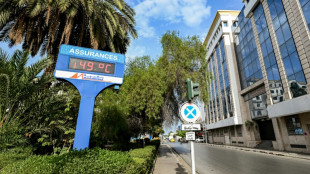 Tunisia says 2026 summer hottest on record

 England's Rashid out of Sri Lanka ODIs with hand injury

 Houthis accuse Saudi Arabia of deadly strikes as thousands flee

 Stocks climb as oil slides, AI buzz returns

 India cricketers win in style as Afghan savours 'special' Games silver

 La Liga president hits out at Real Madrid refereeing 'conspiracy' claims

 MEXC Launches “Real Stocks, Real Friends” with Rewards for Bringing Friends to Wall Street

 Mbappe continues media push for Ballon d'Or recognition

 Stocks rise on AI buzz, oil prices cool

 India narrowly survive huge scare against minnows Japan

 Missing F-35 fighter parts 'not sensitive', says Australia minister

 Cambodia showcases scams crackdown with global conference

 Afghan cyclist who disguised herself as man wins Asian Games silver

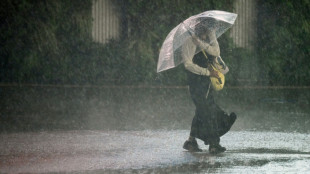 Typhoon Dujuan leaves four dead in Japan, 45,000 houses without power

 G7 leaders condemn Houthi strikes on Saudi Arabia

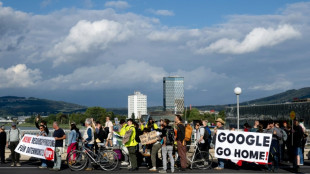 Google data centre sparks protests in Austria

 Shin Ohashi: Junk food-loving teen and Japan's next big swimming hope

 Stocks rise on AI buzz, drop in oil prices

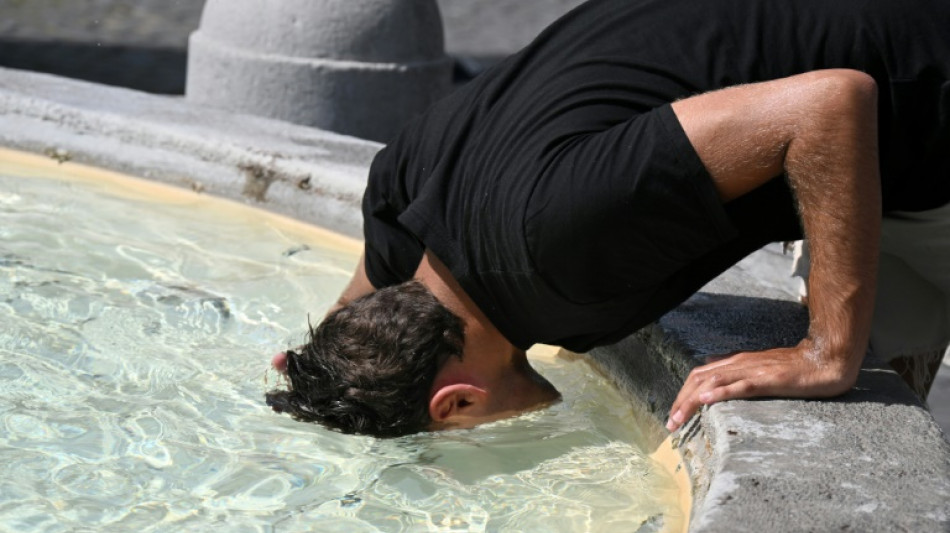
The sizzling temperatures experienced by several countries in southern Europe over the past days are part of a series of brutally hot, dry summers caused by climate change.
Spain has been sweltering under its fourth heatwave of the season, while Greece is struggling for the second time in a month against major wildfires.
Emissions of greenhouse gases are enabling increasingly intense and long-lasting heatwaves, especially in Europe, which the World Meteorological Organization says is the world's fastest warming continent.
AFP looks back at a series of heatwaves in Europe that have left tens of thousands of people dead.
- 2022: hottest ever -
The summer of 2022 was the hottest in Europe's recorded history, and caused the worst drought in centuries and devastating wildfires in France and Spain.
Two heatwaves, one in mid-June and one in July, also made it one of the deadliest summers in years, according to the Nature Medicine journal, which estimates the heat killed more than 61,000 people.
France recorded the biggest rise in heat compared to its previous summer average, with a jump of 2.43 degrees Celsius (36.37 Fahrenheit), Nature's figures showed.
The mercury topped 40C for the first time in the UK in July.
- 2021: blistering heat in Greece -
Between late July and early August, Greece endured the country's worst heatwave in over 30 years.
In Spain, temperatures hit 47C in parts of the south.
The resulting drought sparked large wildfires along the Mediterranean, from Turkey to Spain.
- 2019: Northern Europe swelters -
The summer of 2019 brought two heatwaves, one in late June and one in mid-July.
In France, temperatures hit an all-time record 46C in the southern town of Verargues.
In late July, northern Europe sizzled, with temperatures of 42.6C recorded at Lingen in northwestern Germany.
- 2018: drought drains the Danube -
The second half of July and beginning of August 2018 saw very high temperatures across much of Europe.
The Danube fell to its lowest level in 100 years in some areas, exposing World War II tanks in Serbia submerged since the conflict.
- 2017: months of mugginess -
Much of Europe, but especially the south, sweated in a series of heatwaves from late June well into August.
Spain experienced a record 47.3C on July 13 in the southern town of Montoro.
- 2015: back-to-back heatwaves -
It was heatwave after heatwave throughout the summer of 2015.
In Britain, roads melted and trains were delayed in what was at the time the hottest July on record.
- 2007: Greek forests ablaze -
Central and southern Europe were parched throughout June and July.
In Greece, the worst forest fires in half a century -- some believed to be the result of arson but others the product of heat and drought -- consumed four percent of the country's forests.
- 2003: 70,000 dead -
Britain, France, Italy, Spain and Portugal all experienced exceptional heat in the first half of August.
An EU study of 16 nations puts the number of excess deaths across the bloc during the heatwave as high as 70,000.
In France, most of the estimated 15,000-20,000 fatalities were elderly people left to fend for themselves. Since then the country has devised new systems to protect vulnerable people from the heat.
H.Seidel--BTB