'The last wave?' Spain ICU staff exhausted by Covid battle / Photo: ©

 Global stocks rally on lower oil prices, US-China hopes

 EU proposes energy rating for data centres

 Schoolgirl Yu scorches to second gold as doping case rocks Games

 Putin's party secures record score in Russia election

 Haupt Koleksiyonu: Paranın Biz İnsanlar Hakkında Anlattıkları

 Spanish PM says unregulated AI could be 'devastating'

 Yu, 13, smashes record again with second Asian Games gold

 Switzerland to play without Xhaka over fake Covid certificate

 From Korean Chipmakers to Leveraged Semiconductor ETFs: STARTRADER Launches 49 New 24/7 Stock and ETF CFDs

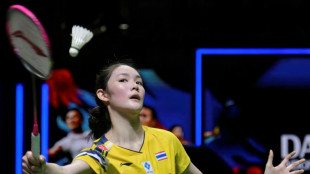 Thai badminton player first doping case at Asian Games: testers

 Колекція Гаупта: Що гроші розповідають про нас, людей
 German far-right AfD poll winner says Merz 'twilight' has begun

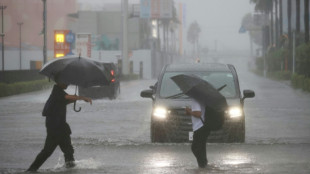 Flights scrapped, evacuations urged as Typhoon Dujuan nears Japan

 China confirms Xi to visit US this week for Trump talks

 مجموعة هاوبت: ما يكشفه المال عنا نحن البشر

 Colecția Haupt: Ce ne dezvăluie banii despre noi, oamenii

 Sisters of jailed Pakistan ex-PM Imran Khan arrested

 African players in Europe: Semenyo brace helps City top table

 'For my family': India boxer beats hardship, injury to go for Games gold

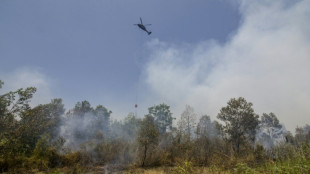 Indonesia doing 'everything' but still struggling to curb fires

 Once decried as 'human cockfighting', MMA wants Olympic spot

 China's Yu, 13, great for swimming says multiple Olympic medallist

 Putin's party set to retain power after Russia vote hit by cyberattacks, drones

 Germany's Merz under pressure after bruising state election losses

 Messi, Miami frustrated in 2-2 draw with San Diego

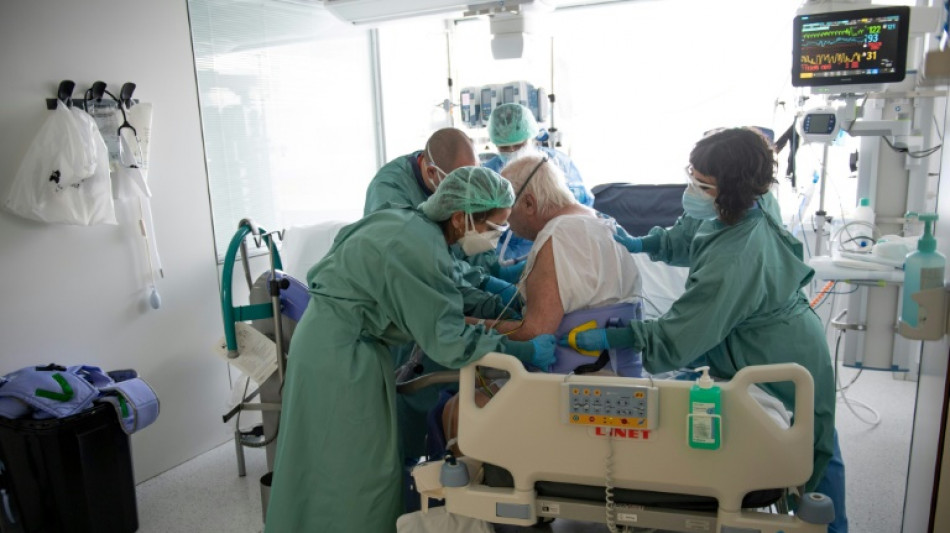
Seemingly milder for some but still highly contagious, Omicron has filled intensive care beds again at a hospital near Barcelona where shattered staff are still fighting a virus that refuses to retreat.
"Every time we think we've reached the end of the tunnel, it just gets longer," sighs Rafael Manez, head of intensive care at Bellvitge University Hospital, one of the largest medical facilities in Spain's northeastern Catalonia region.
Since the pandemic took hold nearly two years ago, overwhelming hospitals across the world, this veteran specialist has steered clear of making predictions, with Covid-19 exhausting them all.
Although more than 90 percent of Spain's population over the age of 12 has been vaccinated, it has not spared the nation from an explosion of Omicron infections, giving it one of Europe's highest incidence rates in recent weeks.
In Catalonia -- one of Spain's most populous regions with 7.7 million residents -- Covid patients are taking up more than 42 percent of intensive care beds, far above the national average of around 23 percent.
And it also has the highest number of patients in critical condition, although there are hopes this wave is on the verge of peaking.
"Our medical teams are really tired, especially by the sense of uncertainty. Will this be the last wave or will there be another?" wonders Gloria Romero, head of nursing at the hospital's intermediate respiratory care unit.
"This takes a toll on healthcare professionals. How long will this situation go on?"
- 'It's very hard' -
With 40 of its 44 beds taken up by Covid patients, the pace has not slowed at the intensive care unit of this hospital, which serves a heavily populated metropolitan area just south of Barcelona.
Inside the unit, staff suddenly start running as a patient appears to run out of air, quickly helping him.
But the work never stops in the ICU, where some 40 percent of those brought in are not vaccinated.
"The unvaccinated patients, who are the ones we're mainly dealing with, are those who are in denial about their illness and even about the treatment," says Santiago Gallego, the ICU's head nurse.
The impact on staff of working through a nearly two-year pandemic is increasingly evident, triggering unprecedented levels of stress and Covid infections, with 600 employees forced to take time off since December 1.
And given the latest explosion of cases, the hospital has also been forced to once again cancel visits, with the most seriously ill patients left to fight for their lives alone, far from their loved ones and only the staff to stay by their side.
"It's very hard physically but most of all emotionally because it just never ends," admits Elena Cabo, a physiotherapist who works in the ICU, her voice breaking with emotion.
- The vaccine as key -
But all the staff just keep on working in the hope that this disease will start to retreat.
"The only thing which is really effective is preventing it through vaccination, nobody can argue with the fact it's had an impact," says Manez.
And if Spain didn't have such a high rate of vaccination, "we would certainly be in a much worse state than we were two years ago," he reflects.
The nature of this sixth wave of infections has also raised long-awaited hopes that Covid-19 is starting to shift from a pandemic to a more manageable endemic illness like seasonal flu.
"The people that are coming in are not as young and they have more underlying health problems, so it's starting to look more like a more common virus," explains Mikel Sarasate, a pulmonologist at the intermediate respiratory care unit.
But nobody wants to get ahead of themselves or play down the severity of a virus that has killed more than 91,000 people in Spain and sickened so many.
"The flu, which is the closest thing we know, doesn't attack patients this badly or with such intensity," Sarasate says, warning about a comparison which for most specialists remains premature.
H.Seidel--BTB