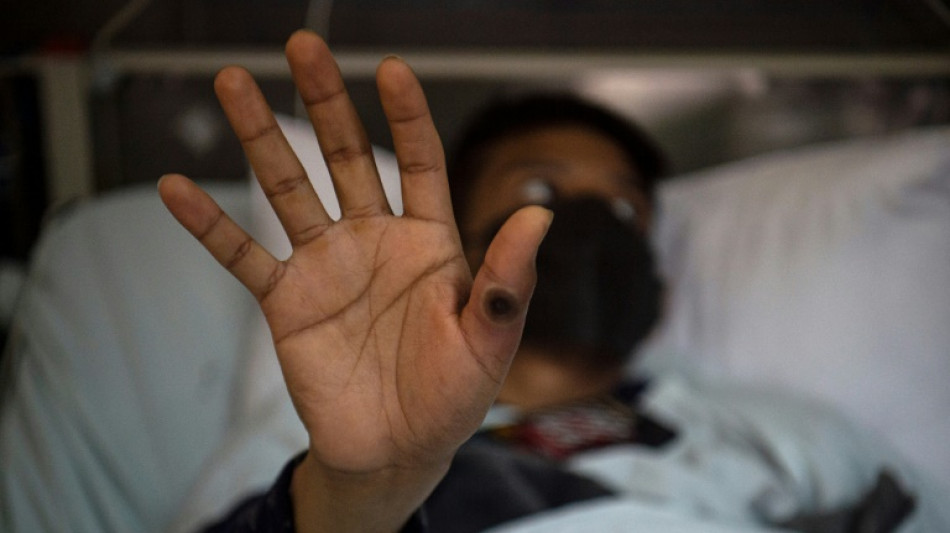
WHO declares mpox no longer a global health emergency / Photo: © AFP/File

 Hurricane Polo strengthens to top category 5 off Mexico

 11 hurt as teen opens fire outside school in western Turkey

 UN chief says 'Big Oil' treats atmosphere as open sewer

 Tunisia says 2026 summer hottest on record

 England's Rashid out of Sri Lanka ODIs with hand injury

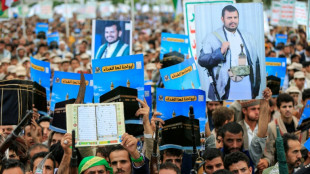 Houthis accuse Saudi Arabia of deadly strikes as thousands flee

 Stocks climb as oil slides, AI buzz returns

 India cricketers win in style as Afghan savours 'special' Games silver

 La Liga president hits out at Real Madrid refereeing 'conspiracy' claims

 MEXC Launches “Real Stocks, Real Friends” with Rewards for Bringing Friends to Wall Street

 Mbappe continues media push for Ballon d'Or recognition

 Stocks rise on AI buzz, oil prices cool
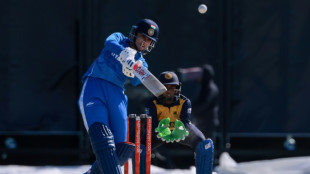
 India narrowly survive huge scare against minnows Japan

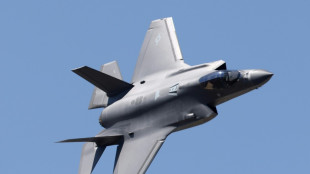 Missing F-35 fighter parts 'not sensitive', says Australia minister
 Cambodia showcases scams crackdown with global conference

 Afghan cyclist who disguised herself as man wins Asian Games silver

 Typhoon Dujuan leaves four dead in Japan, 45,000 houses without power

 G7 leaders condemn Houthi strikes on Saudi Arabia

 Google data centre sparks protests in Austria

 Shin Ohashi: Junk food-loving teen and Japan's next big swimming hope

 Stocks rise on AI buzz, drop in oil prices

 China's robot dancers limber up for America's Got Talent final

 Despite military might, Saudi struggles to crush the Houthis
 Trump to tout deals, defend Iran war in UN speech
 Sri Lanka to issue verdict in landmark Easter attack trial

The World Health Organization declared that mpox no longer constitutes a global health emergency on Thursday, almost exactly a year after the disease formerly known as monkeypox started spreading globally.
WHO chief Tedros Adhanom Ghebreyesus said the decision was prompted by sharply falling case numbers worldwide, but emphasised that the disease remains a threat, particularly in areas of Africa where it has long been endemic.
The announcement comes a week after the UN agency also declared that Covid-19 no longer constitutes a public health emergency of international concern (PHEIC), its highest level of alarm.
"However, as with Covid-19, that does not mean that the work is over," Tedros told an online press conference.
"While the emergencies of mpox and Covid-19 are both over, the threat of resurgent waves remains for both. Both viruses continue to circulate and both continue to kill," he added.
Though some countries in Central and West Africa have suffered local outbreaks for decades, in May last year mpox cases started emerging in Europe, North America then elsewhere, mostly among men who have sex with men.
The WHO declared mpox was a PHEIC in July. The number of people infected with the disease -- which causes fever, muscular aches and large boil-like skin lesions -- has consistently fallen since.
More than 87,000 cases and 140 deaths have been reported from 111 countries during the global outbreak, according to a WHO count.
The countries with the most cases during the global outbreak have been the United States, Brazil, Spain, France, Colombia, Mexico, Peru and the UK, according to the count.
- 'Steady progress' -
Almost 90 percent fewer cases were recorded over the last three months compared to the previous three-month period, Tedros said.
"We now see steady progress in controlling the outbreak based on the lessons of HIV and working closely with the most affected communities," Tedros said.
Because the global cases were overwhelmingly among men who have sex with men, there were fears that discrimination would mar the response to the outbreak.
"While stigma has been a driving concern in managing this epidemic and continues to hamper access to care for mpox, the feared backlash against the most affected communities has largely not materialised," Tedros said.
"For that, we are thankful."
For non-endemic countries, infections spread by travellers represent an ongoing threat, Tedros said, calling on countries to maintain surveillance of the disease and access to tests and vaccines.
People who have untreated HIV are at particular risk of severe forms of mpox, he added.
"While we welcome the downward trend of mpox cases globally, the virus continues to affect communities in all regions, including in Africa, where transmission is still not well understood," Tedros said.
- Mpox continues in Africa -
The monkeypox virus -- which causes mpox disease -- was first discovered in humans in the Democratic Republic of Congo in 1970.
Until a year ago, its spread among humans had been mainly limited to certain West and Central African nations, where local outbreaks are thought to be caused by the virus jumping over to humans from small animals.
Rosamund Lewis, the WHO's technical lead on monkeypox, said these countries "were dealing with mpox long before this outbreak began and will continue dealing with it for some time to come".
WHO emergencies director Mike Ryan said he was "shocked" that little international funding had been donated for the fight against mpox in the African countries where it is endemic.
"Maybe it's an issue of the continued prejudices that exist in this world," he said.
After the emergency status was lifted for Covid and mpox, there is now just one WHO-declared PHEIC -- for poliovirus, which was declared in May 2014.
F.Pavlenko--BTB