New study finds prehistoric migration from China to Americas / Photo: © AFP/File

 Hurricane Polo strengthens to top category 5 off Mexico

 11 hurt as teen opens fire outside school in western Turkey

 UN chief says 'Big Oil' treats atmosphere as open sewer

 Tunisia says 2026 summer hottest on record

 England's Rashid out of Sri Lanka ODIs with hand injury

 Houthis accuse Saudi Arabia of deadly strikes as thousands flee

 Stocks climb as oil slides, AI buzz returns

 India cricketers win in style as Afghan savours 'special' Games silver

 La Liga president hits out at Real Madrid refereeing 'conspiracy' claims

 MEXC Launches “Real Stocks, Real Friends” with Rewards for Bringing Friends to Wall Street

 Mbappe continues media push for Ballon d'Or recognition

 Stocks rise on AI buzz, oil prices cool

 India narrowly survive huge scare against minnows Japan

 Missing F-35 fighter parts 'not sensitive', says Australia minister

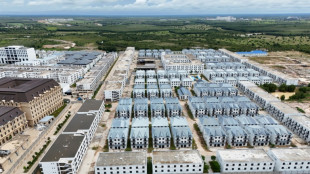 Cambodia showcases scams crackdown with global conference

 Afghan cyclist who disguised herself as man wins Asian Games silver

 Typhoon Dujuan leaves four dead in Japan, 45,000 houses without power

 G7 leaders condemn Houthi strikes on Saudi Arabia

 Google data centre sparks protests in Austria

 Shin Ohashi: Junk food-loving teen and Japan's next big swimming hope

 Stocks rise on AI buzz, drop in oil prices

 China's robot dancers limber up for America's Got Talent final

 Despite military might, Saudi struggles to crush the Houthis

 Trump to tout deals, defend Iran war in UN speech

 Sri Lanka to issue verdict in landmark Easter attack trial

As the last continents to be settled by humans, the question of how and when people first came to the Americas has long intrigued scientists.
A new genetics study published Tuesday in Cell Reports finds that some of the first arrivals came from China during two distinct migrations: the first during the last ice age, and the second shortly after.
"Our findings indicate that besides the previously indicated ancestral sources of Native Americans in Siberia, the northern coastal China also served as a genetic reservoir contributing to the gene pool," Yu-Chun Li, one of the report authors, told AFP.
Li added that during the second migration, the same lineage of people settled in Japan, which could help explain similarities in prehistoric arrowheads and spears found in the Americas, China and Japan.
It was once believed that ancient Siberians, who crossed over a land bridge that existed in the Bering Strait linking modern Russia and Alaska, were the sole ancestors of Native Americans.
More recent research, from the late 2000s onwards, has signaled more diverse sources from Asia could be connected to an ancient lineage responsible for founding populations across the Americas, including Bolivia, Brazil, Chile, Ecuador, Mexico and California.
Known as D4h, this lineage is found in mitochondrial DNA, which is inherited only from mothers and is used to trace maternal ancestry.
The team from the Kunming Institute of Zoology embarked on a ten-year hunt for D4h, combing through 100,000 modern and 15,000 ancient DNA samples across Eurasia. They eventually landed on 216 contemporary and 39 ancient individuals who came from the ancient lineage.
By analyzing the mutations that had accrued over time, looking at the samples' geographic locations and using carbon dating, they were able to reconstruct the D4h lineage's origins and expansion history.
The results revealed two migration events. The first was between 19,500 and 26,000 years ago during the Last Glacial Maximum, when ice sheet coverage was at its greatest and climate conditions in northern China were likely inhospitable.
The second occurred during the melting period, between 19,000 and 11,500 years ago. Increasing human populations during this period might have triggered migrations.
- Coastal migration -
In both cases, the scientists think the travelers were seafarers who docked in America and traveled along the Pacific coast by boats. This is because a grassy passageway between two ice sheets in modern Canada, known as the "inland ice-free corridor," was not yet opened.
In the second migration, a subgroup branched out from northern coastal China to Japan, contributing to the Japanese people, especially the indigenous Ainu, the study said, a finding that chimes with archeological similarities between ancient people in the Americas, China and Japan.
Li said a strength of the study was the number of samples they discovered, and complementary evidence from Y chromosomal DNA showing male ancestors of Native Americans lived in northern China at the same time as the female ancestors, made them confident of their findings.
"However, we don't know in which specific place in northern coastal China this expansion occurred and what specific events promoted these migrations," he said.
"More evidence, especially ancient genomes, are needed to answer these questions."
G.Schulte--BTB