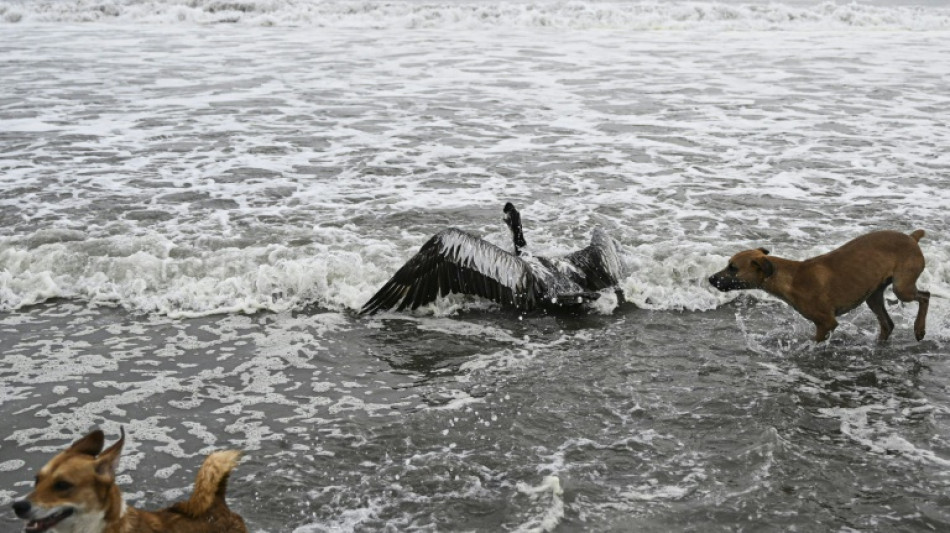
Peru slaughters more than 37,000 poultry after bird flu outbreak / Photo: © AFP

 Microsoft Xbox App Update for PC Promises 60% Faster Startup

 California Humanities Honors Valdez and Burroughs for Courageous Leadership

 Friedmann and Kühner Analyze Bundesliga's Best Shot and Frankfurt's Goalkeeper Crisis

 Honoka‘a Dragons Face Hawaii Prep in BIIF Division II Championship

 Pakistan Demands Grant-Based Climate Finance at COP31 to Avoid Debt Trap
Peruvian authorities have culled at least 37,000 birds on a chicken farm due to bird flu, officials said Thursday.
After previously affecting wildlife in several areas nationwide, this outbreak took place at a farm in Huacho, north of Lima, the national agricultural health agency SENASA said Thursday.
"They have all been slaughtered; this infectious focus has already ended on a small farm in Huacho (north of Lima), with a population of approximately 37,000 birds," said Jorge Mantilla, head of SENASA's disease control, quoted by state news agency Andina.
Killing infected birds is part of the protocol to control avian flu outbreaks.
"The aim is to prevent the disease, which is highly lethal in birds, from spreading to other locations," said veterinarian Mantilla.
Some 14,000 seabirds, mostly pelicans, have died from bird flu in the country in recent weeks.
In addition to the slaughter of the poultry in Huacho, another cull took place in the city of Lambayeque, in northern Peru, where some 700 birds were slaughtered to prevent the spread of the virus.
The Peruvian Poultry Association ruled out that the outbreak puts "the consumption of birds and eggs" in the country at risk.
Peru declared a 90-day national health emergency on Wednesday after confirming cases of H5N1 avian influenza in farm-raised poultry.
According to SENASA, the disease is being transmitted from "wild birds that come from North America" and reach Patagonia.
The first outbreak of avian influenza in the Americas occurred in Canada last year, and in January 2022 the virus was detected in the United States, affecting poultry production, according to Peruvian authorities.
Avian flu is a disease that has no cure or treatment and causes high mortality in wild and domestic birds such as ducks, chickens and turkeys, among others.
G.Schulte--BTB