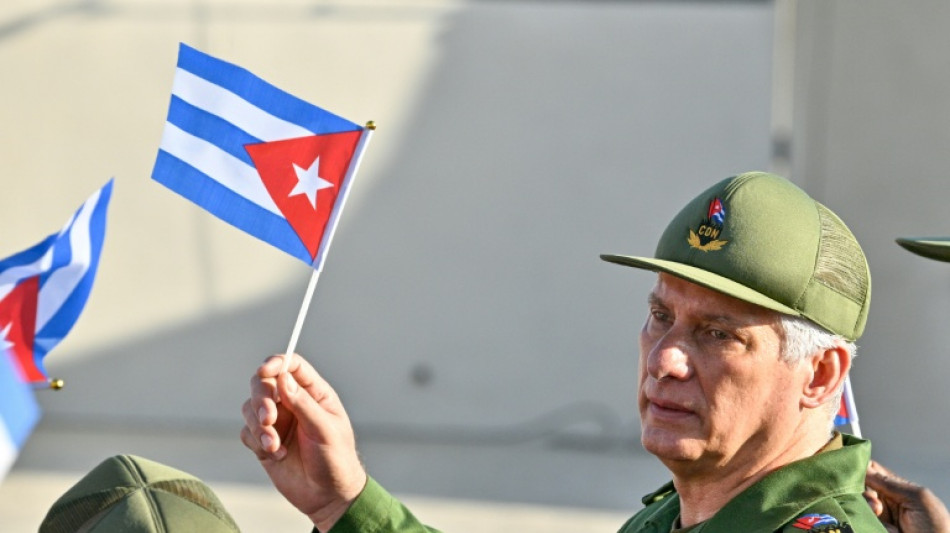
Cuba opens more sectors to private business / Photo: © AFP

 Thailand slams chaotic Asian Games organisation as 'musical chairs'
 North Korea to keep nuclear weapons 'forever': foreign minister
 Markets mixed as China's Xi arrives for US talks
 Swiss voters expected to shun stricter neutrality
 Rapper-turned-PM faces first big test after Nepal disaster
 Tuchel seeks tonic to England World Cup 'scar' in Spain showdown

 'Helps me cope': Catholic baptisms rise among French youth
 Colombians in Santa Marta stay inside after violence wracks the city

 Iran airlines cancel flights as US sanctions hit
 Meta launches camera-free AI glasses amid privacy pushback
 Australian PM says OpenAI hacked government health website

 Xi arrives in US to personal Trump welcome
 Morocco elects new parliament amid social frustration, youth discontent
 Scheffler and Burns to face Im and Lee in Presidents Cup opener
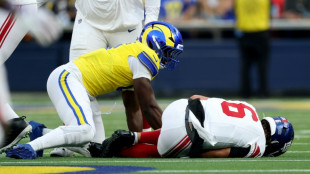
 Crushing wins for Lyon and Barca in women's Champions League
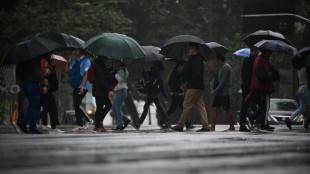 Rio breaks record for rainiest September amid powerful El Nino
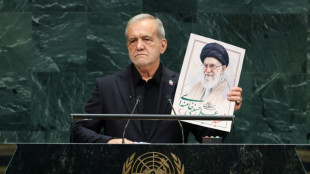
 At UN, tech chiefs urge caution in AI development
 Russian strikes kill seven in Ukraine, Zelensky vows winter campaign
 Venezuelan shot by ICE needs urgent medical care, mother tells AFP
 Zelensky says Putin using fighters from 47 countries in Ukraine war
 Klopp calls on Germany to 'rise above ourselves' as new era begins

 Russian strikes kill seven in Ukraine as Russia vows no 'pause' to war

 ArcPoint Expands Globally with Institutional Intelligence Platform for Modern Investors
 Ronaldo focussing on 'present' ahead of Wales test

 Outgoing UN chief makes final climate push at New York summit
Cuban President Miguel Diaz-Canel on Friday announced greater freedoms for small businesses across the country, as the communist government takes steps to liberalize the island's economy in the face of a crippling US blockade.
In a speech broadcast on national television, Diaz-Canel said Cuba would open more sectors to private businesses and streamline the approval process for new ventures.
"For non-state forms of management, the list of prohibited activities will be limited so that their scope of operations is as broad as possible," the president said. "A process is underway... to approve all pending applications in the shortest time possible."
Under pressure from the oil blockade imposed by Washington in January, the Cuban government has unveiled a series of reforms aimed at opening up the economy.
Private businesses — which can employ up to 100 people — were authorized in 2021 and have become an increasingly important part of Cuba's economy. Since February, they have been permitted to import fuel, a sector previously controlled exclusively by the state.
As part of the new measures, the government will enable private businesses to invest in the economy on equal terms with foreign investors, after some of them recently left the country amid concerns over US sanctions.
Diaz-Canel said the government was also considering scrapping state intermediaries in import and export operations.
The president reiterated his commitment to decentralizing the economy and granting greater autonomy to state-owned enterprises, which account for roughly 80 percent of economic activity.
He also announced an overhaul of the state bureaucracy that would reduce the number of ministries and trim the the state workforce, a plan that requires parliamentary approval in July.
Diaz-Canel assured that the new reforms "will soon be discussed and approved very swiftly."
He also sought to project confidence despite the country's mounting economic difficulties.
"The country is not paralyzed; the country is facing this situation intelligently," the president said, denouncing what he described as a "maximum pressure" policy from Washington.
In addition to the oil blockade, the United States has imposed a range of sanctions on Cuba.
The measures have further aggravated the economic, social and energy crises that have gripped the island for years despite its decades-long struggle against a US embargo dating back to 1962.
R.Fischer--VB