-
 Louise Trotter expands her palette at Bottega Veneta
-
Ireland squad vote to play Israel tie despite Gaza unease
-
 Pope prays at Lourdes after huge Paris mass
-
Gutsy Vollering wins cycling road race world title

-
 USA trims International lead after Presidents Cup four-balls
-
Vollering wins cycling road race world title

-
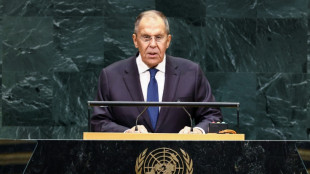 Russia accuses Europe of blocking Ukraine talks, as strikes drag on
-
Man City's meteoric rise clouded by dark shadow

-
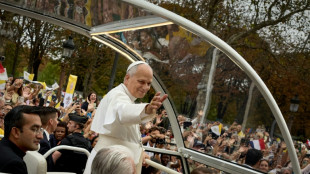 'He said hello': Families pray with pope on Paris avenue
-
Mbappe out for two weeks or more with knee injury say Real
-
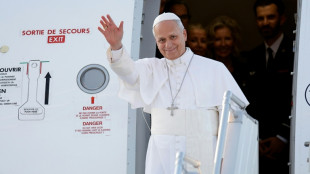 Pope celebrates giant Paris mass, flies to Lourdes
-
Lyon collapse away to Stade and suffer first Top 14 loss

-
 Thousands march in Madrid over eviction of 87-year-old woman
-
Russia accuses Europe of seeking to thwart Ukraine talks
-
 England women back to winning ways with last-gasp defeat of New Zealand
-
Man City chairman defiant over reported Premier League charges
-
 Trump rejects Iran proposal for deal to reopen Hormuz
-
Germany ready to 'walk through fire' for Klopp, says Tah
-
 England's Cox says injured Buttler leaves 'big shoes to fill'
-
At least 16 killed in Russian and Ukrainian strikes
-
 Ruthless Perpignan upset sloppy Bordeaux-Begles
-
Powerful storm pummels US Northeast
-
 Deadly abbey attack feeds anti-Ukrainian sentiment in Poland
-
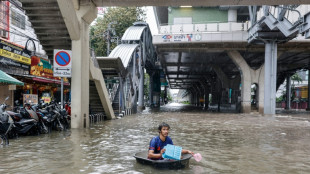
Bangkok declares disaster after homes flooded, roads submerged by heavy rain
-
 Antonelli says he drove 'safety-first' on his worst weekend of season
-
Norris calls for errant Colapinto to be banned for causing Baku crash
-
 Fernandez fights back to reach Singapore Open final
-
Russell finds himself again and prepares to heap pressure on Antonelli
-
 Giant statue of Pope Leo XIV takes shape in Peru workshop
-
South Korea hold nerve to win Asian Games basketball gold

-
 Ukraine crush holders Italy to reach first BJK Cup final
-
Russell holds off Verstappen to claim imperious victory in Baku
-
 Pope celebrates giant Paris mass in landmark visit
-
Russell holds off Verstappen to win Azerbaijan Grand Prix
-
 Germany selects Munich for Olympics host bid
-
India's Kohli says 2027 ODI World Cup will be his last
-
 Sagnol sacked as Georgia boss after Nations League upset
-
Huge crowds cheer Pope Leo along Champs-Elysees ahead of Paris mass
-
 Man City could face 'drastic' sanctions after reported guilty verdict: ex-chairman
-
Putellas wants to bring 'winning culture and mentality' to London City

-
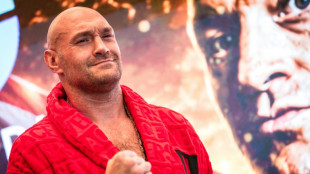 Furious Fury says row between rival promoters could scupper Joshua bout
-
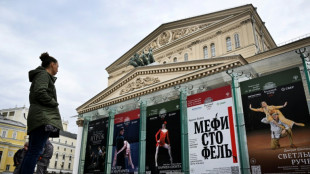
Rare Italian opera returns to Moscow after nearly 120-year hiatus
-
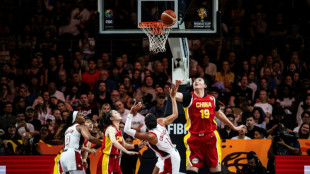 'Invincible' 223cm teen basketball player stars as China win bronze
-
Pope to celebrate giant Paris mass after 'peace' appeal

-
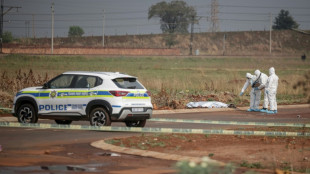 Tenth woman found dead in South Africa's string of killings
-
Homes flooded, roads submerged: Bangkok declares disaster over heavy rains
-
 Japan schoolboy, 11, wins gold while empty seats blight Asian Games
-
Ahead of Paris mass, pope urges life together in 'dignity and peace'
-
 Japan organisers 'not satisfied' as empty seats blight Asian Games
-
Austria 'ghetto' language classes leave children to repeat school
EU agrees deal to ban Russian gas by end of 2027
European Union lawmakers and member states reached a deal Wednesday to ban all imports of Russian gas before the end of 2027, as the bloc seeks to choke off key funds feeding Moscow's war chest.
"This is the dawn of a new era, the era of Europe's full energy independence from Russia," EU chief Ursula von der Leyen told reporters following the overnight deal.
Aimed at breaking a reliance the bloc has struggled to end despite the invasion of Ukraine, the accord marks a compromise between EU capitals and the European Parliament, which wanted the ban to hit sooner.
"We've made it: Europe is turning off the tap on Russian gas, forever," EU Energy Commissioner Dan Jorgensen wrote on X.
"We've chosen energy security and independence for Europe. No more blackmail. No more market manipulation by Putin. We stand strong with Ukraine."
But the Kremlin hit back, saying the move would "accelerate" a decline of the EU's economy, as it would force the bloc to resort to more expensive alternatives.
Under the deal, long-term pipeline contracts -- considered the most sensitive because they can run for decades -- will be banned from September 30, 2027, provided storage levels are sufficient, and no later than November 1, 2027.
For liquefied natural gas (LNG), long-term contracts will be prohibited from January 1, 2027, in line with a call by Commission President Ursula von der Leyen to tighten sanctions on Moscow.
Short-term contracts will be phased out earlier: from April 25, 2026 for LNG and June 17, 2026 for pipeline gas.
The move aims "to end dependency on Russian energy following Russia's weaponisation of gas supplies with significant effects on the European energy market", said a European Council statement.
The timeline must still get final approval from the European Parliament and member states.
European companies will be able to invoke "force majeure" to legally justify breaking existing contracts, citing the EU import ban.
- Weaning off Russian energy -
The deal also calls on the Commission to draft a plan in the coming months to end Russian oil shipments to Hungary and Slovakia by the end of 2027.
Hungarian Prime Minister Viktor Orban -- the EU leader closest to the Kremlin -- thumbed his nose at Brussels last month by vowing to keep importing Russian hydrocarbons during a meeting with President Vladimir Putin.
Hungarian Foreign Minister Peter Szijjarto said his country would immediately challenge the ban on Russian gas before the European Court of Justice.
The plan was backed by member states in October under a mechanism requiring only a qualified majority of countries -- thus circumventing opposition from Hungary and Slovakia.
"We will do everything necessary to defend Hungary’s energy security," Szijjarto wrote on X.
The EU moved to wean itself off Russian oil in 2022 but granted exemptions to the two landlocked countries.
Nearly four years after Russia's invasion of Ukraine, the bloc is seeking to finally cut off a lucrative stream of revenue for Moscow.
The share of Russian gas in EU imports has fallen from 45 percent in 2021 to 19 percent in 2024. But while Europe has slashed pipeline deliveries, it has partly turned to LNG -- shipped by sea, unloaded at ports, and fed back into the network.
Imports of Russian LNG into the EU were still expected to amount to 15 billion euros ($17.5 billion) this year.
I.Stoeckli--VB