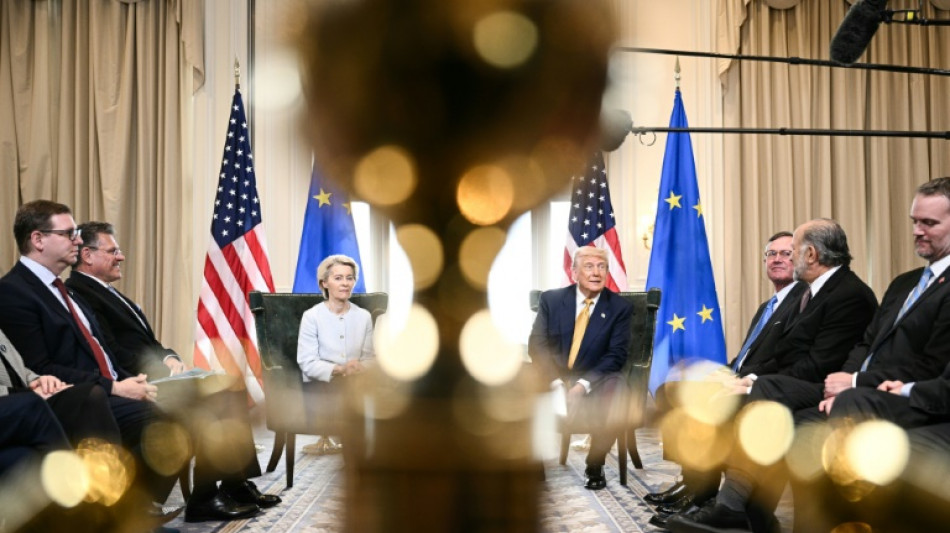
What we know so far about the EU-US trade deal / Photo: © AFP

 South Korea volleyball team latest to be bussed to wrong Games venue

 Malaysia starts sending Myanmar migrants home

 8.3 mn refugees at risk due to 'severe' funding cuts: UN

 Stocks drop and oil rises as Hormuz hopes fade

 OpenAI cancels release of newest model due to safety concerns

 AI bosses head to White House as safety pressure builds

 Batista sacked as Costa Rica coach after six months

 Flooding, power cuts and evacuations as Hurricane Polo slams Mexico

 Dodgers eye three-peat, Red Sox face Yankees as MLB playoffs begin

 Certification of Boeing 737 MAX delayed by software bug

 Celine Dion wows Paris Fashion Week with surprise gig

 AMD buys firm founded by AI 'godmother' Fei-Fei Li
 Italy rebound in Turkey as France win late in Belgium

 Pope says concerns about AI 'should be taken seriously'
 Hurricanes to hoist title banner as NHL season begins
 Justice Alito steps aside from major US climate case

 Willis happy with England exile after retains Top 14 player award

 Spain housing protests keep heat on government as PM seeks new law

 Wissa spoils Zimbabwe homecoming as DR Congo win AFCON qualifier

 UK police release on bail five men held over airbase incident

 Ex-All Black Plummer 'sure' New Zealand will find Super Rugby solution

 Shein sees 1% revenue growth in first half of 2026

 Netherlands regrets Israel retaliation in settlements row
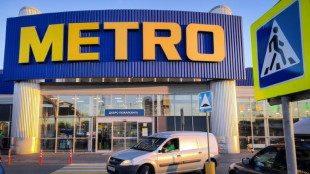 Moscow seizes Russian assets of German food retailer Metro
 Bulgarian spirits inflamed by new rakia rules

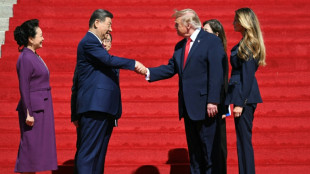
EU chief Ursula von der Leyen clinched an agreement Sunday with US President Donald Trump to avoid crippling tariffs from hitting the bloc, with both leaders hailing a "good deal".
The stakes were high with a looming August 1 deadline and $1.9 trillion transatlantic trading relationship on the line.
Many European businesses will breathe a sigh of relief after the leaders agreed the 27-country bloc will face a baseline levy of 15 percent instead of a threatened 30 percent -- but the deal will not satisfy everyone.
Here is what we know so far:
- What did EU, US agree? -
Both sides confirmed there will be a 15-percent across-the-board rate on a majority of EU goods -- the same level secured by Japan this month -- with bilateral tariff exemptions on some products.
The deal will bring relief for the bloc's auto sector, employing around 13 million people -- and hit by Trump with 25-percent tariffs, on top of a pre-existing 2.5 percent.
"Obviously, it is good news for the car industry. So Germany will be happy. And all the EU members with auto supply chains, they go from 27.5 to 15 percent," said Jacob Funk Kirkegaard of the Peterson Institute For International Economics.
A 15-percent levy will remain "costly" for German automakers, "but it is manageable", said trade geopolitics expert Elvire Fabry at the Jacques Delors Institute.
While 15 percent is much higher than pre-existing US tariffs on European goods -- averaging 4.8 percent -- it mirrors the status quo, with companies currently facing an additional flat rate of 10 percent imposed by Trump since April.
The EU also committed to buy $750 billion of liquefied natural gas, oil and nuclear fuels from the United States -- split equally over three years -- to replace Russian energy sources.
And it will pour $600 billion more in additional investments in the United States.
Trump said EU countries -- which recently pledged to ramp up their defence spending within NATO -- would be purchasing "hundreds of billions of dollars' worth of military equipment".
- Are there exemptions? -
Von der Leyen said the 15-percent rate applied across most sectors, including semiconductors and pharmaceuticals -- a critical export for Ireland, which the bloc has sought to protect.
Trump in April launched probes that could lead to significantly steeper tariffs on the two key sectors, warning this month he could slap 200-percent levies on drugs.
Brussels and Washington agreed a bilateral tariff exemption for key goods including aircraft, certain chemicals, semiconductor equipment, certain agricultural products and critical raw materials, von der Leyen said.
The EU currently faces 50-percent tariffs on its steel exports to the United States, but von der Leyen said a compromise on the metal had been reached with Trump.
"Between us, tariffs will be cut and a quota system will be put in place," she said.
It is understood that European steel would be hit with 50-percent levies only after a certain amount of the metal arrived in the United States, but no details were initially provided on the mechanism.
- What happens next? -
The deal needs to be approved by EU member states, whose ambassadors will meet first thing Monday morning for a debrief from the European Commission.
And there are still technical talks to come, since the agreement needs to be fully fleshed out.
Von der Leyen described the deal as a "framework" agreement. "Details have to be sorted out, and that will happen over the next weeks," she said.
In particular, she said there has yet to be a final decision on alcohol, critical since France and The Netherlands have been pushing for carve-outs for wine and beer respectively.
"This is something which has to be sorted out in the next days," von der Leyen said.
G.Haefliger--VB