
-
 South Korea volleyball team latest to be bussed to wrong Games venue
-
Bears thrash Eagles 27-7 as third-string QB Keenum shines
-
 Malaysia starts sending Myanmar migrants home
-
All Blacks name veteran Taylor captain as Mo'unga seizes 10 jersey
-
 8.3 mn refugees at risk due to 'severe' funding cuts: UN
-
Race against time as Asian Games cricket quarter-finals washed out
-
 Stocks drop and oil rises as Hormuz hopes fade
-
India turns to corals and seagrass to shield against rising seas
-
 OpenAI cancels release of newest model due to safety concerns
-
Manchester City's Premier League charges: What comes next?
-
 AI bosses head to White House as safety pressure builds
-
Brazil's cellphone crime: a security nightmare in every pocket

-
 Batista sacked as Costa Rica coach after six months
-
Russia pummels Kyiv in latest deadly attack
-
 Flooding, power cuts and evacuations as Hurricane Polo slams Mexico
-
NFL Giants obtain QB McCarthy from Vikings
-
 Dodgers eye three-peat, Red Sox face Yankees as MLB playoffs begin
-
Deal for evicted Spanish pensioner as PM seeks new housing law
-
 Certification of Boeing 737 MAX delayed by software bug
-
Clippers apologize, warn fans of 'challenges' after Leonard scandal
-
 Celine Dion wows Paris Fashion Week with surprise gig
-
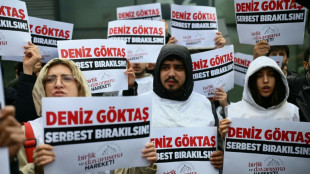
Turkish comedian convicted for Erdogan 'insult' freed pending appeal
-
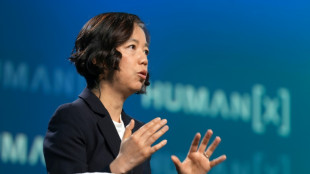 AMD buys firm founded by AI 'godmother' Fei-Fei Li
-
Trump announces 'biggest' US steel plant in battleground Iowa
-
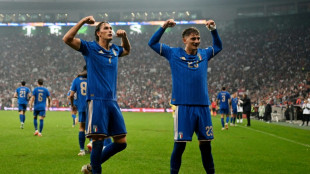 Italy rebound in Turkey as France win late in Belgium
-
Olise wonder strike gives Zidane's France win in Belgium

-
 Pope says concerns about AI 'should be taken seriously'
-
US stocks fall, bond yields rise as Middle East war drags on
-
 Hurricanes to hoist title banner as NHL season begins
-
Trump denies offering to sell arms to China's Xi
-
 Justice Alito steps aside from major US climate case
-
Wemby ready for NBA Spurs to move rivals in climb to top
-
 Willis happy with England exile after retains Top 14 player award
-
Ukraine to postpone some spending amid delays in aid: PM

-
 Spain housing protests keep heat on government as PM seeks new law
-
Tuchel says Czech Republic game 'not yet a must-win'
-
 Wissa spoils Zimbabwe homecoming as DR Congo win AFCON qualifier
-
MaXhosa puts South Africa on the Paris fashion map
-
 UK police release on bail five men held over airbase incident
-
Rose, Scott among 2027 World Golf Hall of Fame finalists
-
 Ex-All Black Plummer 'sure' New Zealand will find Super Rugby solution
-
Brunson says NBA champion Knicks can't get satisfaction
-
 Shein sees 1% revenue growth in first half of 2026
-
France puts out largest wildfire since 1949
-
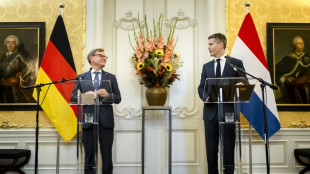 Netherlands regrets Israel retaliation in settlements row
-
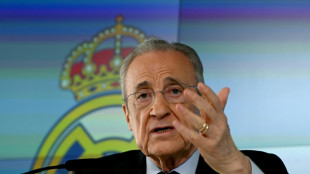
Real Madrid's Perez summoned over Barcelona referee payments comments
-
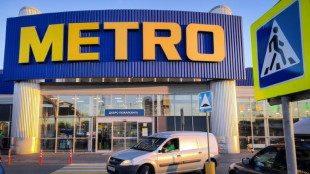 Moscow seizes Russian assets of German food retailer Metro
-
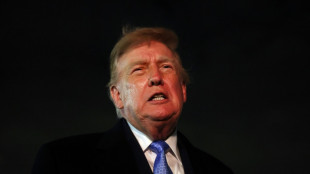
Oil takes off again, Wall Street dips after Trump rejects Iran truce offer
-
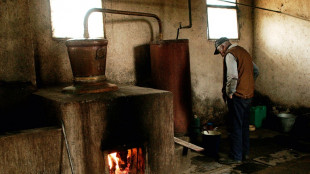 Bulgarian spirits inflamed by new rakia rules
-
AlgoQuant Asset Management Selects Liquid Mercury to Enhance Digital Asset Trading Infrastructure

European Union resigned to 15 pecent US tariff
The United States and European Union clinched a trade agreement on Sunday that will see EU exports taxed at 15 percent, in a bid to resolve a transatlantic tariff stand-off that threatened to explode into a full-blown trade war.
US President Donald Trump emerged from a high-stakes meeting with European Commission President Ursula von der Leyen at his golf resort in Scotland, describing the deal as the "biggest-ever".
The deal, which the leaders struck in around an hour, came as the clock ticked down on an August 1 deadline to avoid an across-the-board US levy of 30 percent on European goods.
"We've reached a deal. It's a good deal for everybody. This is probably the biggest deal ever reached in any capacity," said Trump.
Trump said a baseline tariff of 15 percent would apply across the board, including for Europe's crucial automobile sector, pharmaceuticals and semiconductors.
As part of the deal, Trump said the 27-nation EU bloc had agreed to purchase "$750 billion worth of energy" from the United States, as well as make $600 billion in additional investments.
Von der Leyen said the "significant" purchases of US liquefied natural gas, oil and nuclear fuels would come over three years, as part of the bloc's bid to diversify away from Russian sources.
Negotiating on behalf of the EU's 27 countries, von der Leyen had been pushing hard to salvage a trading relationship worth an annual $1.9 trillion in goods and services.
"It's a good deal," the EU chief told reporters.
"It will bring stability. It will bring predictability. That's very important for our businesses on both sides of the Atlantic," she said.
She added that bilateral tariff exemptions had been agreed on a number of "strategic products", notably aircraft, certain chemicals, some agricultural products and critical raw materials.
Von der Leyen said the EU still hoped to secure further so-called "zero-for-zero" agreements, notably for alcohol, which she hoped to be "sorted out" in coming days.
Trump also said EU countries -- which recently pledged to ramp up their defence spending within NATO -- would be purchasing "hundreds of billions of dollars worth of military equipment."
- 'Best we could get' -
The EU has been hit by multiple waves of tariffs since Trump reclaimed the White House.
It is currently subject to a 25-percent levy on cars, 50 percent on steel and aluminium, and an across-the-board tariff of 10 percent, which Washington threatened to hike to 30 percent in a no-deal scenario.
The bloc had been pushing hard for tariff carve-outs for critical industries from aircraft to spirits, and its auto industry, crucial for France and Germany, is already reeling from the levies imposed so far.
"Fifteen percent is not to be underestimated, but it is the best we could get," acknowledged von der Leyen.
Any deal will need to be approved by EU member states -- whose ambassadors, on a visit to Greenland, were updated by the commission Sunday morning. They were set to meet again after the deal struck in Scotland.
German Chancellor Friedrich Merz rapidly hailed the deal, saying it avoided "needless escalation in transatlantic trade relations".
But German exporters were less enthusiastic. The powerful BDI federation of industrial groups said the accord would have "considerable negative repercussions" while the country's VCI chemical trade association said the accord left rates "too high".
Ireland, one of the EU's top exporters to the United States, said Sunday it welcomed the deal for bringing "a measure of much-needed certainty", but that it "regrets" the baseline tariff, in a statement by its Department of Foreign Affairs and Trade.
The EU had pushed for a compromise on steel that could allow a certain quota into the United States before tariffs would apply.
Trump appeared to rule that out, saying steel was "staying the way it is", but the EU chief insisted later that "tariffs will be cut and a quota system will be put in place" for steel.
- 'The big one' -
While 15 percent is much higher than pre-existing US tariffs on European goods, which average around 4.8 percent, it mirrors the status quo, with companies currently facing an additional flat rate of 10 percent.
Had the talks failed, EU states had greenlit counter tariffs on $109 billion (93 billion euros) of US goods, including aircraft and cars to take effect in stages from August 7.
Trump has embarked on a campaign to reshape US trade with the world, and has vowed to hit dozens of countries with punitive tariffs if they do not reach a pact with Washington by August 1.
Asked what the next deal would be, Trump replied: "This was the big one. This is the biggest of them all."
burs-gv/tc/lb
L.Stucki--VB