US may 'escalate to de-escalate' against Iran: Treasury chief / Photo: © AFP

 US faces tough path to new Iran nuclear deal

 Cuba unveils historic package of free-market reforms

 Stokes set for England return in New Zealand finale - reports

 Quarantine over for almost all hantavirus ship passengers, crew
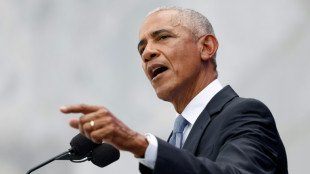 Ex-presidents and stars, but no Trump, turn out for Obama Library

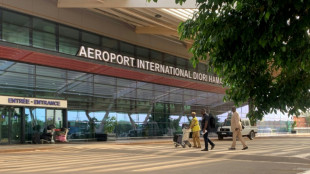 Al-Qaeda-linked jihadists attack Niger airport, 11 soldiers killed
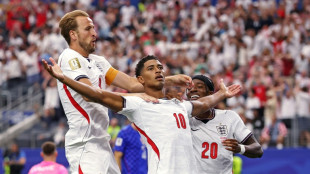
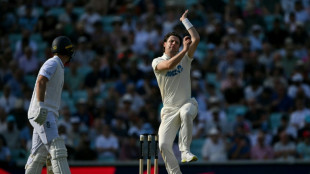 New Zealand's Henry rocks England in 2nd Test after Phillips century
 Iran's supreme leader says approved deal as US lifts ports blockade

 AI-generated videos use Down syndrome to make sales

 Spurs sign Dutch defender Van Hecke from Brighton

 Liverpool agree deal to sign Spain forward Munoz from Osasuna

 New Zealand's Henry rocks England after Phillips century
 Wildcard Eala shocks Rybakina in Berlin

 South Africa hold Czechs, keep World Cup knockout dream alive

 Important or selfish? World Cup evidence mounts against Ronaldo

 EU wrestles over tackling China export flood
 Vance defends Iran deal, eyes Swiss talks

 Wahi granted Canadian visa for Ivory Coast World Cup match after delay
 US lifts Iran ports blockade as uncertainty clouds Swiss Iran talks
 Brutal Shinnecock winds blow away US Open contenders

 AI-generated videos wield Down syndrome to make sales
 Man dies, trains and classes disrupted as heatwave hits France
 Neymar to miss Brazil's second World Cup game against Haiti

 O'Brien's historic 100th Royal Ascot winner has golden glow

 Graft probe into Spanish ex-PM expanded to daughters
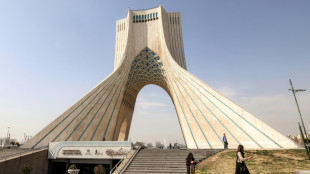
The United States may need to "escalate" its attacks against Iran to be able to wind down the war, Treasury Secretary Scott Bessent said Sunday, after President Donald Trump gave seemingly contradictory trajectories for the US military campaign.
Trump on Saturday threatened to "obliterate" Iranian energy plants if Tehran did not fully open the pivotal Strait of Hormuz, just a day after saying US objectives were "very close" and that he was considering "winding down" the war.
Asked on NBC's "Meet the Press" if Trump was winding down or escalating the war, Bessent said: "They're not mutually exclusive. Sometimes you have to escalate to de-escalate."
"This is the only language the Iranians understand," he argued.
Iran's threats against shipping through the Strait of Hormuz, through which about a fifth of global gas and oil supplies flows, have caused energy prices to soar around the world.
Bessent, as part of efforts to abate market turmoil, has temporarily lifted US sanctions on Iranian and Russian oil that had already been loaded onto ships.
But the move has produced some backlash, with critics saying it will provide funding to Iran at the same time that the US-Israeli conflict is ongoing.
Asked on NBC about the contradiction, Bessent defended the move as helping alleviate pressure on US partners and lower the price Iran can receive for its oil.
"That Iranian oil was always going to be sold to the Chinese. It was going to be sold at a discount... So which is better? If oil prices spiked to $150 and they (Iran) were getting 70 percent of that, or oil prices below 100?"
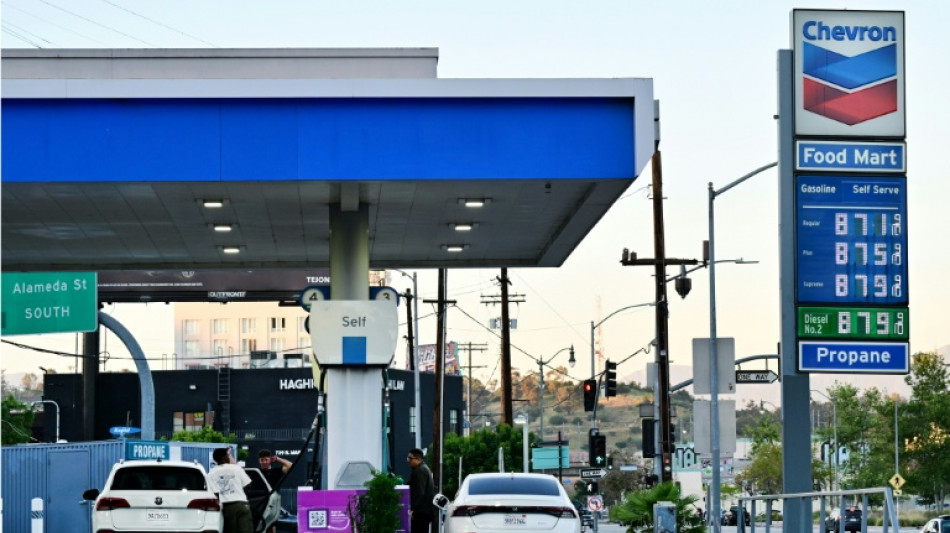
The spike in crude prices has also seen costs at the pump across the United States quickly rise, creating potential political risks for the president just months before the midterm elections.
Bessent on Sunday refused to put a timeline on when Americans should expect prices to moderate, while arguing that the electorate will agree that removing Iran's nuclear threat will be worth the temporary costs.
"I don't know whether it's going to be 30 days. I don't know whether it's going to be 50 days. I don't know whether it's going to be 100 days," he said.
"But to have 50 years of peace in the Middle East and know that the Iranian regime is defanged," will be worth it.
Meanwhile, the exiled son of Iran's last shah Reza Pahlavi called on Trump and Israeli Prime Minister Benjamin Netanyahu to refrain from targeting Iran's civilian infrastructure, because it "belongs to the Iranian people and to the future of a free Iran."
"Iran must be protected. The regime must be dismantled," US-based Pahlavi, who wields influence among the diaspora but holds no official position, said in a post on X Sunday.
A.Zbinden--VB