
Trump says Coca-Cola to switch to cane sugar in US / Photo: © AFP/File

 Neo Nontso Reveals Anele Mdoda’s Calm Demeanor During Wedding Prep

 How Mystery Bounty Poker Tournaments Spread from Curiosity to Mainstream

 Market Buzz: Meesho Stake Sale, Clean Max’s ₹50,000 Crore Investment and Corporate Updates

 The 20 Most Shocking Documentaries Ranked: From Elizabeth Holmes to Man on Wire

 Ole Miss inquiry expands after video and monkey-noise allegations

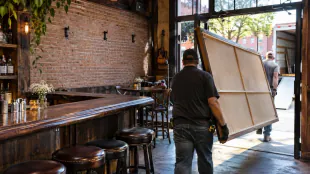 Bunnie XO artwork taken down from Jelly Roll’s Nashville bar

 Arlington sentinel rebukes Pete Hegseth entourage for laughter near memorial

 Late Late Show Line-Up Announced Featuring Nicola Coughlan and TJ Reid

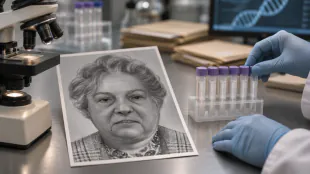 Authorities to identify Montauk Mary and five other Long Island cold-case victims

 Barbie sequel negotiations stall over reported $25 million pay packages

 Bath & Body Works launches buy-one-get-one-free candle offer
Beverage giant Coca-Cola has agreed to use real cane sugar in its US production, President Donald Trump announced Wednesday on social media.
The company currently uses high-fructose corn syrup (HFCS) in its domestic beverages -- a sweetener that has long drawn criticism from Health Secretary Robert F. Kennedy Jr. and his Make America Healthy Again movement.
"I have been speaking to Coca-Cola about using REAL Cane Sugar in Coke in the United States, and they have agreed to do so," Trump wrote on his Truth Social platform.
"I'd like to thank all of those in authority at Coca-Cola. This will be a very good move by them -- You'll see. It's just better!"
The US president did not explain what motivated his push for the change, which would not impact his well-known favorite beverage, Diet Coke.
Since his return to the White House, Trump has re-installed a special button in the Oval Office which summons a helping of the sugar-free carbonated drink.
Coca-Cola did not immediately confirm the ingredient shift.
"We appreciate President Trump's enthusiasm for our iconic Coca‑Cola brand. More details on new innovative offerings within our Coca‑Cola product range will be shared soon," the company said in a short statement.
HFCS became popular in the 1970s, with its use skyrocketing thanks to government subsidies for corn growers and high import tariffs on cane sugar.
Any shift away from corn is likely to draw backlash in the Corn Belt, a Midwestern region that has been a stronghold of support for Trump.
Both HFCS and sucrose (cane sugar) are composed of fructose and glucose. However, they differ structurally: HFCS contains free (unbonded) fructose and glucose in varying ratios -- 55/45 in soft drinks -- while sucrose consists of the two sugars chemically bonded together.
These structural differences, however, don't appear to significantly affect health outcomes.
A 2022 review of clinical studies found no meaningful differences between HFCS and sucrose in terms of weight gain or heart health.
The only notable distinction was an increase in a marker of inflammation in people consuming HFCS. Overall, both sweeteners appear similarly impactful when consumed at equal calorie levels.
Despite this, Mexican Coke -- which is made with cane sugar -- is often sold at a premium in US stores and prized for its more "natural" flavor.
Trump's prized Diet Coke is sweetened with aspartame -- a compound classified as a "possible carcinogen" by the International Agency for Research on Cancer (IARC).
D.Schaer--VB