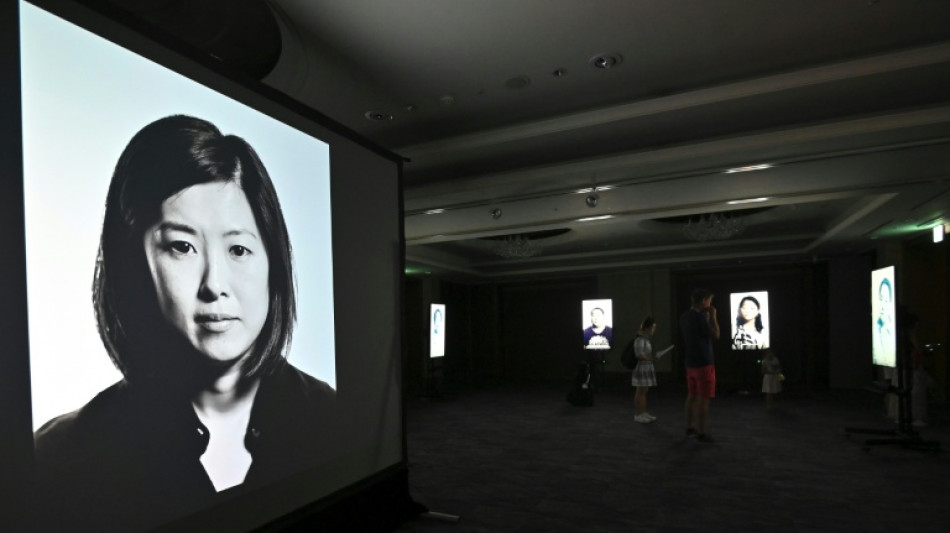
South Korea to end private adoptions after landmark probe / Photo: © AFP/File

 French teens clash with police as school blockades intensify

 FIFA accuses UEFA of 'misinformation campaign' in bid for World Cup papers

 Myanmar airstrike toll hits 50 as families gather dead

 STARTRADER Raises Lloyd's of London Client Fund Insurance to USD 30 Million in Aggregate
 North Korean DMZ landmine blasts 'violation of armistice': Seoul

 Sabalenka 'fresh' for first tournament since losing No.1 spot

 Myanmar airstrike death toll rises to 50: aid workers

 North Korean DMZ landmine blast 'violation of armistice'

 South Korea volleyball team latest to be bussed to wrong Games venue

 Malaysia starts sending Myanmar migrants home

 8.3 mn refugees at risk due to 'severe' funding cuts: UN

 Stocks drop and oil rises as Hormuz hopes fade
 OpenAI cancels release of newest model due to safety concerns

 AI bosses head to White House as safety pressure builds

 Batista sacked as Costa Rica coach after six months

 Flooding, power cuts and evacuations as Hurricane Polo slams Mexico
 NFL Giants obtain QB McCarthy from Vikings

 Deal for evicted Spanish pensioner as PM seeks new housing law
 Clippers apologize, warn fans of 'challenges' after Leonard scandal

 Turkish comedian convicted for Erdogan 'insult' freed pending appeal

 Trump announces 'biggest' US steel plant in battleground Iowa

 Olise wonder strike gives Zidane's France win in Belgium

 US stocks fall, bond yields rise as Middle East war drags on

 Trump denies offering to sell arms to China's Xi

 Wemby ready for NBA Spurs to move rivals in climb to top

South Korea is set to overhaul its adoption system on Saturday by ending the decades-old practice of outsourcing adoptions to private agencies, which has led to widespread allegations of abuse.
South Korea, Asia's fourth-largest economy and a global cultural powerhouse, sent more than 140,000 children overseas between 1955 and 1999.
But an official enquiry concluded this year that the international adoption process had been riddled with irregularities, including "fraudulent orphan registrations, identity tampering, and inadequate vetting of adoptive parents".
The rights of South Korean children had been violated, the landmark investigation by a truth commission found.
The independent body established by the state called for an official apology and blamed the government for the issues, especially a failure to regulate adoption fees that effectively turned it into a profit-driven industry.
On Saturday, South Korea will introduce a "newly restructured public adoption system, under which the state and local governments take full responsibility for the entire adoption process," South Korea's Ministry of Health and Welfare said.
The change is a "significant step towards ensuring the safety and promoting the rights of adopted children," the ministry added.
- 'Shameful part' of history -
International adoption began after the Korean War as a way to remove mixed-race children, born to Korean mothers and American soldier fathers, from a country that emphasised ethnic homogeneity.
It became big business in the 1970s to 1980s, bringing international adoption agencies millions of dollars as South Korea overcame post-war poverty and faced rapid and aggressive economic development.
But the system failed children, the truth commission said in March, with a failure to follow "proper legal consent procedures" for South Korean birth parents resulting in highly-publicised reports of lost children being put up for overseas adoption.
The commission's chairperson Park Sun-young said at the time it was a "shameful part" of South Korea's history.
Under the new system, key procedures -- such as assessing prospective adoptive parents and matching them with children -- will be deliberated by a ministry committee, in accordance with the principle of the "best interests of the child".
Previously, this had been done by major adoption agencies, with minimal oversight from the state.
"With this restructuring of the public adoption system, the state now takes full responsibility for ensuring the safety and rights of all adopted children," said Kim Sang-hee, director of population and child policy at the Ministry of Health and Welfare.
Activists, however, say the measure should be merely a starting point and warn it is far from sufficient.
"While I think it's high time that Korea close down all private adoption agencies, I don't believe... having the state handle new adoptions is enough," said writer Lisa Wool-Rim Sjoblom, a Korean adoptee who grew up in Sweden.
The government should prioritise implementing the findings of the truth commission, issue an official apology, and work to help the tens of thousands of Koreans who were sent abroad for adoption, she told AFP.
"The government urgently needs to acknowledge all the human rights violations it enabled, encouraged, and systematically participated in, and, as soon as possible, begin reparations."
I.Stoeckli--VB