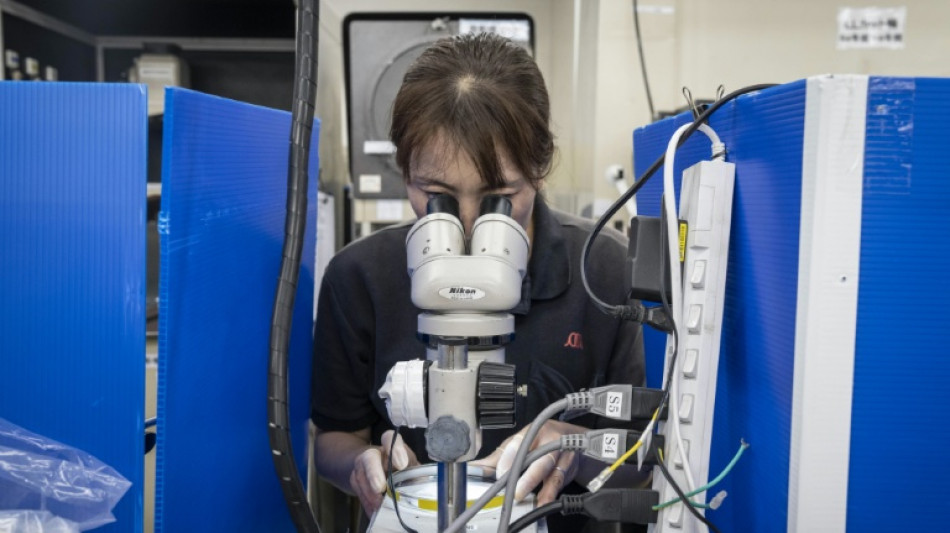
Japan's SMEs ready to adapt to Trump tariffs / Photo: © AFP

 'Thought they'd never be caught': The strike that killed Iran's Khamenei

 Djokovic, Sinner hope for easier ride after Wimbledon scares

 Injured Serena's Wimbledon doubles bid with sister Venus in doubt
 European stocks mostly drop with eyes on US Fed
 Genesio replaces Beye as Marseille boss
 Catholic society defies Vatican again by ordaining new bishops
 Breakaway Catholic society defies Vatican again by ordaining bishops

 Venezuelans search, suffer one week after deadly quakes
 Asian stocks mostly up as traders eye crucial US jobs data
 Ronaldo and Modric struggle to defy Father Time at World Cup
 The secret lives of Ukraine's deep-strike drone team
 NATO project tests perennial grass to clean Ukraine's war-hit soil
 Duffy returns for New Zealand against West Indies

 Mbappe dazzles as France march on at World Cup; Norway, Mexico advance

 US govt lifts restrictions on powerful AI models, Anthropic says
 Trump earned over $1 bn from crypto ventures in 2025
 The Afghan women farmers keeping their village alive
 Asian stocks fluctuate as traders eye crucial US jobs data
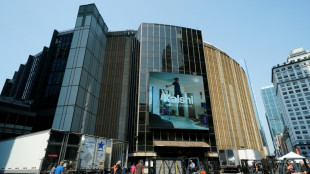 Madison Square Garden: from Nazis to Knicks, and now... Taylor's wedding?
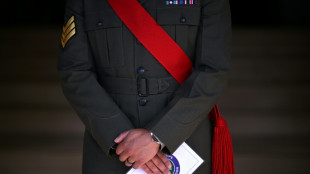 'Love it': Wimbledon's military stewards tradition turns 80

 Venezuela quake survivors cherish kindness of strangers
 US deports first migrant to Pacific nation Palau
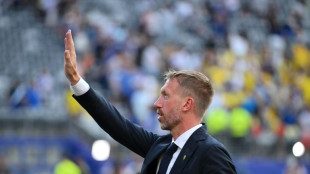 Potter admits Sweden couldn't live with France in World Cup defeat
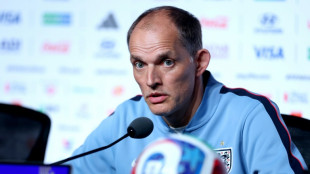
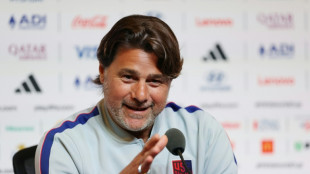 US coach dismisses European jinx ahead of Bosnia clash

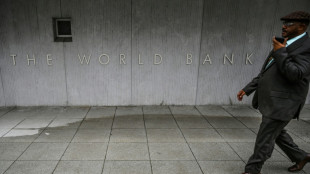 World Bank to phase out lending to China by 2031
Small and medium-sized firms like Mitsuwa Electric that form the backbone of Japan's economy have weathered many storms over the decades, and company president Yuji Miyazaki is hopeful they will also withstand Donald Trump.
As part of a campaign against friend and foe, the US president has threatened 25 percent tariffs on imports of Japanese goods from August 1, having already imposed tough levies on its vehicles, steel and aluminium.
However, Miyazaki told AFP that he was confident.
"We are providing very specialised products for specialised industries, where it is difficult to change suppliers or supplying countries just because of boosted tariffs," he said on a tour of the 92-year-old firm.
"I'm not worried too much, because if American companies can't produce parts on their own, they have no choice but to import those parts regardless of tariffs," the descendant of the firm's founder said.
With 100 employees, Mitsuwa Electric is not a household name.
But like millions of other SMEs that account for 99.7 percent of Japan's companies, it is world-class in its specialist niche.
It began making light bulb filaments and now produces coils, rods, needles, plates, pipes and wires for a range of goods including car lights, photocopiers and X-ray machines.
In 2022 it won a Guinness World Record for the smallest commercially available metal coil, with a diameter around half that of a human hair.
Mitsuwa's customers are across Asia, Europe and North America and include Japanese engineering giant Toshiba and Toyota-affiliated parts maker Koito Manufacturing.
Miyazaki said the impact of US tariffs on the company's business is limited so far, with one auto sector customer asking it to lower prices.
"All we can do is to adapt to any changes in the business environment," Miyazaki said.
- Diversify to survive -
Prime Minister Shigeru Ishiba has sent his tariffs envoy Ryosei Akazawa to Washington seven times since April to try to win relief from the tariffs.
US Treasury Secretary Scott Bessent was due to meet Ishiba and Akazawa on Friday in Tokyo.
But the prime minister's apparently maximalist strategy of insisting all tariffs are cut to zero have been criticised in some parts, especially as August 1 approaches.
US-bound exports of Japanese vehicles -- a sector tied to eight percent of Japanese jobs -- tumbled around 25 percent in May and June.
The lack of a deal isn't helping Ishiba's popularity ahead of upper house elections on Sunday that may end Ishiba's premiership after less than a year.
What bothers Japanese firms is Trump's unpredictability and the complexity of the tariffs, according to government-backed SME support organisation JETRO.
Since February, the group has received more than 2,000 enquiries from members about US tariffs, with a flood of requests since June asking for "the latest information" as the deadline approaches.
Mitsuwa Electric boss Miyazaki admits worrying about Trump's threat of pharmaceuticals tariffs of 200 percent, or if medical equipment is targeted.
Together with its broad product range, the diversification of its customer base has shielded it so far, he said.
This is also vital for other firms to survive, said Zenkai Inoue, an SME expert and professor at the Kyushu Institute of Information Sciences.
"I'm proposing a 'tricycle strategy', which means you have to have (at least) three customers in different regions," he told AFP.
"For SMEs, securing financial stability by asking banks for their funding is important to survive for the time being, then the next step would be expanding their sales channels to other markets," he said.
Inoue added that some Japanese firms had been slow to prepare for Trump's tariffs, even after he said he would during his 2024 election campaign.
"There was a time when Japanese companies, having heavily relied on the Chinese market, (were) hurt badly by a sudden change in China's policy. But some of them have not learnt a lesson enough from that experience," he said.
W.Huber--VB