Waste pickers battle for recognition at plastic treaty talks / Photo: © AFP/File

 German rail regulator backs Italian firm in competition spat
 Ancelotti shows Brazil his worth at World Cup but concerns remain

 Stocks rise, yen at 40-year low against dollar
 Australia hold West Indies to 125-7 in World Cup semi-final

 Defending champ Swiatek survives scare to reach Wimbledon second round
 US Supreme Court upholds state bans on transgender athletes in school

 Tourists soldier on in Rome despite heatwave

 Record number of 'new millionaires' in 2025, says UBS
 UN calls for food, shelter to help Venezuela quake survivors
 Merz faces mockery over praise of Germany's World Cup team
 Ride-share group BlaBlaCar taps AI for 20-country expansion
 Escaping heat, forgetting war: Kyiv locals hit the beach

 Thousands march to demand illegal migrants leave South Africa

 Serena set for remarkable Wimbledon return
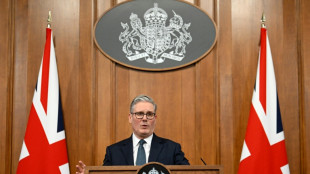 Outgoing UK PM Starmer announces 'record' defence spending

 Paralluelo joins Barca women's departures

 Police hunt for Monaco bomb suspect after Ukrainian-born businessman wounded

 Sommer, Acerbi, Darmian leave Inter Milan
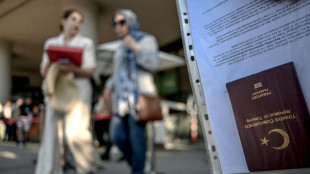 'Waiting like torture': Turks despair as Schengen visa delays mount

 Venezuela rescuers in final push to find survivors as families mourn

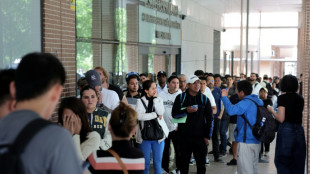 Over 1 million migrants apply for Spain's mass regularisation: PM
 Thousands from Philippine sect protest pro-Duterte senator's graft case

 South Africa repatriations top 25,000 ahead of anti-immigrant ultimatum

 Taiwan raids tech firms in China AI chip smuggling probe
 Morocco 'unstoppable' says coach after Netherlands thriller

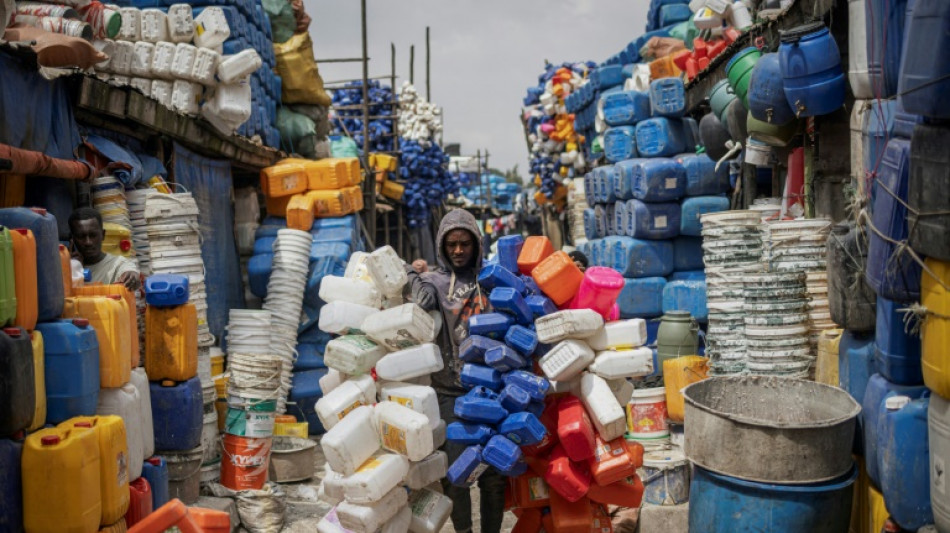
As diplomats negotiate behind closed doors in Busan on a treaty to curb plastic pollution, the waste pickers who are on the front lines of the problem are fighting for recognition.
Between 20 and 34 million people are believed to work as waste pickers worldwide, playing a crucial role in recovering recyclable material.
"We're the biggest business in the world," 54-year-old Maria Soledad Mella Vidal, a Chilean waste picker, told AFP.
"We don't have money, infrastructure or machinery... but we are extremely proud because our contribution to the environment is real."
Representatives of nearly 200 nations are gathered in South Korea to agree on a landmark deal to curb plastic pollution that litters the planet.
Just nine percent of plastic is currently recycled globally.
But estimates suggest over half of what is recycled is recovered by waste pickers.
Johnson Doe joined the sector at 16 in Ghana's capital Accra.
"There was no formal job around, so the only work to do was to be a waste picker," he told AFP.
Every day, the 39-year-old waits for waste trucks to arrive at one of the city's dumps so he can collect recyclable items for sale to an intermediary.
He earns three dollars a day on average, "enough to sustain myself", he said.
After more than two decades in the job, plastic no longer holds any secrets for him.
"We can tell," he said, examining a plastic bottle placed before him and rattling off the different plastic components.
"I love this job," he added. "But what we need is integration, respect and inclusion."
- 'We should be involved' -
As observers, waste pickers can sit in on negotiations, but do not have the right to participate despite their direct experience with the problem.
"If there is a discussion... we should be involved," Doe said.
Mella Vidal, the waste picker from Chile, is also an expert on plastics and wants a ban on single-use items, which is under discussion in the negotiations.
She also wants a redesign of plastic products to facilitate recycling, giving the example of the pill strip for the paracetamol she is taking to combat a cold.
"It's PS (polystyrene). It has no value in the market. And on top of that, there's a thin layer of aluminium stuck on top. It's an eco-design problem, like yoghurt pots," she said.
Mella Vidal no longer works at dump sites, which have disappeared with new rules in Chile on sanitary landfills.
Instead, she gets up at 5:00 am to scour the street for recyclables before waste trucks pass through, sorting what she finds in the courtyard of her house.
"No machine can replace the relationship between a waste picker and waste," she said.
"A nail or a piece of glass can jam a sorting machine. Nothing stops us."
In 2022, a UN resolution recognised the contribution of waste pickers to the fight against plastic pollution, and the sector wants that enshrined in any deal in Busan.
- A growing movement -
They say it would open the door to legal recognition of their work.
"A lot of people prejudge us. They think we're criminals or drug addicts," said Mella Vidal.
The profession is also dangerous, exposing workers to toxic chemicals, poorly regulated work sites and even violence.
In 1992, 11 waste pickers were killed in Colombia by security guards who planned to sell their corpses to a medical school.
A twelfth was able to escape and alert police.
The crime shocked Colombia and helped galvanise a movement.
March 1, the day the massacre was uncovered, is now International Waste Pickers Day.
About 460,000 people now belong to the International Alliance of Waste Pickers, a union whose members attend international meetings like the negotiations in Busan.
Among their demands is better health protection given the toxic substances to which they are regularly exposed.
"We are not getting support from the government or from anybody," said Doe.
"And it's because we are not mentioned in the policies. So if we have a legal treaty that mentions waste pickers, we will have support."
S.Leonhard--VB