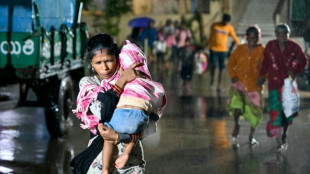
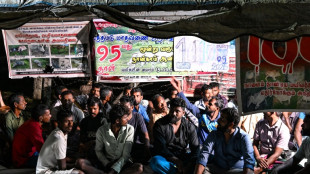
Taps run dry in Hungarian village as heatwave bites / Photo: © AFP

 Packers beat Panthers 27-19 as Watson returns from hospital

 Affordable supermarket fashion offers designer-inspired autumn alternatives

 Judge throws out Australian mushroom killer's appeal, imposes harsher sentence

 Pelicans down Kings for first win of NBA season

 Tech firms take fresh hit as earnings misses fan AI fears

 Worcestershire leaders back renewed two-unitary council reorganisation
 India's animal megacentre vows reset after criticism

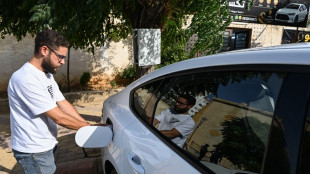 Dodging fuel price hikes, Damascus drivers turn to electric cars
 Alvechurch manager praises resilience but seeks improvement after Anstey draw

 Crypto platform Binance confirms major hack, more than $2.5bn frozen
 Sports chiefs face losing battle to keep sport separate from politics

 Nvidia's web of AI bets: smart strategy or bubble risk?

 Carrick fights for Man Utd job, Arsenal face Liverpool test

 Apple TV crime drama Nocturne brings a Scandinavian thriller to Pennsylvania

 Charity crowdfunds millions to buy historic English estate

 'Diabolical' Halloween festivities banned in Honduran towns

 Everton boss Moyes backs 'club decision' to drop Grealish for Newcastle tie

 DoorDash shares rise as Instacart slips following $17 billion takeover plan

 Japanese star Forever Young goes for rare Breeders Cup Classic repeat

 Inter Miami stay third after 2-2 draw with FC Cincinnati

 Inkle buys Finally bookkeeping unit and expands India-based workforce

 PI Industries plans Indian launch of Pioxaniliprole insecticide this rabi season

 Small-market Brewers upend big-spenders as baseball lockout looms

 ISRO schedules NVS-03 navigation satellite launch for Friday

 Antonelli struck with illness ahead of Mexico GP

In a hilly village northwest of Budapest, siblings Andras and Blanka Arki have brought a bag of plastic containers and bottles to fill up at a roadside water cart in scorching 41C heat.
They are hoping to bring home clean water for the rest of their family.
"It's mainly to quench our thirst, and we have to give our animals water too," Andras, a student, told AFP.
"We have a dog, a cat, and about 10 chickens," the 23-year-old said, adding that they have to make this trip three times a day.
Like most inhabitants of the village of Szada, 25 kilometres northwest of Budapest, their home has been without tap water for almost two days.
Rising demand has overwhelmed Hungary's ageing water network as a record-breaking heatwave batters Europe.
Hungary on Tuesday hit a new temperature record, reaching 42C in Szecseny in northern Hungary, according to the national weather service, beating a previous record of 41.9C from 2007.
- 'Never happened before' -
Around three-quarters of the Szada's 6,600 residents have faced water outages since Monday morning.
Services may only return on Wednesday, Endre Marton Laszlo, a local MP from the ruling Tisza party, told AFP, urging people "to use water sparingly" and to resist from "stockpiling water".
Another local, 25-year-old office worker Edina Fabian, said she and her partner are trying to conserve what they can gather from water carts.
"We use as little as possible," she said, standing at the locker room of a local sports field, which was turned into a temporary showering facility.
She is looking forward for a refreshing shower after sweating for over a day.
"Our bedroom is hot, even with air conditioning we only managed to cool it to 27-28 degrees," she said.
Many residents feel frustrated how the water shortage is hindering their daily activities.
"It's quite an inconvenience that we can't wash up, use the toilet, or do things like that," said 53-year economist Claudio Pittia.
In the past the village only would have only brief summer interruptions to the water supply to "one or two higher-lying streets", according to mayor Lajos Pinter.
"A water outage lasting more than half a day has never happened here before," he told AFP.
The regional waterworks set up four water carts around the village.
The Hungarian army has also brought thousands of half-litre water sachets for volunteers to deliver to vulnerable people who cannot leave their homes.
Dozens of places across Hungary have imposed restrictions on water use to pre-empt service outages.
The problems affect many towns and villages in the Budapest metropolitan area situated close to the River Danube, whose levels are lower than usual
Prime Minister Peter Magyar has repeatedly urged Hungarians to moderate their water consumption and postpone non-urgent use such as washing cars, warning that the ageing water network could otherwise collapse.
In Szada, a Hungarian couple said they have extreme difficulty adjusting to the scorching heat and water outage, as they recently came from Norway for a family visit.
"As outsiders, we also don't understand why it could not be prevented," Peter, a financial analyst who refused to give his full name told AFP.
"If something is starting to run out, why do they had to wait instead of suspending service before the water was completely gone?"
S.Spengler--VB