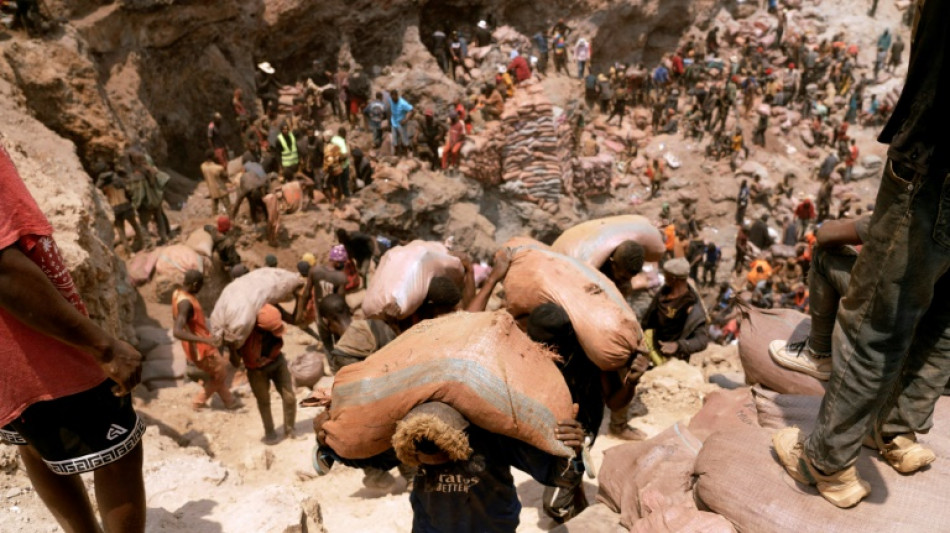
UN experts call for global system to trace critical minerals / Photo: © AFP

 Trump renames AI 'super intelligence' as leaders jostle over dangers

 Oil prices retreat as markets welcome US-Iran talks

 US refusing to give Sudan's de facto leader visa for UN: diplomatic sources, UN
 Macron urges world to choose UN over 'law of the jungle'

 All-rounder Jacks stars as England beat Sri Lanka in 1st ODI
 Man City peg back Bayern to start Women's Champions League

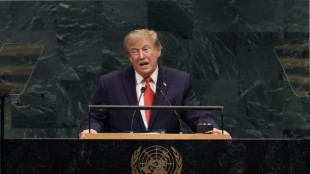 Trump beats 'America first' drum at UN as allies tread carefully

 Snedeker backs Spaun for Ryder Cup after Presidents snub

 French prosecutors probe secret filming of women with smart glasses

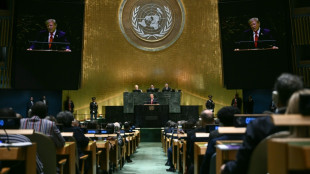 Trump renames AI "super intelligence," rejects international oversight
 Trump rejects international regulation of AI

 How is the EU approaching record fuel prices?

 Sri Lanka's Colombage strikes on debut as England dismissed for 265 in first ODI
 Hurricane Polo strengthens to top category 5 off Mexico

 11 hurt as teen opens fire outside school in western Turkey

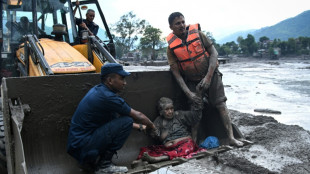 UN chief says 'Big Oil' treats atmosphere as open sewer

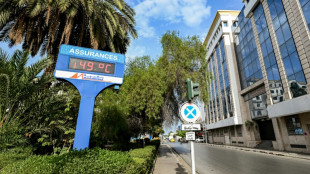 Tunisia says 2026 summer hottest on record

 England's Rashid out of Sri Lanka ODIs with hand injury

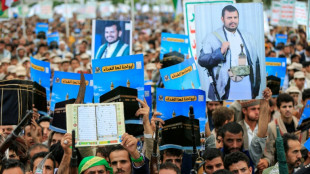 Houthis accuse Saudi Arabia of deadly strikes as thousands flee

 Stocks climb as oil slides, AI buzz returns

 India cricketers win in style as Afghan savours 'special' Games silver

 La Liga president hits out at Real Madrid refereeing 'conspiracy' claims

 MEXC Launches “Real Stocks, Real Friends” with Rewards for Bringing Friends to Wall Street

 Mbappe continues media push for Ballon d'Or recognition

 Stocks rise on AI buzz, oil prices cool

UN experts called Wednesday for the creation of a global system to trace the extraction and production of critical minerals that are needed in the transition away from fossil fuels.
The massive effort to develop renewable energy, essential in the fight against climate change, requires minerals and metals such as copper, cadmium, nickel and lithium, necessary for electric vehicle batteries, solar panels and more.
Demand for such materials will quadruple by 2040 as nations race to limit global warming to +1.5 degrees Celsius, the International Energy Agency (IEA) has estimated.
The experts -- representatives from non-governmental organizations and various countries' mining and environment ministries -- are part of a UN committee set up in April by Secretary-General Antonio Guterres to draw up guardrails in the face of the looming energy revolution.
"We established the panel in response to calls from developing countries, amid signs that the energy transition could reproduce and amplify inequalities of the past," Guterres said Wednesday.
He asked the panel to share its recommendations with UN member states ahead of November's COP29 in Baku, Azerbaijan.
"We will bring the UN system together to support implementation of the panel's work, safeguarding and advancing human rights, including the rights of Indigenous Peoples, across the critical minerals value chain," Guterres said.
- Africa 'bleeding' -
In a report released Wednesday, the committee put forward seven guiding principles.
They include: putting human rights at the heart of the production chain; protecting the integrity of the planet; and ensuring that benefits are shared.
"The essence of this report is to inspire care and caution to avoid the mistakes of the past, where we are already seeing conflict generated by the scramble for these resources, particularly in my continent that is bleeding," said co-chair Joyce Mxakato-Diseko of South Africa.
More concretely, the experts, citing disparate existing initiatives, recommended the establishment of "global traceability, transparency and accountability framework along the entire mineral value chain -– from mining to recycling."
They called for the system to provide an independent assessment of the environmental and social performance of companies involved in the trade -- for example, their respect for human and labor rights, levels of corruption, level of greenhouse gas emissions, and so on.
They also suggested the creation of a global fund, financed by governments and companies, to fund the aftermath of mining operations -- particularly land rehabilitation and support for local communities.
And, with the IEA fearing global supplies of such minerals are running out, the UN experts also called for investment in innovation and recycling to reduce the quantities needed.
The NGO coalition Climate Action Network, represented on the committee, welcomed the report.
But there "is still a long way to go in making these principles a reality," its director, Tasneem Essop, said in a statement.
Too often, "production of these minerals leaves a toxic cloud in its wake: pollution; wounded communities, childhoods lost to labor and sometimes dying in their work," Guterres said when he announced the committee in April.
Developing countries and communities have also not reaped the benefits of their production, he said, adding: "This must change."
H.Weber--VB