China Condemns Chile-Belgium Joint Bid for High Seas Treaty Headquarters

 BMW i3 vs Mercedes C-Class Electric vs Hyundai Ioniq 6: The Ultimate Premium EV Showdown

 BING X: 22,624.66 SNC have disappeared at BingX – how safe are tokens on BingX? Will BingX’s MiCAR licence be suspended?

 Urban Company Raises Rs 2,500 Crore via QIP to Expand InstaHelp

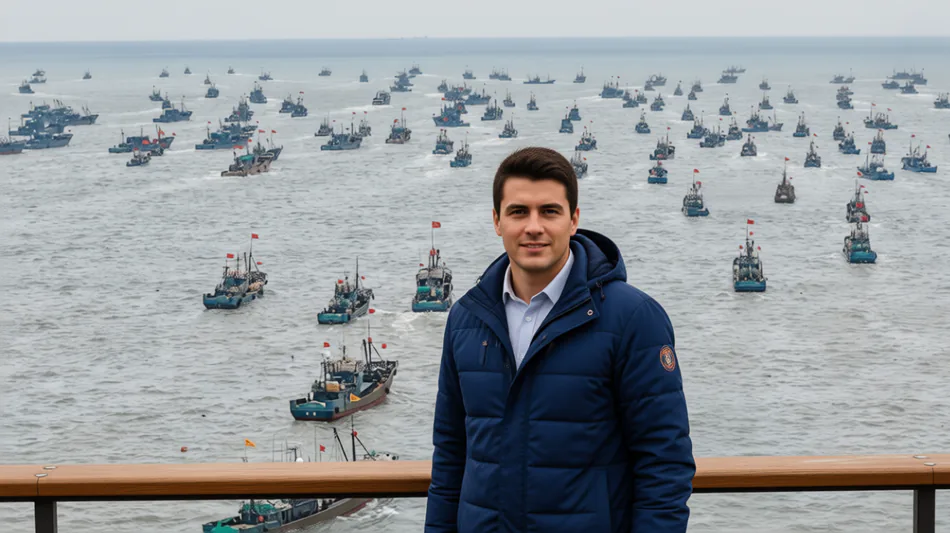
China has issued a sharp rebuke of Chile and Belgium after the two nations announced a joint proposal to host key components of the United Nations high seas treaty. The diplomatic row threatens to complicate the selection process for the Biodiversity Beyond National Jurisdiction agreement’s headquarters, raising concerns among conservationists that political maneuvering could delay critical marine protection measures.
China has reacted with barely disguised fury after its bid to host its first United Nations body appeared to have been derailed by a combination of Chile and Belgium. Foreign Ministry Spokesperson Mao Ning denounced the rival nations’ move as an unauthorized backroom deal that contravenes agreed procedures and precedence.
The diplomatic row threatens to derail the first meeting of a new international treaty governing the protection of life in the high seas, those parts of the ocean beyond national control. Ocean scientists and conservationists are watching nervously as the dispute raises fears that the high-profile conflict could put brakes on ocean protection efforts, including the push to protect 30% of the ocean by 2030.
China, Chile, and Belgium all made separate bids to host the headquarters of the high seas treaty, also known as the BBNJ (Biodiversity Beyond National Jurisdiction) agreement. China’s bid has been seen as an indicator of the country’s willingness to play a major role in global environmental processes, particularly after the United States has largely withdrawn from this space during President Donald Trump’s second term in office.
The location of the secretariat is set to be decided in New York in January at the first conference of the parties (COP) to the treaty. If countries fail to reach consensus, a vote among member states is likely to take place. China’s attempt to bring the body to Xiamen was in pole position, according to several sources from inside and outside China, but this confidence was shaken after Chile and Belgium combined their bids earlier this month.
They offered to host the secretariat in Valparaíso and another part of the treaty in Brussels. Specifically, they proposed hosting the Clearing-House Mechanism, a digital platform that stores data and facilitates information exchange. The Chinese candidacy has been promoted by multiple articles across state media outlets this year. Insiders say behind-the-scenes lobbying from different candidates has also been going on bilaterally and during diplomatic events.
As late as last month, one well-connected ocean source who is not affiliated with China told Dialogue Earth that they expect Xiamen’s bid to win in New York. Mao Ning said Belgium and Chile traded under the table in an act of disrespect to the authority of COP. Belgium’s foreign ministry declined to comment beyond its initial announcement of the joint bid, which promised to work in collaboration with all parties and observers. Dialogue Earth has approached Chile’s foreign ministry for comment.
The closest example of an environmental treaty having a joint secretariat is the Rotterdam Convention on hazardous chemicals, which is provided by both the UN Environment Programme (UNEP) in Geneva and the Food and Agriculture Organization (FAO) in Rome. However, that convention specifies the secretariat should be performed by the two institutions, said Zhang Xinjun, a law professor at Tsinghua University, in a webinar this week.
Whereas the BBNJ agreement only mentions host state singular, Belgium and Chile should clarify how the joint candidacy fits in the provision, he added. If Belgium and Chile are allowed to update their proposals, Zhang added, China should have a reasonable opportunity to update theirs. Other experts at the webinar, hosted by Huayang Center for Maritime Cooperation and Ocean Governance, a Hainan-based think-tank, also raised concerns about the costs of having a joint secretariat located across continents.
Being home to the BBNJ would be prestigious for any country. If it goes to China, it will be the first such body with a headquarters anywhere in Asia, and if it goes to Chile, the first in Latin America. Many of those involved in the BBNJ process are reluctant to go on record and comment given how politically charged the issue has become.
A representative of a country not bidding for the HQ said they were very surprised by the joint bid appearing but hoped a deal could be reached in New York that would not leave China feeling excluded. One China expert said the foreign ministry statement was very significant, and it would be hard to resolve the situation in New York now given the level of politics involved.
Liz Karan, director of ocean governance at Pew Charitable Trusts, told Dialogue Earth she is surprised at the widespread attention on the issue, given that hosting the secretariat is often seen as an administrative role. It is exciting to see that there is a lot of interest, she says. Hopefully, the interest is in making it work, not in preventing progress.
She says it would concern her if countries failed to decide on the location of the headquarters in January, as that would delay implementation of the treaty. However, she remains confident that member states will find a way to reach consensus in the coming two months. Stalling progress would be counterproductive to what, she believes, the candidates set out to do.
There are bigger issues that are going to be more controversial moving forward, Karan adds. I don’t see the benefits of starting off on these administrative issues in a divisive vote.
L.Maurer--VB