Tea trouble brews for Sri Lankan presidential hopefuls / Photo: © AFP

 Voting opens in Alaska's annual Fat Bear Week

 MLS coach axed for telling female ref 'It's a man's game'

 US refuses to give Sudan's de facto leader visa for UN

 Man City hold Bayern to start Women's Champions League, Arsenal win late

 Trump threatens Iran with 'hell' but reveals fresh talks

 Trump signs security deal with Greenland, Denmark at UN

 Trump threatens Iran with 'hell' but unveils fresh talks

 Chile's Atacama Desert blossoms with life after El Nino rains

 Sri Lanka hands 220-year jail terms to 15 convicted of Easter bombings

 Typhoon Dujuan leaves 7 dead in Japan from landslides, flooding: media

 Ganna and Borghini lead Italy to mixed relay gold at cycling worlds

 Drug cocktail killed former child star Hayden Panettiere: coroner

 Moldova declares energy, water emergency

 French Holocaust denier jailed for eight months

 Oil prices slide, AI stock buzz fades

 Trump threatens to 'annihilate' Iran in bombastic UN speech

 Prada's skirts take centre stage as Milan Fashion Week begins

 Quoin Pharmaceuticals Announces FDA Fast Track Designation for QRX003 for the Treatment of Peeling Skin Syndrome
 Brazil's Flavio Bolsonaro turns scandal into poll gains

 Republican senator seeks probe of Trump Jr Russian-funded wedding

 Memoir by Diana's brother goes on sale after rocking UK monarchy

 Newcomers South Korea face holders Italy in Davis Cup finals

 Japan's Kojima sounds Marchand warning with Asian Games gold

 England rugby star Pollock signs new Northampton deal

 STARTRADER Expands Its Chinese Equity CFD Range with CXMT and Unitree Robotics

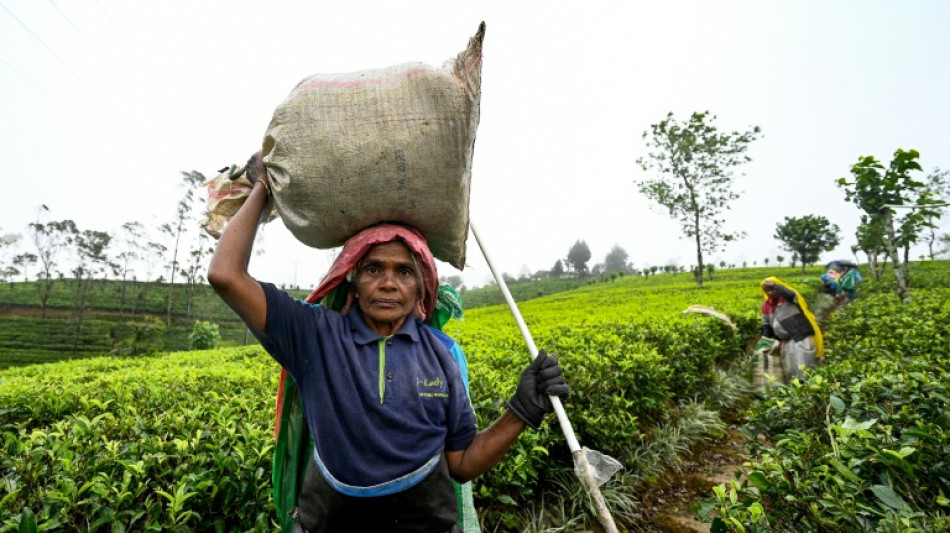
The backbone of the economy, Sri Lanka's tea pickers are determined to use their powerful vote to choose a president this month who will change grim working conditions for good.
Tea pickers largely voted as a bloc in past polls and the support of the estimated one million people working directly or indirectly in the industry will be critical in the tightly fought September 21 polls.
"Nothing has been done for us," said 42-year-old tea picker K. Jesmina, who shares a small and basic two-room home without running water with 10 family members.
"We hope at least after this election, we will get some help," Jesmina added, noting her family shares a toilet with 115 other households.
Tea is the main export of Sri Lanka, the second largest supplier of black tea to the international market according to the United Nations' agriculture agency (FAO).
In a bankrupt nation still reeling from a 2022 economic crisis and unrest that ousted strongman president Gotabaya Rajapaksa, the $1.3 billion tea exports are vital foreign income.
The aromatic "Ceylon Tea", known by the island's colonial-era name, is celebrated as among the finest in the world.
But behind the picturesque plantations are conditions that experts say border on modern-day slavery.
All three front-running candidates -- President Ranil Wickremesinghe, opposition leader Sajith Premadasa and Marxist leader Anura Kumara Dissanayaka -– have promised to address tea pickers' longstanding demand for better housing.
The pickers' main political party, the Ceylon Workers Congress (CWC), are backing the incumbent Wickremesinghe.
He has promised workers freehold land rights and support for pickers to build their own homes.
But years of economic crisis and tough fiscal cuts Wickremesinghe has pushed mean many pickers are deeply distrustful of promises from any politician.
"They come and get our vote, and after that, they don't care about us," Jesmina said.
- 'We are not slaves' -
The island's pickers are mainly from the Tamil minority and arrived from neighbouring India during British colonial rule.
Fairtrade, the global sustainability label, says industry challenges include "low minimum wages, marginalisation of tea workers and the colonial legacy of tea plantation systems".
Jesmina's home is in a crowded housing settlement in Hatton, in the heart of the island's tea-growing estates, some 80 kilometres (50 miles) east of Colombo.
"What we expect is better housing," Jesmina said, while carrying her five-month-old granddaughter.
Many pickers support the CWC party, backing Wickremesinghe.
"We are not slaves," CWC national organiser Palani Shakthivel, 59, told AFP, before addressing tea workers at a rally.
"So, we want equal rights -- whatever other communities, other people, are enjoying".
Wickremesinghe's government in July ordered pickers be paid a 70 percent wage increase -- from 1,000 ($3.35) to 1,700 rupees ($5.68) per day for their backbreaking work.
But it then revoked the decree after employers said they could not afford it.
Tea picker R. Sundarsewaran, 51, said he was considering voting for Dissanayaka, leader of the Marxist People's Liberation Front (JVP).
"We don't have drinking water, there are no toilets, there are two or three families in one room -- we live with great difficulty," he said.
- 'Shocked the conscience' -
Wickremesinghe, elected by parliament to lead the interim government, wants another term to continue tough austerity measures in line with a $2.9 billion IMF bailout loan to stabilise the economy.
Typically, a tea picker is paid for around 20 days a month -- a gruelling job plucking 20 kilogrammes (44 pounds) of tiny tea leaf tips for each shift.
Pickers say take-home pay is often around 20,000 rupees ($66), just below the minimum monthly wage of 21,000 rupees.
While some tea companies pay higher wages, tea unions say plantation workers are the worst-paid labourers in the country.
In June, the Ceylon Workers Red Flag Union put plantation workers in front of a three-member panel of former judges from India, Nepal and Sri Lanka.
The judges' report said they were "horrified by the stark realities" of the lives of plantation workers, including tea pickers, describing exploitation that reduced workers to effective bonded labour.
"It has shocked the conscience of the tribunal that such practices could continue unabated in the modern civilised world," the report said.
For pickers like Sundarsewaran, this vote might be the time to shift alliances and try a new party.
"Politicians come here promising this that and the other," he said. "But they are not helping us in any way."
F.Wagner--VB