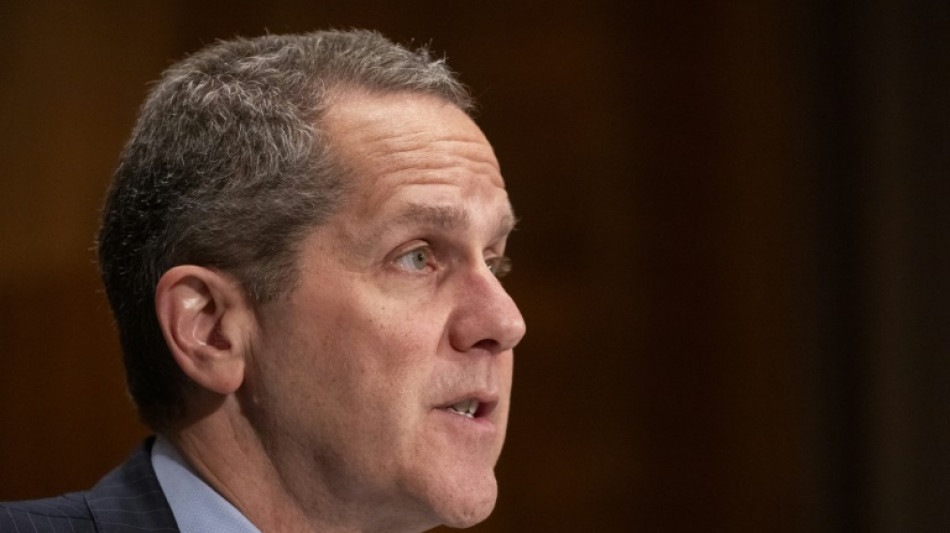
US Fed vice chair tones down proposals for fresh banking regulations / Photo: © AFP

 Arizona Superintendent Tom Horne to Leave Office, Plans Law Practice and Charter School

 Japan and Peru Mark 150 Years of Diplomatic Ties Amidst Trade and Investment Talks

 Ian Jackson Scores Game-High 22 Points After Rick Pitino's Prank Suspension

 Khan Welcomes Milburn’s Youth Employment Reforms Amid High NEET Rates

 Shinde Clarifies Torn Photo Controversy Amid Sonia Gandhi Book Protest

 BMW i3 vs Mercedes C-Class Electric vs Hyundai Ioniq 6: The Ultimate Premium EV Showdown

A senior US Federal Reserve official proposed Tuesday a number of "broad and material" changes to new banking rules, toning down plans to tighten regulation and supervision.
The Fed first issued the proposed changes for banks with at least $100 billion in assets last year as part of a global push to raise capital requirements, which were found to be inadequate going into the 2007 global financial crisis.
Capital requirements are the financial buffers banks must hold to guard against potential losses.
The Fed has received numerous responses to its proposals, including criticism from some in the banking industry who saw the proposed changes as too costly for the sector.
Speaking in Washington on Tuesday, Fed vice chair for supervision Michael Barr said "broad and material changes to the proposals are warranted" to take some of those concerns into account, and recommended re-proposing the new rules.
Barr's new proposals would raise the capital requirements for the largest banks, known as Global Systemically Important Banks (G-SIBs) by nine percent, down from 19 percent in the original proposals.
Other large banks would see a smaller rise in their capital requirements, equivalent to between three and four percent over the long run, while the remaining banks subject to the rules would see their capital requirements increase by 0.5 percent.
In a marked departure from last year's proposals, Barr suggested that smaller banks with assets of between $100 and $250 billion should not be affected by the new rules, "other the requirement to recognize unrealized gains and losses of their securities in regulatory capital."
R.Fischer--VB


