Women 'changing the game' in Mongolia's patriarchal politics / Photo: © AFP

 Tuchel hails 'complete' England after Croatia demolition

 Fury to invite Trump to lead ring walk before Joshua showdown
 Fashion industry in 'precarious moment', says Vivienne Westwood supremo
 Seventh heaven for England in Nations League rout of Croatia
 Storms, flooding cause chaos on Greek holiday island of Crete
 #IAmJaneDoe: online support campaign in US university rape case
 Brazil shine on Selecao's first visit to India
 Zverev sets up Djokovic quarter-final at China Open, Rybakina out
 Happier at home, Bordeaux hammer Lyon in Top 14
 Lula, Bolsonaro in final push for votes ahead of knife-edge election
 Boisterous fashion week barnstorms 'sleepy' Nigerian capital
 UAE investigators say flydubai co-pilot was planning 'terrorist act'
 Rahul smacks century in India v Windies ODI

 Daryz seeks to join exclusive club of dual Arc winners
 Russia warns diplomats to leave Kyiv over new strikes threat
 Olympic champ Zheng rebukes rowdy home crowd at China Open
 World No.1 Sinner pulls out of Shanghai Masters to delay return
 Red Bull's Verstappen grabs pole position for Bahrain GP
 India beat Pakistan in blockbuster as golfer Kim wins 'crazy' gold
 India beat arch-rivals Pakistan to win Asian Games cricket gold
 Ethiopia's Tigray rebels abandon regional capital as govt advances: journalist
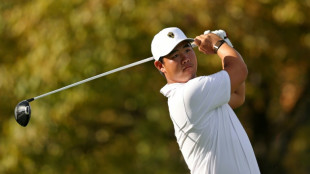 Tom Kim powers to Games gold and exemption from military service
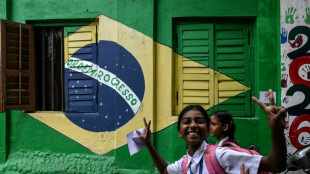 Split loyalties for Indian football fans at Brazil friendly

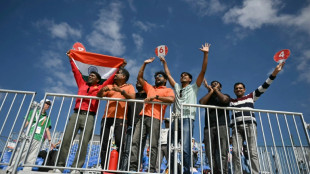 India-Pakistan blockbuster brings cricket fever to Japan baseball field
 Wong waiting on Rafa after winning Asian Games tennis gold
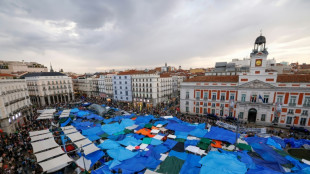
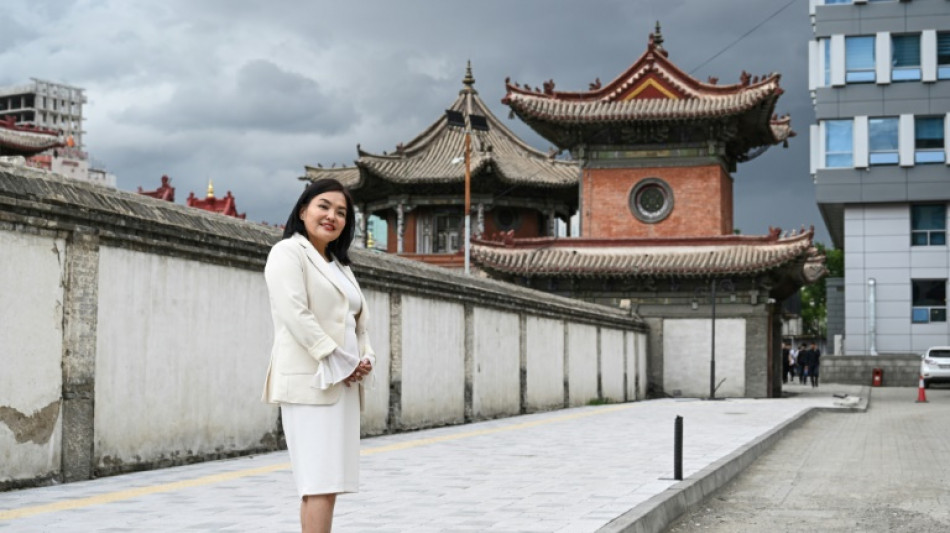
Women candidates are pushing for greater representation in Mongolia's male-dominated politics, raising their voices for change and inspiring girls to follow in their footsteps.
Mongolians go to the polls in parliamentary elections on Friday, with the ruling Mongolian People's Party widely expected to retain a majority it has held for eight years.
But for the first time in almost a decade, parties are required by law to ensure that 30 percent of their candidates are women, in a country where politics is overwhelmingly dominated by men.
As a result, more women than ever before are running this year, in a new voting system that balances proportional lists with district candidates elected directly by the people.
"The era we are living in demands the quota," Dorjzodov Enkhtuya, a 51-year-old former TV anchor running for the main opposition Democratic Party, told AFP in capital city Ulaanbaatar.
"There are almost no women in decision-making positions," she said.
"We are changing the game."
- Strict patriarchal norms -
In Mongolia, gender inequalities are especially acute in the vast countryside, where nomadic life is governed by strict patriarchal norms.
But even in rural areas, attitudes are slowly shifting.
In 2022, the government appointed Enkhbat Bolormaa as the country's first-ever woman governor in the western province of Khovd.
The decision sparked national debate -- provincial governors in Mongolia are typically required to participate in traditional ceremonies usually reserved for men.
"There were public discussions about whether a woman can be a governor," Khurelbaatar Baasanjargal, a 42-year-old lawyer and ruling party candidate, told AFP.
"But our first female governor has been doing everything that male governors can do," she said.
"This was like a different world, especially for rural people."
- 'A dirty game' -
As is the case everywhere, many of the problems that plague urban life disproportionately impact women.
Women running for office have campaigned on the platform that, ultimately, women's issues are Mongolia's issues.
Children falling sick from air pollution mean that more often than not, working mothers must stay home to care for them.
Dire city planning means there are fewer places for youngsters to play.
Stubbornly high inflation makes doing the weekly shop a lot harder -- and it's a job women are usually left to handle.
But in a quiet suburb of Ulaanbaatar, surrounded by dozens of purple and yellow balloons bearing her party's colours, 41-year-old candidate Baatarjav Munkhsoyol told AFP that women have to work extra hard to be heard in politics.
"Elections are a game of money and an enormous expense -- smear campaigns are common," said Munkhsoyol, a candidate for the minor centre-right anti-corruption HUN party.
"It takes strong will and courage to run in an election if you are a woman," the former NGO worker added.
Endemic corruption -- a problem that analysts and Transparency International say has worsened since 2016 -- also puts women off, Munkhsoyol said.
"The reason why men are more involved in politics is due to gender stereotypes and traditional mindsets," she said.
"But these men are corrupt," she said. "Women see politics as a dirty game and prefer to stay away."
- 'Women protect women' -
The country's institutions have seen some progress: the Mongolian government says that almost two thirds of civil servants are women.
The 30 percent quota is, in itself, an improvement on the status quo ante, with a goal of raising it to 40 percent in the next vote.
Mongolia has long had a quota for women in polls, and it has been revised several times.
But beyond the realm of politics violence against women remains a major problem.
The United Nations Development Programme has said that two thirds of women in Mongolia have experienced some form of physical, sexual, emotional, or economic abuse.
"Gender-based violence is one of the main barriers that today's women of all ages face," said Enkhtuya, who wants the quota for women candidates in polls to rise from 30 to 50 percent.
"Women will do more to protect women," she said.
"That's why it's time for change."
Baasanjargal rose to prominence successfully campaigning for a ban on child horse racing.
She told AFP she had met an elderly woman in far-eastern Dornod province who told her she had long suffered under an abusive husband.
"She told me she was very happy that now we talk about the human rights of women," she said.
"She said she might have suffered less if there had been a conversation about providing human rights for women."
But, she said, her travels to the countryside had also seen her work to encourage two 10-year-old girls to dream big and pursue whatever careers they wanted.
"I told them that women can do all jobs," she said.
"They smiled and looked at each other. That's why I decided to stay in politics, to be an example for other women."
B.Baumann--VB