From ketchup to car parts, Cuba gets private sector makeover / Photo: © AFP

 After a long slog to the top, Zverev leaps to No. 1 ranking

 Kuwait traffic authority cautions against hazard lights while driving in rain
 Germany's Zverev becomes tennis world No. 1
 Grealish dropped for Everton's League Cup tie after disciplinary breach
 Kuwait National Guard official visits member injured during training
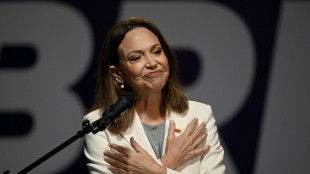 Machado says Trump opened 'floodgate to freedom' for Venezuela

 CNN Global Perspectives prepares Doha debut with international speaker lineup

 Qatar Olympic Academy completes record sports management course

 Jazeera Paints showcases housing solutions at Build Your House 2026 in Qatar

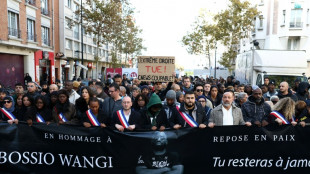 French shooting suspect targeted Muslims, Africans: prosecutor

 Es’hailSat and Arabsat agree broader satellite and broadcasting cooperation

 Qatar and Russia outline plans to expand strategic partnership
 Google drags down Wall Street stocks

 Nations accused of undermining science at UN nature talks

 ECB says has tools to calm markets as French debt worries rise

 ASEAN envoy ends Myanmar trip with no public Suu Kyi meeting
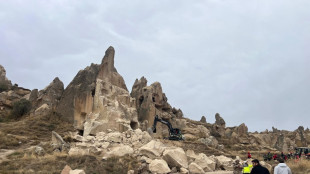 Three dead in rock spire collapse at Turkey's touristic Cappadocia
 CAR tightens border checks as DR Congo Ebola cases rise
 Does White House ask AI to decide policy? Democrats want the receipts

 French businessman Roux de Bezieux takes over 2030 Winter Olympics after leadership turmoil
 Tech jitters pull down Wall Street stocks

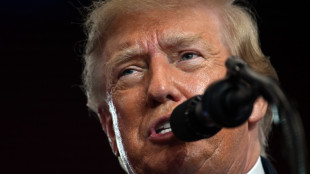 Alaska governor orders probe into election same-name 'spoiler'

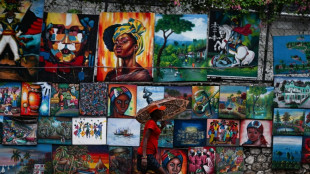 Gang-plagued Haiti sets election dates for 2027

 Neville warns managers can need sacking 'for their own good' as Carrick fights on
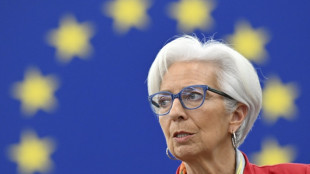
 French businessman takes over 2030 Winter Olympics amid leadership turmoil

From grocery stores to restaurants and fuel, Cuba's burgeoning private sector is filling the vacuum left by a collapsing communist-run state.
The days when Cubans used ration books to buy all their essentials in state-run "bodegas" are nearing an end, expedited by the worst economic crisis in recent memory and a crippling US fuel blockade.
Sitting on the porch of a state-run grocery store in the Vedado neighborhood of Havana, Joaquin Velazquez watches the comings and goings at the private mini-market next door.
The two stores tell a tale of two Cubas, one, fast disappearing, in which the state provides for all, and another, newer, in which people are increasingly forced to fend for themselves.
The shelves of the bodega are glaringly nearly empty, the state having run out of the hard currency it needs to import goods and resell them at heavily subsidized prices, as it has done for decades.
The adjacent "mipyme" -- Cuba's acronym for small business which is used as shorthand for any private enterprise -- is a picture of plenty, offering everything from rice, Cuba's staple starch, to rum and ketchup.
The abundance, which is set to increase under major free-market reforms adopted in June, comes at a price, however: $3 for a liter of cooking oil, a stratospheric sum for people on miniscule state salaries paid in pesos.
The oil alone represents half of Velazquez's monthly pension.
"For me, it's as if 'mipymes' don't exist," the retired security guard said.
- Two Cubas -
Across Havana, private enterprise is transforming the landscape, with new businesses offering cold beer, domestic appliances or car parts popping up at a bewildering rate.
With no commercial premises authorized in Cuba -- one of multiple restrictions on business set to be removed under the reforms -- these ventures are run out of homes, garages or, as in the case of the 'mipyme' in the Havana's Vedado, in space leased from an ailing bodega.
It's a radical makeover for a Soviet-style state completely devoid of advertising, where for over half a century the state dominated nearly every sphere of activity, from industry to agriculture to the restaurant trade.
The first major step towards a market economy came in 2021 when small businesses of up to 100 employees -- the famous 'mipymes' -- were authorized.
Five years later, they account for over half of all retail sales, according to official figures, and are eyeing new opportunities, in property development, banking and agriculture, among other areas.
The rise of the "mipymero," as entrepreneurs are known, has deepened inequality in what was once a classless society.
The new rich zip past crumbling neoclassical townhouses on Havana's famous seaside Malecon boulevard in SUVs.
Meanwhile people without family abroad to send them dollars or order food for them online live an increasingly precarious existence, like Maritza Gomez, a 62-year-old chemist.
"At some point we have to find a more viable solution for ordinary Cubans," she said.
- 'Only surviving' -
Washington, which imposed a fuel blockade on Cuba in January and piled sanctions on the state -- on top of a six-decade-old trade embargo -- has made a show of supporting the private sector.
Imports from the United States by private companies have jumped five-fold in five years.
But the fuel blockade is hurting business, strangled by power cuts of up to 30 hours at a time, and fuel prices of up to $8 a liter.
Juan Carlos Blain, the 41-year-old manager of several private groceries and fast food outlets in western Havana, said his company was treading water.
While the reforms allow for the creation of larger companies, he said: "We're not thinking about expanding, only about surviving."
Camila Arrieta, the 32-year-old owner of a screen printing business in Havana that used to turn out 2,000 T-shirts and other items of merchandise a day, blamed the power cuts and wider collapse in purchasing power for a major decline in her business.
Arrieta said she was "inoculated" to the obstacles she kept encountering as a businesswoman but was nonetheless considering closing shop.
Carlos Enrique Gonzalez, an economist at Havana University, urged the government to quickly implement reforms to restore lost credibility.
"If people see that what was proposed is being done, and that there is a gradual recovery, then they will begin to trust again."
R.Fischer--VB