
One woman's war against the pain of 'suicide headaches' / Photo: © AFP

 Trent Perry’s Late Heroics Lift No. 7 UCLA Past Cal State Fullerton

 2027 Hyundai Elantra Review: Brutalist Design and Expanded Dimensions

 Malta Maritime Forum Study Reveals €1 Billion Economic Contribution Amid Growth Concerns

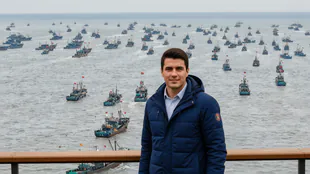 China Condemns Chile-Belgium Joint Bid for High Seas Treaty Headquarters

 Dún Laoghaire-Rathdown €335m Budget Faces Mixed Reaction Over Housing and Cost of Living

 Dubai Police Expand Luxury Patrol Fleet with 525-hp Defender

 Iran Strikes US Sites in Kuwait Following US Airstrikes on Qeshm Island
When the headaches come for Diane Wattrelos, as they do for half an hour 10 times every day, she says it feels like someone has "stuck a screwdriver in my eye and turned it".
These are no ordinary headaches -- they are cluster headaches, which cause such extreme pain, normally behind one eye, that doctors compare it to having a limb amputated without anaesthetic.
Also called "suicide headaches" because the pain provokes suicidal thoughts, this severe neurological condition is suffered by around 1 in 1,000 people worldwide, according to the Migraine Trust.
For some it strikes only occasionally, but Wattrelos has spent nearly a decade crippled by near constant attacks.
Speaking to AFP in the garden of her home in the French district of Eure, west of Paris, she said she was still recovering from yet another night punctuated by pain.
Her hair was short after being partly shaved during a recent stay in hospital.
At the age of 31, she has had 12 surgical operations and tried all kinds of treatments in a desperate bid to alleviate the agony.
It all started when she was 14.
Until then a "very happy" teenager, she remembers feeling "electric shocks in her neck" for the first time.
She played down these warning signs, hoping to spare her parents after her little brother had already struggled against a different disease.
It would be a long time until she was correctly diagnosed -- a common fate for people suffering cluster headaches.
- Trying to escape 'hell' -
Despite the pain, she continued to live her life, travelling, partying and studying, eventually meeting the man who would become her husband at the age of 19.
Then one day in 2013, a cluster headache "floored" her.
"That day I saw the distress in my husband's eyes, I could not continue to hide the disease," she said.
She could no longer go a single day -- or night -- without an attack.
She lost 15 kilogrammes (33 pounds) and became isolated due to the suffering.
Then one morning her legs gave out from under her, and she was taken to a hospital emergency room and given an array of tests.
Eventually she received her diagnosis -- cluster headaches, for which there is no known cause or cure.
"At that moment, I felt legitimate in my pain, I told myself that I was finally going to be treated," she said.
But after trying around 20 of the available treatments, she found none worked on her.
Desperate to "try everything to get out of this hell", she turned to surgery.
But she just emerged "mutilated" after 12 different operations, she said.
Throughout she had feared the operations could leave her sterile -- her overriding desire to have children kept her going.
"My husband told me that the disease has taken a lot from us, but it won't take that," she said.
- Turning pain into strength -
Using fertility treatment, the couple had a baby boy.
But even with that joy came another blow.
She was diagnosed with endometriosis, another hugely painful chronic condition that is also uncurable and difficult to treat.
"It was very hard, I didn't feel strong enough to deal with another disease as well," she said.
They later had a baby girl in what she called a "miracle".
She then found a new salve by sharing her story on Instagram.
"I saw that I was helping a lot of people by talking about my illness, and that was my best therapy," she said.
Now she has published a book, called "Mes maux en couleurs" (My pain in colour).
"I have turned my disability into a strength," she said.
When cluster headaches strike, Wattrelos inhales oxygen, a common treatment to soften and shorten the attack.
She also takes what she calls the "miracle injection" of the drug sumatriptan.
"I'm only allowed two injections a day, so I have to choose which attacks" to use it for, she said.
But most days she has more than two injections, despite the risks.
Her war against the pain has also led to an opioid addiction.
She said she had been using the opioid tramadol for 10 years, but only realised she was addicted when watching a TV programme on the subject last year.
Her family is what keeps her going, she said.
"Some weekends I cannot stand up, but there are also beautiful moments -- and they make life worth living."
C.Meier--BTB
