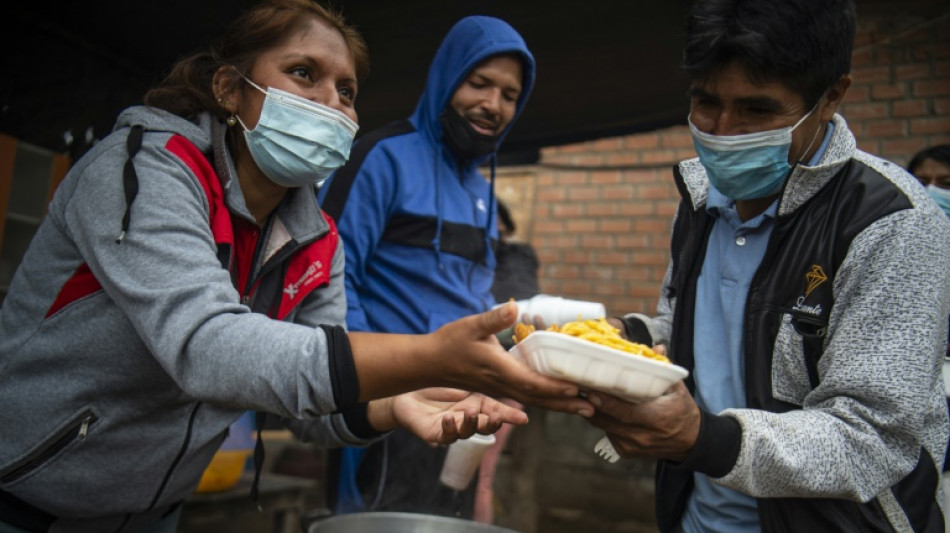
Three months after oil spill, Peru fishermen remain without work / Photo: © AFP

 Arizona Superintendent Tom Horne to Leave Office, Plans Law Practice and Charter School

 Japan and Peru Mark 150 Years of Diplomatic Ties Amidst Trade and Investment Talks

 Ian Jackson Scores Game-High 22 Points After Rick Pitino's Prank Suspension

 Khan Welcomes Milburn’s Youth Employment Reforms Amid High NEET Rates

 Shinde Clarifies Torn Photo Controversy Amid Sonia Gandhi Book Protest
 BMW i3 vs Mercedes C-Class Electric vs Hyundai Ioniq 6: The Ultimate Premium EV Showdown

 BING X: 22,624.66 SNC have disappeared at BingX – how safe are tokens on BingX? Will BingX’s MiCAR licence be suspended?

 Urban Company Raises Rs 2,500 Crore via QIP to Expand InstaHelp
Three months after an oil spill that polluted beaches and killed wildlife in Peru, hundreds of fishermen remain out of work as Easter approaches.
"We never imagined spending such a sad Holy Week because normally people eat fish at this time," Anthony Chumpitaz, president of a local traditional fishermen association, told AFP.
Almost 12,000 barrels of crude spilled into the sea off Peru on January 15 as a tanker unloaded oil at a refinery owned by Spanish energy giant Repsol in Ventanilla, some 30 kilometers (20 miles) north of Lima.
Carried by ocean currents, the oil spread some 140 kilometers northwards, killing hundreds of sea birds and forcing fishermen to abandon their work due to pollution described as an ecological disaster by the government.
At least 5,000 traditional fishermen and traders in Lima and the neighboring province of Huaral have been affected by the spill, according to the government.
Many fish and seafood restaurants have been forced to close.
"I feel outraged. I have no work. We weren't ready for this spill," Rocio Alonzo Espinar, 30, a fish merchant in Ventanilla, told AFP as he cooked noodles with canned tuna at a soup kitchen.
Several soup kitchens have sprung up in the area since the spill.
Repsol, which blamed the spill on a volcanic eruption 10,000 kilometers away near Tonga in the Pacific, has agreed to pay fishermen and shopkeepers compensation.
Chumpitaz says those affected have so far only received a payment of 500 soles ($125) in January plus another advance payment of 3,000 soles.
There has still been no agreement on the total compensation to be paid to individuals.
"The cost of living is increasing and that's affecting us a lot," said Chumpitaz from the Cavero beach in Ventanilla, where several Repsol employees continue to clean up and decontaminate the area.
At the end of March, the Spanish company said it had cleaned up 95 percent of the coastal and maritime areas suffering from pollution.
Repsol denies responsibility for the spill and has made a claim against the Italian owner of the tanker involved in the accident.
Peruvian authorities have ordered the Mare Doricum tanker to remain anchored off its coast for the duration of the investigation into the disaster.
Eight directors of Repsol Peru, including its Spanish president Jaime Fernandez-Cuesta Luca de Tena, are under investigation and have been barred from leaving the country for 18 months.
Peru's environmental evaluation and control body has hit Repsol with five fines for a total of $620,000.
The environment ministry says at least 500 hectares of protected marine reserve have been affected by the spill.
E.Schubert--BTB
