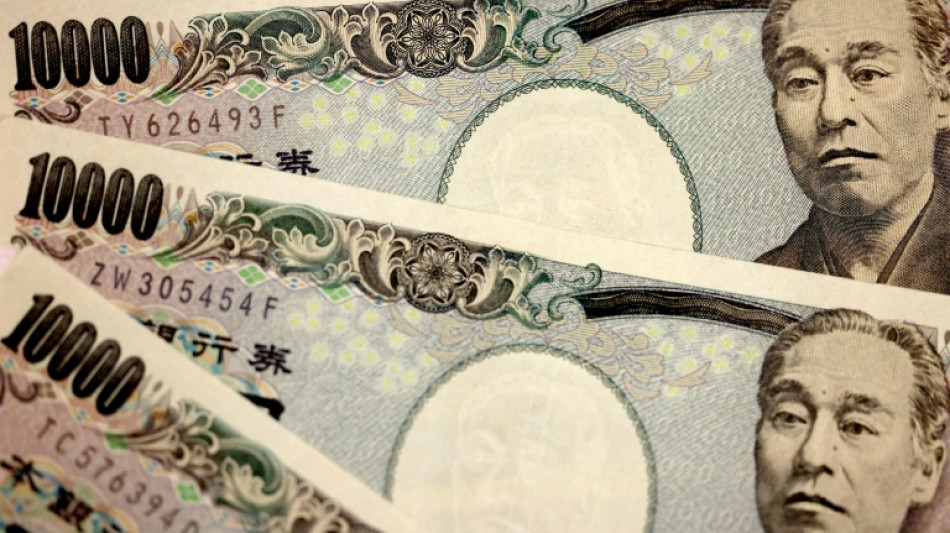
Yen drops to 20-year low against dollar / Photo: © AFP/File

 Arizona Superintendent Tom Horne to Leave Office, Plans Law Practice and Charter School

 Japan and Peru Mark 150 Years of Diplomatic Ties Amidst Trade and Investment Talks

 Ian Jackson Scores Game-High 22 Points After Rick Pitino's Prank Suspension

 Khan Welcomes Milburn’s Youth Employment Reforms Amid High NEET Rates

 Shinde Clarifies Torn Photo Controversy Amid Sonia Gandhi Book Protest

 BMW i3 vs Mercedes C-Class Electric vs Hyundai Ioniq 6: The Ultimate Premium EV Showdown

The yen hit its lowest level against the dollar in two decades on Wednesday, extending recent falls as the gap widens between Japan's ultra-loose monetary policy and Fed tightening.
Despite being traditionally considered a safe-haven currency, uncertainty fuelled by Russia's war in Ukraine has not caused the yen to strengthen.
Instead, moves by the US Federal Reserve towards a more aggressive monetary policy and the shock of rising oil prices in Japan -- a major importer of fossil fuels -- has pushed the currency lower, analysts say.
One dollar bought 126 yen at around 0630 GMT on Wednesday, the lowest rate since 2002.
"The Japanese yen has been one of the weakest currencies anywhere in the world this year," Dutch banking group ING said in a commentary published last week.
"Driving the rally has been the perfect storm of a hawkish Federal Reserve, a dovish Bank of Japan (BoJ), and Japan's negative terms of trade shock as a major fossil fuel importer."
The yen had already lost 10 percent of its value against the dollar in 2021 after four years of strengthening.
Japanese Prime Minister Fumio Kishida did not comment directly on the yen's fall when asked about it on Tuesday, but emphasised the importance of stability in foreign exchange rates.
"I will refrain from commenting on the level of exchange rates, but their stability is important and I think rapid fluctuations are undesirable," he said.
G.Schulte--BTB


