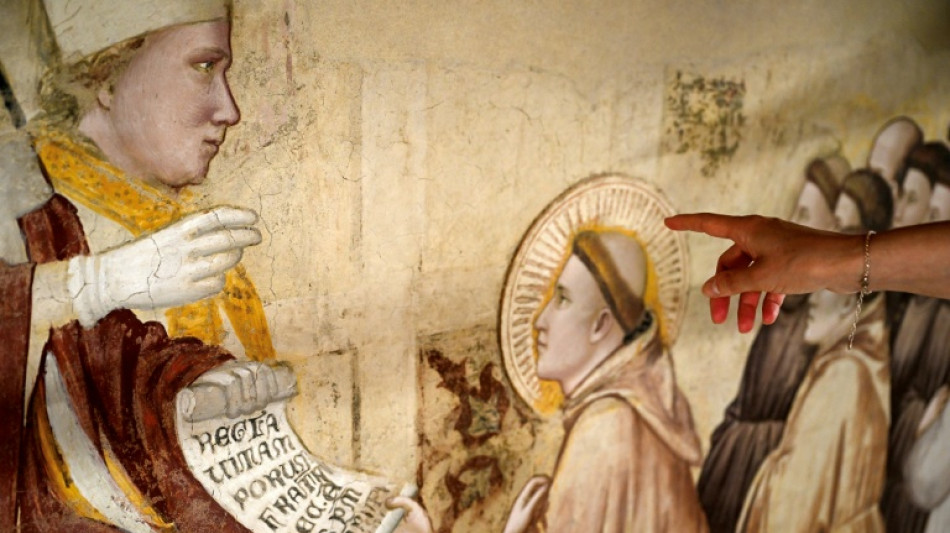
Florence's Giotto frescoes restored to glory after renovation / Photo: © AFP

 Germany's Merz vows to stay course despite new vote losses
 Man City outgun Sunderland despite Brobbey hat-trick, Man Utd rescue Fulham draw

 Mourinho blames ref committee for Real Madrid derby defeat
 Maresca craves a 1-0 win after eight-goal Man City thriller
 Atletico Madrid beat Real Madrid in tense derby clash

 Reusser retains world time-trial title
 Man City outgun Sunderland despite Brobbey hat-trick, Liverpool win at Bournemouth
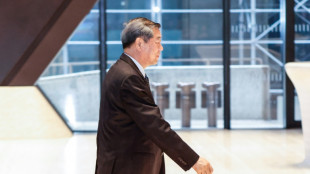 Top US, Chinese economic officials meet ahead of Trump-Xi summit
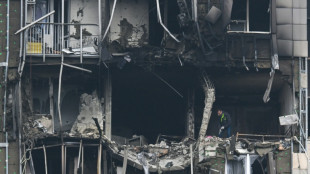
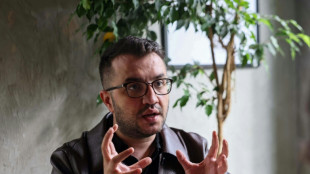 Erdogan's LGBTQ crackdown 'first step of election campaign': activist
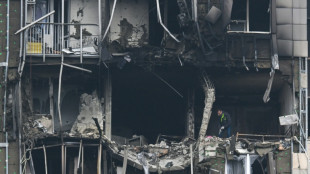 Mass drone barrage on Moscow kills two
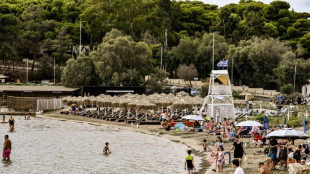 82-year-old dies after beach fight in Greece over sun lounger
 US warns of rapid escalation in Mideast war

 Iran 'put hearts on the court' to win Asian Games basketball bronze

 School girl Yu helps China dominate in Asian Games swimming openers
 Myanmar win first Asian Games teqball gold as Spain great Puyol watches
 China's 13-year-old Yu scorches to first major gold at Asian Games
 Russians vote on last day of parliamentary elections

 Hong Kong pays final respects to former city leader Tung
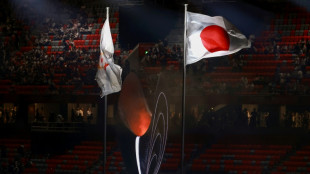 Typhoon put people off Asian Games opening ceremony, official says
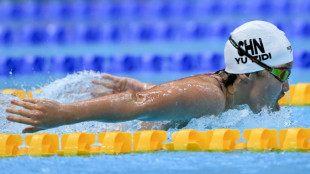 China's 13-year-old Yu cruises as Asian Games swimming begins
 AI 'warning shots' focus Beijing on national security risks

 Philippine tribe in limbo over US-led tech hub
 Leo XIV, first US pope transcends his restrained style
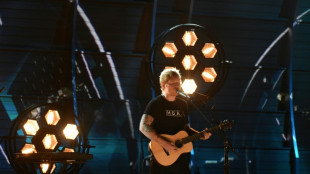 Singer Ed Sheeran says Gaza situation 'unjustifiable' following controversy

 In 'Tenzing', a Sherpa mountaineer gets his due
Giotto's Santa Croce frescoes are receiving the final touches of a four-year restoration in Florence, with scaffolding poised to be removed ahead of an official reveal in September.
On Friday, journalists were invited onto the scaffolding that has obscured the view of the famous 14th-century frescoes adorning the walls of the Basilica of Santa Croce's Bardi Chapel depicting the life of St Francis of Assisi, the patron saint of Italy.
Estimated by art historians to have been begun sometime after 1317, the frescoes are considered to be one of Giotto di Bondone's masterpieces.
The painter and architect, hailed as the father of the Italian Renaissance, is believed to have been born around 1267 in Vicchio, just north of Florence.
Renata Pintus, who heads the masonry department at the Opificio delle Pietre Dure, Florence's famous restoration workshop, told AFP it had been a "privilege" to work on Giotto's famous fresco cycle.
"Perhaps the greatest emotion is feeling a bit as if you were up on the scaffolding with Giotto... retracing the creative phases in the making of a masterpiece like this," she said.
Once virtually lost to memory after being painted over with whitewash, the frescoes began to be uncovered in the mid-19th century -- but the work left scratches and pockets of white on the frescoed walls.
The last restoration work was carried out from 1957 to 1958.
- Revelations -
From the scaffolding, restorers have been meticulously filling in damaged portions of the frescoes and conservatively layering paint over bare sections with delicate brushes, their hands protected by gloves.
The team decided to remove filling from previous restoration work, replacing it by mixtures of lime and sand that more closely resembled the original material used by Giotto.
"We tried to resolve the conservation issues affecting these wall paintings, caused by their long and rather troubled conservation history over the centuries," Pintus said.
But the partially destroyed frescoes have offered up a bright side, she said.
In some cases, the lost paint layers revealed "preparatory stages" where Giotto laid out his figures or architectural elements before the final layer, said Pintus.
After addressing structural problems such as loss of adhesion and exfoliated paint, the restorers then used reversible techniques -- including watercolour paint -- to "stitch" everything back together, she said.
Stefano Filipponi, head of the Opera di Santa Croce, which manages the church and oversees its conservation, told AFP that visitors will notice the difference when the frescoes are officially unveiled to the public in September following the renovation, which has cost more than one million euros ($1.16 million).
"They will certainly be able to appreciate Giotto's painting with greater clarity because the work carried out today, using the technologies we now have, has made it possible to free the original painting completely from any kind of glaze or covering," he said.
"It is something extremely direct, narrative and engaging," he said of Giotto's work.
- 'Best painter in world' -
Renaissance author Giovanni Boccaccio named Giotto, who died in 1337, "the best painter in the world".
He was celebrated during his lifetime for introducing a new way of painting -- depicting weighty, massive figures in three-dimensional space, while imparting his characters with a human expressiveness not seen before.
Giotto -- a student of Cimabue, the master who began to break from stiff Byzantine forms to embrace more natural figures -- worked in Florence, Rome and Assisi, where in the late 13th century he painted a cycle of frescoes on the life of St Francis for that basilica.
At Santa Croce, the world's largest Franciscan church, Giotto's frescoes bear witness to his innovations, including modern spatial techniques such as foreshortening and human figures imparted with a fleshy weightiness.
The six scenes depicting key moments in the life of St Francis include the saint renouncing his worldly goods to his father, receiving the stigmata, and his death with his body transported to heaven by angels.
The high scaffolding used in the current restoration is scheduled to be dismantled in the next 10 days, with the final work focused on lower sections.
M.Betschart--VB