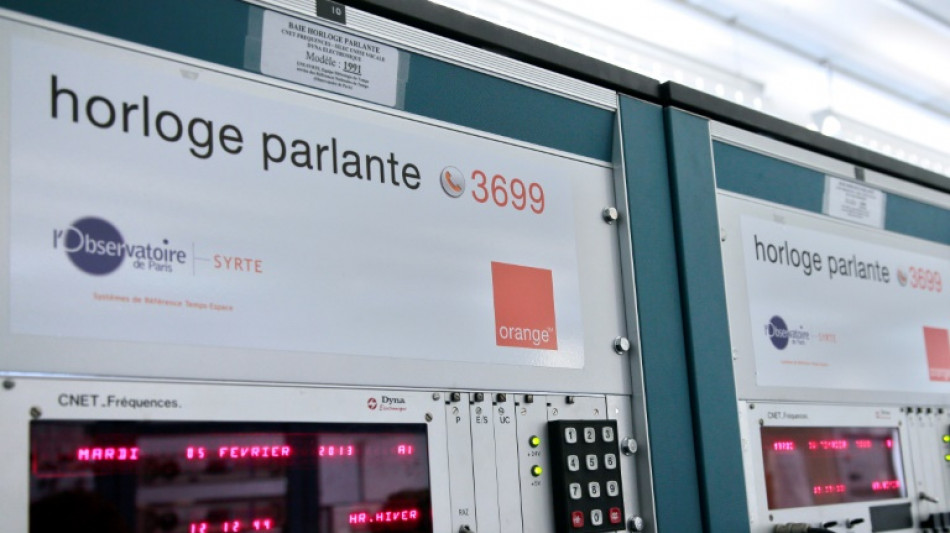
Time's up for France's historic 'speaking clock' / Photo: © AFP/File

 Typhoon Dujuan leaves four dead in Japan, 45,000 houses without power

 G7 leaders condemn Houthi strikes on Saudi Arabia
 Google data centre sparks protests in Austria
 Shin Ohashi: Junk food-loving teen and Japan's next big swimming hope
 Stocks rise on AI buzz, drop in oil prices

 China's robot dancers limber up for America's Got Talent final
 Despite military might, Saudi struggles to crush the Houthis
 Trump to tout deals, defend Iran war in UN speech
 Sri Lanka to issue verdict in landmark Easter attack trial
 Macron says talks with Trump on Red Sea, Ukraine 'constructive'

 Green policies just good politics, says UK minister

 Bardot auction in Paris fetches nearly one million euros

 No timeline on Daniels injury return, says Commanders coach

 British Columbia sues OpenAI in US court over Canada school shooting

 French star Batum retires after 18-year NBA career
 Zidane leads first France training session

 Man shot by ICE agent in Texas detained with bullet inside him: lawyer
 California declares state of emergency ahead of El Nino

 South Africa arrests three more suspects, after nine women murdered
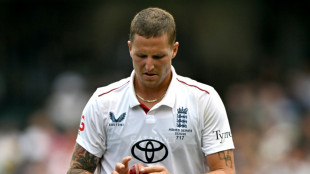 Carse needs time away from England, says captain Brook
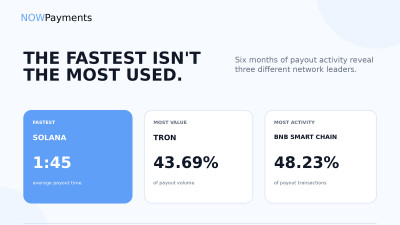 NOWPayments Releases Cross-Chain Payout Data Revealing Key Performance Benchmarks Across TRON, BNB Chain, and Solana
 British Museum bans photos of Bayeux Tapestry as crowds linger
 COP31 host says AI climate footprint to be a summit priority

 Berlin's far-left vote winners reject anti-semitism charges
 Mancini eager for 'new adventure' on Italy return
For nearly 90 years, anyone in France needing to know what time it is down-to-the-second could ring up the Paris Observatory and get an automated, astronomy-based response.
But the final countdown for the world-first service has begun.
Nostalgia fans hoping to dial 3699 and get the soothing voice of France's "speaking clock" will have to move fast because telecoms operator Orange is pulling the plug on July 1.
"When I was a kid my mom never stopped asking me to use the speaking clock," recalled Claire Salpetrier, an English teacher in Magnanville, west of the capital.
It all started when in 1933, the astronomer and Paris Observatory director Ernest Esclangon, got fed up with people clogging up the centre's only phone line to ask the official time -- an essential service in the days of mechanical clocks.
So he developed a concept that would later be adopted worldwide, incorporating the latest technologies as the decades went by.
Orange, the former state telecom monopoly, said the Observatory got several millions of calls in 1991, when dedicated infrastructure was set up to provide times accurate to the 10th millisecond.
"The utility was pretty strong back then, but bit by bit we started seeing an erosion," Orange's marketing director Catherine Breton told AFP.
"There were just a few tens of thousands of calls in 2021."
Hearing the famous "At the fourth beep, the time will be..." in alternating men's and women's voices last stood at 1.50 euros a pop ($1.58), which may also have proved dissuasive in the era of smartphones.
- 'Sad and nostalgic' -
"I was surprised it still existed. It's something we knew about as kids, when we didn't yet have cell phones," said Antonio Garcia, a health clinic director in Meulan-en-Yvelines, outside Paris.
"It was super handy when you needed to take a train or a plane -- I can still remember the 'beep, beep, beep'," he said.
The current version is the fourth generation of the service and is calculated from Coordinated Universal Time in a temperature-controlled room by the Time-Space Reference Services lab (SYRTE) housed at the Observatory.
Much of the equipment needed to keep it up and running needs replacing, an investment that doesn't appear to be worth the effort.
Media relations specialist Charlotte Vanpeen said she used to use it "when the power went out and you needed to reset the time on everything".
"Hearing about its end makes me sad and nostalgic," she said.
"Kids these days have all these technologies and don't know about what we had. The good things are being forgotten."
For Michel Abgrall, the research engineer in charge of keeping the speaking clock running, its demise is "a bit emotional."
"It's part of our cultural heritage," he said.
But for those worried about knowing the precise time, Abgrall says don't fret: It features prominently on the Observatory's home page.
W.Lapointe--BTB