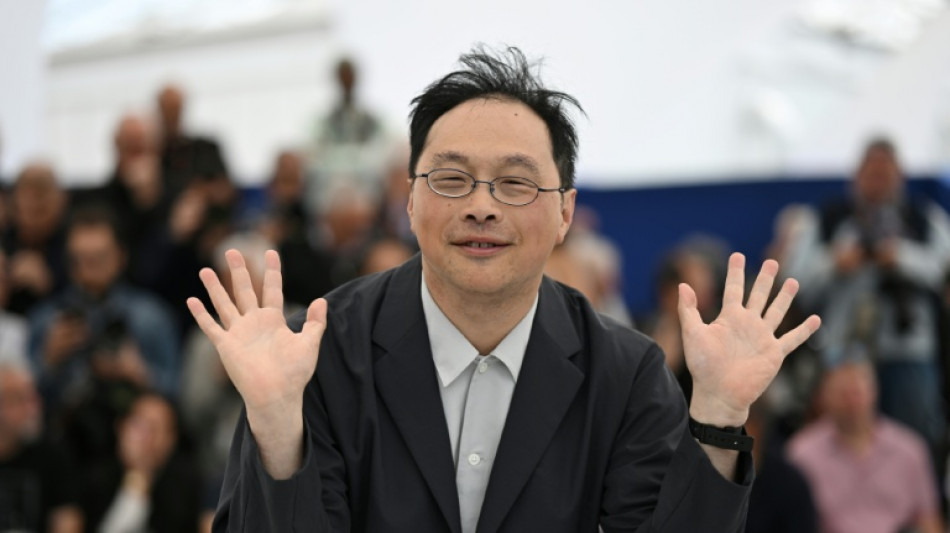
Japanese filmmaker Fukada casts queasy gaze on J-pop idols / Photo: © AFP

 China's Yu, 13, wins third gold with latest Asian Games record

 UK says will revisit Chagos deal after latest Trump criticism

 In first, French presidential candidate gives birth during campaign

 Cambodia no 'safe haven' for cyberscams, PM says

 North Korea weightlifter sets three world records for Asian Games gold

 A Full Moon for Every Child: STARTRADER's STARCARES Brings Support to SOS Children's Village Ho Chi Minh City

 Meta leans into AI, smart glasses amid privacy pushback

 Battered Duerer masterpiece up for five-year revamp

 Trump met with Venezuela's interim leader at UN

 Malaysia furore after Najib wins conditional house arrest

 Italy hope for new dawn under Mancini

 Mongolian herders enlist new tech against harsher, drier climate

 Tata turmoil shines light on India succession woes

 World Cup 'not enough' as Spain begin next chapter

 Meta acts against 3.7 mn scammers' accounts with Singapore police help

 Australia PM says draft social media rules about taking back control

 Voting opens in Alaska's annual Fat Bear Week

 MLS coach axed for telling female ref 'It's a man's game'

 US refuses to give Sudan's de facto leader visa for UN

 Man City hold Bayern to start Women's Champions League, Arsenal win late

 Trump threatens Iran with 'hell' but reveals fresh talks

 Trump signs security deal with Greenland, Denmark at UN

 Trump threatens Iran with 'hell' but unveils fresh talks

 Chile's Atacama Desert blossoms with life after El Nino rains

 Sri Lanka hands 220-year jail terms to 15 convicted of Easter bombings

Exploitative contracts that force young female Japanese pop stars to forego relationships and sex are at the heart of director Koji Fukada's latest film, which has premiered in Cannes.
The 45-year-old director said he was inspired by a news report about a Japanese "idol", as the starlets are known, who was sued by her management agency after breaking a "no dating" clause.
Fukada cast former idol Saito Kyoko in the lead role of his feature "Love on Trial" which tells the story of a young performer who undergoes a similar ordeal.
"I felt a deep discomfort, a real unease when I found out, and that's what made me want to look into the subject a bit and then turn it into a screenplay," he told AFP in Cannes.
The film highlights the unequal relationship between management agencies and the idols, who are usually teenagers trained to become a mixture of pop star, online influencer and advertising prop.
But the core of the film examines the more unusual demand that the women remain unattached and chaste -- in order for their older, male fanbase to project their fantasies.
As the lyrics to the songs of Fukada's fictional five-member group "Happy Fanfare" make clear, the performers spend their time singing about the idea of falling in love.
"The industry really encourages this kind of artificial love between fans and their idols," the director of "The Real Thing" and "Harmonium" explained.
"As soon as an idol appears to have a romantic relationship with someone, it's well known that they lose a lot of popularity."
As well as selling merchandise, the women also offer their time for meet-and-greet events -- for a price -- at which fans can come to talk to them, hold hands, and take selfies.
- 'Unusual job' -
The activist director, who has previously spoken out about sexual harassment and the Japanese film industry's over-reliance on manga adaptations, believes the J-pop industry reflects the prejudices of Japanese society.
"There is a lot of prejudice and gender discrimination towards women in our patriarchal system," he said. "We tend to believe that women must be pure, untouched and submissive."
As his film makes clear, many of the stars themselves are happy to encourage this image in pursuit of fame and wealth.
"I met idols who are still active. Some believe that the ban on romantic relationships is a problem. Others think it's normal because it's a very unusual kind of job," he said.
He hopes his film, which is set for release from May, will spark debate in Japan.
"I tried to make a film that could bring out each person's perception of gender, love, freedom, and issues of discrimination," he said.
"And that every viewer, whether they agree or disagree with the choices made by the heroine, could take part in a discussion around these questions."
J.Marty--VB