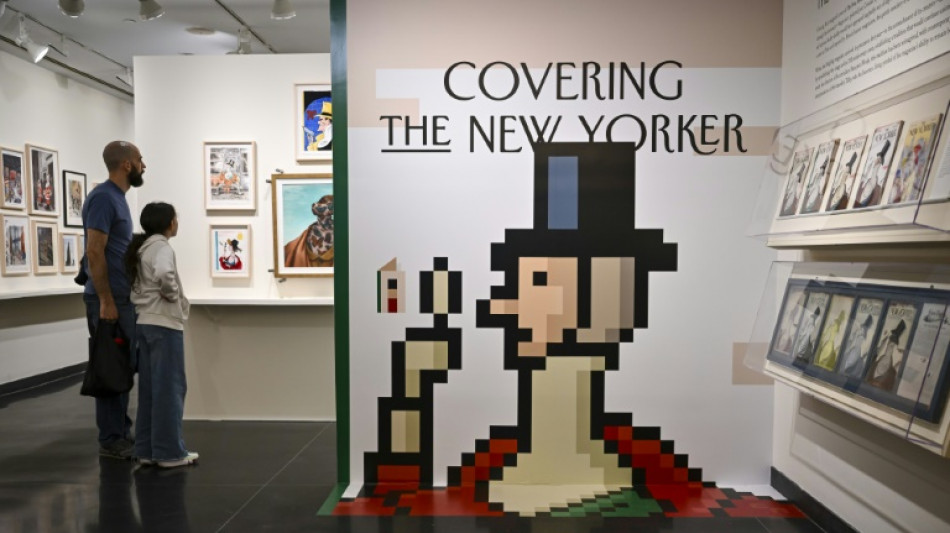
The New Yorker, a US institution, celebrates 100 years of goings on / Photo: © AFP

 Bolivia's Paz appoints new economy minister amid bailout talks

 US designates UK-based Palestine Action as foreign 'terrorist group'

 'Rocky Horror Picture Show' star Tim Curry dead at 80

 American Moll wins women's pole vault at Zurich city event
 As Canada takes on US tariffs, what's behind the David and Goliath fight?

 UEFA 'likely' to drop threat to boycott FIFA tournaments: source

 US disrupts platforms allegedly used by Chinese hackers

 The foreign tourists missing in Nepal's flash floods

 Hundreds missing after Nepal-Tibet flood kills 98

 CIA director was on 'semi-routine' mission in Moscow: Trump

 Aldeguer switches to Rossi's VR46 for next season

 Rent TRON Energy and Reduce USDT Fees : TronBid Expands Marketplace

 Pakistan captain Babar Azam returns against England '90 percent fit'

 Stocks mixed as oil drops, inflation stays high

 Improving standards transform pole vault as spectacle, says Duplantis

 India close in on win despite Sri Lanka fightback in second Test

 MEXC TradFi Gala Concludes With Over 170,000 Registrations and $4.3 Billion in Daily Trading Volume

 Olympic skating champion Liu to skip new season
 Benfica sign midfielder Palhinha from Bayern

 Flick says Barca may go without striker as Atletico resist Alvarez sale

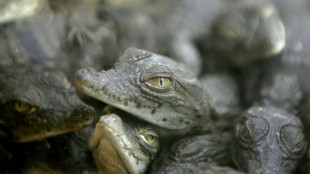 Too hot to incubate: Nile crocodiles hatch on their own in French reserve

 Spurs closing in on Man City's Marmoush after signing Savio

 Celtic count the cost of Champions League flop

 Lebanon accuses Israel of burning forest, farmland in south

 Nepal floods at China border kill 8, cause 'major casualties' in Tibet

The New Yorker magazine, a staple of American literary and cultural life defined by its distinctive covers, long-form journalism, witty cartoons and particular grammar, is celebrating 100 years on newsstands.
To mark the publication's centenary milestone, four commemorative issues are being released, while its namesake city will host seven exhibitions ahead of a Netflix documentary on the title known for its artistic cover creations.
Despite its storied history, the New Yorker often puts a mirror up to current events. Three founding fathers were shown on a recent cover design being marched out of office, carrying their effects in cardboard boxes in a satirical commentary on US President Donald Trump's assault on the status quo.
Francoise Mouly, the magazine's artistic director, said the New Yorker was not immune from the crisis plaguing the media.
"But I'm stubborn and I see the future with a lot of confidence and hope," she said.
Mouly has been one of the conductors of the New Yorker orchestra since 1993, selecting the cover that week after week lends the magazine its unique identity.
"There are some printed products that will never be replaced by digital -- children's books, comics, and the New Yorker," she told AFP at a recent exhibition showcasing the magazine's art, held at New York's Alliance Francaise cultural center.
One example of cover art on display depicts a rush-hour subway scene in which all the passengers are animals, while another by Mouly's husband Art Spiegelman shows a Black woman kissing a Hasidic man.
That 1993 design, which followed clashes between the two communities in a Brooklyn neighborhood, stirred controversy at the time and remains one of the title's most discussed covers.
With more than 5,000 editions over the past century, the magazine has published literary greats like Truman Capote's 1965 "In Cold Blood", while also giving James Baldwin space to write about race relations.
- 'Incredibly successful' -
Ernest Hemingway, Susan Sontag and JD Salinger are among the authors to have graced the pages of the magazine which combines current affairs, analysis, fiction, reviews, criticism, poetry, and of course its legendary cartoons.
Published weekly, the magazine has reported global scoops like the fullest account of the US atomic bomb dropped on Hiroshima, with the entirety of the August 31, 1946 edition given over to John Hersey's article.
In 1961 Hannah Arendt covered the trial of Nazi war criminal Adolf Eichmann in the reporting of which she coined the phrase "the banality of evil."
In recent years the magazine won a Pulitzer Prize for Ronan Farrow's reporting of predatory film mogul Harvey Weinstein, fuelling the "MeToo" movement.
"These were all remarkable, long-form stories that really changed the course of American history, not just American journalism," said Julie Golia, curator of an exhibition on the magazine at The New York Public Library.
Founded on February 21, 1925, the New Yorker did not always have such lofty ambitions.
At the height of the Jazz Age, amid post-war and pre-depression euphoria, husband and wife founders Harold Ross and Jane Grant set out to create "a magazine of wit and cosmopolitanism, an urbane magazine, but not one that took itself too seriously."
One hundred years on, it boasts 1.3 million subscribers, most of whom subscribe in both print and digital formats. It is a jewel in the crown of media group Conde Nast, which also publishes Vogue, Vanity Fair and GQ, having bought the New Yorker in 1985.
Despite its highbrow image, the magazine has adapted to the digital age emphasizing subscriptions over advertising, editor-in-chief since 1998 David Remnick said in a recent radio interview.
"The New Yorker is much more than those pages that people get in the mail," said Golia.
"It's a website, it's podcasts, it's a festival, and it's a brand (and) as a brand, it's incredibly successful."
L.Maurer--VB