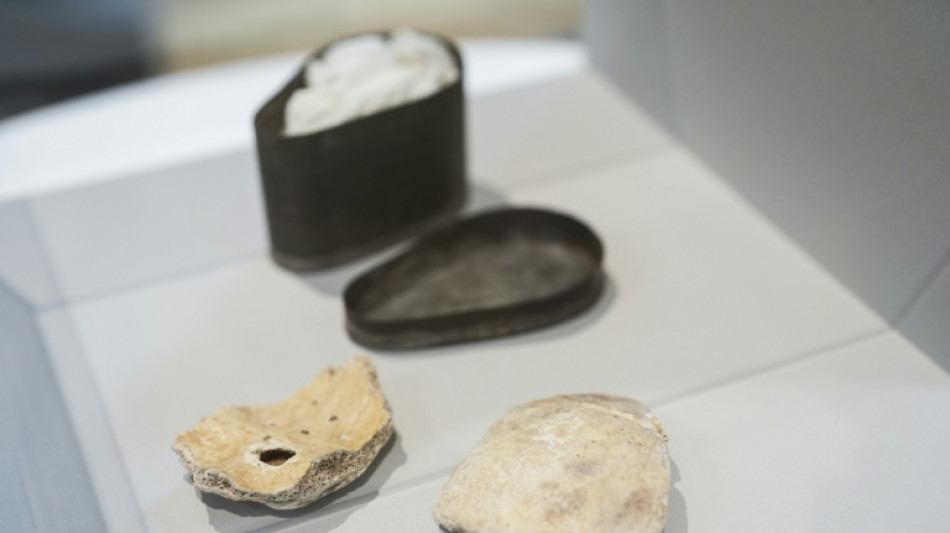
Presumed Beethoven skull fragments return to Vienna / Photo: © APA/AFP

 Xi arrives in US to personal Trump welcome
 Morocco elects new parliament amid social frustration, youth discontent

 Scheffler and Burns to face Im and Lee in Presidents Cup opener
 Crushing wins for Lyon and Barca in women's Champions League
 Rio breaks record for rainiest September amid powerful El Nino

 At UN, tech chiefs urge caution in AI development
 Russian strikes kill seven in Ukraine, Zelensky vows winter campaign
 Venezuelan shot by ICE needs urgent medical care, mother tells AFP
 Zelensky says Putin using fighters from 47 countries in Ukraine war

 Klopp calls on Germany to 'rise above ourselves' as new era begins

 Russian strikes kill seven in Ukraine as Russia vows no 'pause' to war

 ArcPoint Expands Globally with Institutional Intelligence Platform for Modern Investors

 Ronaldo focussing on 'present' ahead of Wales test

 Outgoing UN chief makes final climate push at New York summit

 Grief and pain flow at hearing for Canadian suicide poison vendor

 Ireland boss Hallgrimsson says timing of Israel remarks 'not clever'

 Weinstein resentenced to 15 years in prison for 2006 sex assault

 Fendi brings disco bling, Italian style, to Milan Fashion Week

 French court confirms rape trial for PSG and Morocco star Hakimi

 President tells Trump that Iran will never 'bend at the knee'

 أليكس بودي والبروفيسور الدكتور شتيفان هاوبت يتفقان على التعاون من أجل مجموعة فنية أسطورية في رومانيا
 U2 at 50: Irish rockers reveal anniversary album
 Алекс Боді та проф. д-р Стефан Гаупт домовилися про співпрацю щодо легендарної колекції мистецтва в Румунії
 Alex Bodi și prof. dr. Stefan Haupt încheie un acord de cooperare pentru o colecție de artă legendară în România

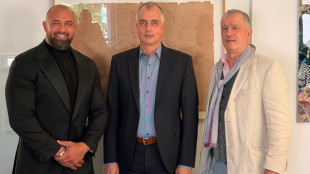
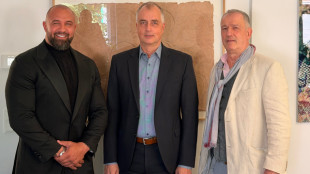
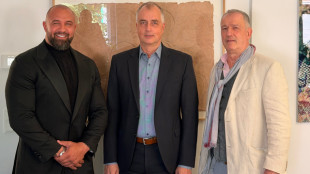
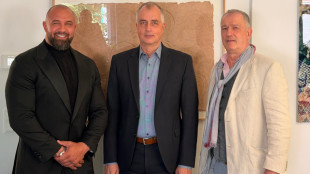
 Alex Bodi and Prof. Dr Stefan Haupt agree to collaborate on a legendary art collection in Romania

Skull fragments, presumed to be from Ludwig van Beethoven, have returned to Vienna, where the legendary 19th century German composer was buried, experts said Thursday.
US businessman Paul Kaufmann donated the fragments, which he inherited, to the Medical University of Vienna where researchers will probe the illnesses suffered by the impresario and his cause of death.
"This is where the bones belong, back in Vienna," Kaufmann told reporters.
Austrian coroner Christian Reiter said the 10 fragments, including two bigger pieces, one from the back of the head and one from the right side of the forehead, had "great value".
"We have received really valuable material here, with which we hope to continue to research in the next years. That was Beethoven's wish too," Reiter said.
The composer battled illness through his life and explicitly asked for his body to be studied, Reiter added.
Beethoven, whose piano, chamber and symphonic works are among the greatest of Western classical music, died at 56 in 1827 after years of struggling with unknown ailments, including increasing deafness in his later years.
The fragments are believed to be the only surviving fragments of Beethoven's skull, Reiter added.
Kaufmann -- whose Jewish ancestors fled the Nazis -- said he found the fragments in a small box with "Beethoven" scratched on it in a family safety deposit box in a French bank in 1990.
Kaufmann's great great uncle, Austrian doctor Franz Romeo Seligmann, is presumed to have acquired them in 1863 during an exhumation of Beethoven's body.
Kaufmann said the fragments would now be analysed further to confirm that they belong to the late composer, who died in Vienna.
- Cause of death mystery -
The available evidence suggests that they are authentic.
In 2005, a group of US scientists announced that tests on hair of Beethoven and the skull fragments showed he died from lead poisoning, which may have also been responsible for his hearing loss.
Researchers at the US Department of Energy's Argonne National Laboratory in Illinois said the bone fragments, tested at the country's most powerful X-ray facility, had high concentrations of lead, matching earlier findings of lead in his hair.
The source of the lead is unknown, but they said it may have come from a wine goblet made with the metal.
Alternatively, some medical treatments in the 18th and 19th centuries made use of heavy metals like lead and mercury.
Beethoven suffered abdominal pains in his 20s which became progressively worse, and the composer saw a large number of physicians in search of a cure.
In March, researchers who sequenced Beethoven's genome using authenticated hair samples said liver failure, or cirrhosis, was likely behind his death brought about by a number of factors, including alcohol consumption.
C.Meier--BTB