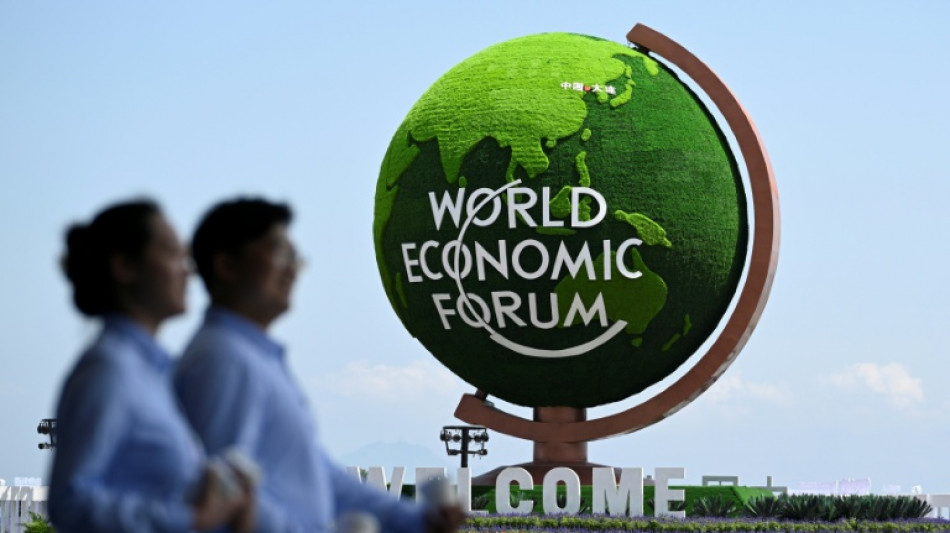
Geopolitics and AI in spotlight at China's 'Summer Davos' / Photo: © AFP

 Colombian judge bans strikes on guerrillas if minors are present

 Khachanov shocks ailing Auger-Aliassime, Swiatek and Osaka advance at US Open

 Lone juror blocking verdict in US mother's child murder trial: defense
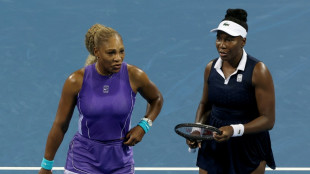 'Kinda chic' - Williams sisters set to launch US Open doubles bid

 Volkswagen says cutting 100,000 jobs by end of decade

 Russia slaps curfew on charity director over army criticism

 Ailing Auger-Aliassime upset by Khachanov at US Open
 Richarlison omitted from Tottenham's Premier League squad
 How El Nino is choking the Panama Canal

 Hamilton drives his Ferrari dream at Monza

 Senegal has an IMF loan, now what?

 Auger-Aliassime upset by Khachanov at US Open
 Hugging Face, the French start-up that became AI's warehouse

 World Cup winner Llorente retires from Spain team at 31

 Osaka squeezes into US Open third round
 Apple faces £2 bn lawsuit in UK over app privacy feature
 Former champ Swiatek eases into US Open third round

 DR Congo latest to promise moving Israel embassy to Jerusalem

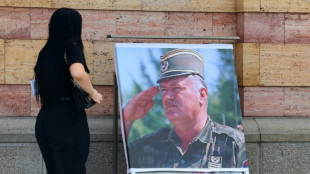 War criminal Mladic's body returns to Serbia with military honours

 Pierre Cardin museum brings designer's futurist style to Venice

 Slovenian rookie Omrzel triumphs as Mas extends Vuelta lead

 British, French leaders talk migrants, EU relations

 Heading for Ferrari's home race, Leclerc still dreams of world title
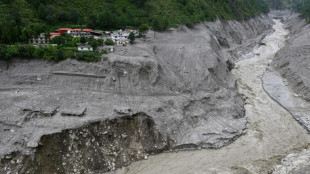
 Cafe at centre of Israel culture clash agrees to shut on Sabbath

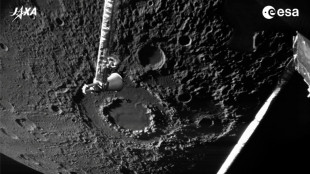 Spacecraft bound for Mercury begins 'tricky' arrival
Breakthroughs in technologies such as AI are touted as drivers of economic growth, but headwinds include concerns over job losses and geopolitical tensions, speakers told AFP at China's "Summer Davos" this week.
The annual conference organised by the Switzerland-based World Economic Forum (WEF) brings together policymakers and experts across sectors crucial to the global economy.
AI "is really changing industry and the economy", offering new opportunities in education, healthcare and other areas, Mirek Dusek, WEF's managing director, said Tuesday.
"We are blessed with a lot of technological advancements recently, but the main imperative for decision-makers around the world is really: how do you make sure this counts in the real economy?" Dusek told AFP.
There is also a "risk of a backlash against some of these technologies", he warned.
Fears are growing of AI-driven disruption to labour markets and the potential security risks it poses, from breaches of cyber defences to its use in conflict.
Adding to pressure on the international economic system is the US-Israeli war with Iran, which has stymied shipping from the oil-rich Middle East.
- 'Tepid environment' -
These shadows have spurred the World Bank to lower its global growth forecast for this year to its lowest level since the Covid pandemic.
The world economy is currently facing "a tepid environment", Dusek said.
"We all know that there is a threat of lost opportunity in terms of global growth if we really go into a state of severe fragmentation."
Chinese Premier Li Qiang was due Wednesday morning to deliver a closely watched speech at the WEF's "Annual Meeting of the New Champions", hosted this year in the northeastern port city of Dalian.
The occasion provides an opportunity for Beijing's number-two leader to deliver a message about the Chinese economy to the influential group of tech and business leaders in attendance.
China's economy -- second in size only to that of the United States -- has struggled in recent years to keep up with the breakneck pace of development it maintained in previous decades.
Despite a striking boom in exports and AI tech, sluggish household consumption and an entrenched property sector debt crisis have weighed on growth since the pandemic.
Complicating matters is Beijing's tumultuous relationship with Washington.
Graham Allison, professor at the Harvard Kennedy School and a frequent unofficial interlocutor with Chinese and US foreign policymakers, told AFP in Dalian that a potential war between the two great powers is very much on the table.
Allison is known for coining the term "Thucydides trap" -- which he defined Tuesday as "the dangerous dynamic that occurs when a rapidly rising power, like... China over the past generation impacts a major ruling power", such as the United States.
- Avoiding woes of history -
Thucydides, an ancient Greek historian, "warns us that business as usual, diplomacy as usual (and) statecraft as usual produces war" in such a situation, Allison said.
However, recent high-level engagement between the Chinese and US presidents is reason for optimism that a war can be avoided, he added.
At a summit in Beijing last month, Xi Jinping asked Donald Trump if the countries could "transcend the so-called 'Thucydides Trap' and forge a new paradigm for major-power relations".
Allison told AFP that Xi "clearly gets it" and that his mention of the obscure historical concept "wasn't by accident".
Trump, meanwhile, is "erratic in his own way", said Allison, calling the Iran war this year a "terrible" and "unnecessary mistake".
But he "understands China is different", he said.
Xi's response last year to sky-high tariffs imposed by Washington on China -- strangling US access to critical rare-earth minerals -- made Trump realise that he is "now up against somebody that is roughly (his) peer".
"These two presidents are clearly trying to redefine the relationship or reframe it in a way that'll overcome Thucydides's trap."
K.Sutter--VB