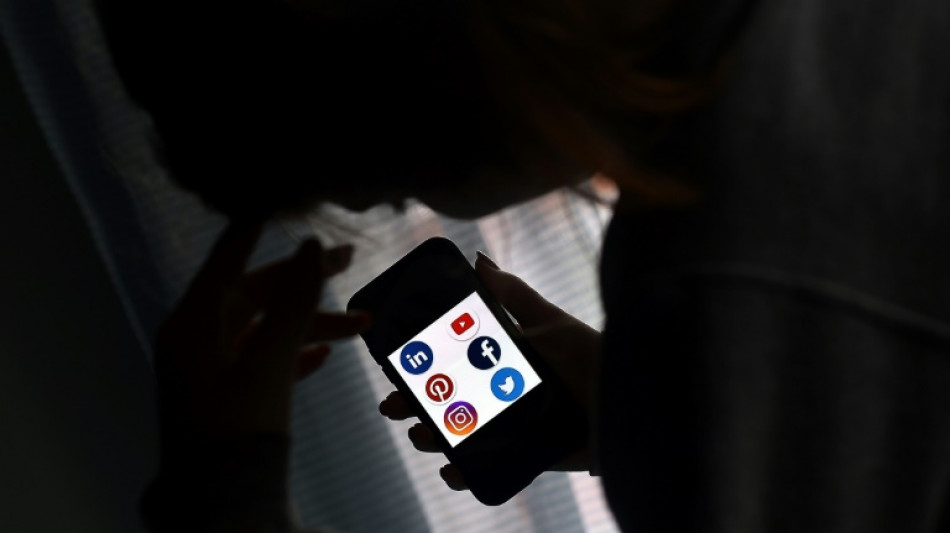
Vietnam to demand social media users verify identities / Photo: © AFP/File

 South African election results renew debate over identity-based voting

 South African voters report smoother local election but declining IEC trust

 Dolly Parton museum and Nashville hotel open after singer’s death

 George and Amal Clooney attend New York political-comedy reading

 British buyers pay substantial premiums for period-home appearance

 Thomas Markle released to house arrest after child-abuse-image charge

 Dawn of War 4 developers chose Adeptus Mechanicus for tactical variety

 Italy face unbeaten South Africa in Turin Nations Championship match

 ChatGPT interactive interface feature tested across six custom tools

 Freshways milk-price cut deepens pressure on UK dairy farms

 Labour and National remain virtually tied as New Zealand vote count advances

 The Good Daughter adapts Karin Slaughter thriller with Rose Byrne and Meghann Fahy

 Heavy-lift drone evacuates wounded Ukrainian soldier from frontline kill zone

 Morrison says West Brom recovered after pressure from successive derby losses

 Britain considers 2027 state visit for Ukraine’s Zelensky

 Arizona Democrats Secure Historic Trifecta with New Legislative Leadership

 Carney Welcomes U.S. Trade Reversal After Democratic Midterm Victory

 Armenian FM Discusses EU Accountability for Palestinian Rights in Madrid
Vietnam plans to ask all social media users on platforms such as Facebook, YouTube and TikTok to verify their identities, citing the need to combat online scams.
The Southeast Asian nation has one of the highest online fraud rates in Asia, with financial, identity and romantic scams particularly common, according to the Global Anti Scam Alliance.
But social media restrictions are also used by the communist state to curb freedom of expression, and government critics with online followings are regularly targeted.
"Unidentified social network accounts will be dealt with," said Nguyen Thanh Lam, deputy minister of information and communications, without elaborating.
A new government decree on online information scheduled to be issued later this year will make the measure mandatory, Lam said, according to a report published Monday on the ministry's website.
Lam added that there were times authorities could not track down social media users who violated the law because they used cross-border platforms.
This measure, he said, will "prevent the using of those platforms to create fraud groups that are untraceable".
No details were shared about the potential punishments for breaking this law.
The move comes a month after authorities said they would probe TikTok over alleged "toxic content" hosted on the hugely popular Chinese-owned video-sharing app.
Vietnam has also asked foreign tech companies to establish representative offices in Vietnam and store data in the country.
The requirement is part of a sweeping cyber security law introduced in 2018 that compels Facebook and Google to take down posts deemed to be a national security threat within 24 hours.
Facebook, TikTok and YouTube do not ask users in Vietnam to verify their identity.
Earlier this year, authorities ordered mobile phone users to verify their identities and subsequently blocked around 1.2 million SIM cards.
K.Brown--BTB