
Bolivia says US drug agency to return to aid cocaine battle / Photo: © AFP

 Forest destruction tests Armenia-Azerbaijan peace push

 Deal still eludes nations on final day of UN nature talks

 Teen rallies take to the streets across Italy

 Netanyahu bloc finishes ahead in Israel vote, but well short of majority

 Rural US hospitals, collateral victims of Trump politics
 How Trump could interfere in US midterm elections

 As Republicans downplay abortion for midterms, four US states to vote

 No. 4 Indiana looks to revive offense against improving Minnesota

 Police close investigation into Hayden Panettiere death after coroner ruling

 Australian mushroom killer loses appeal, has sentence extended

 Lethbridge students learn how city transit and transportation systems work

 India highlights defence ties with Japan and Australia at Cebu meetings

 Horoscope for October 30, 2026: communication and patience shape the day

 Amazon cloud business accelerates but shares drop on profit miss

 Wesley Fofana under scrutiny after Chelsea penalty miss in Carabao Cup

 Russell admits absence of rivalry because he cannot match Antonelli

 DR Congo says Rwanda flouting pact, US sanctions justified

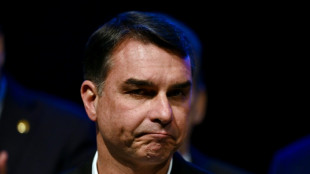 Brazil's Flavio Bolsonaro isolated, ridiculed after self-exile

 Asian equities diverge after mixed technology earnings and Fed rate decision

 Zverev 'on top of the world' after securing No. 1 ranking

 Clash of styles as Vikings, Lions prepare for NFL showdown

 After a long slog to the top, Zverev leaps to No. 1 ranking

 GCC legislative officials review ways to deepen regional cooperation

 Canada buying stake in AI firm Cohere to bolster tech sovereignty

 Utah files criminal charges against prediction market Kalshi

Bolivia's brand-new narcotics czar, Ernesto Justiniano, told AFP Friday the US Drug Enforcement Administration, expelled in 2008, will be returning to bolster the South American country's anti-cocaine campaigns.
Justiniano is part of the new administration of President Rodrigo Paz, a pro-business conservative who took office on November 8 after two decades of leftist rule.
Paz, 58, is aiming for a sharp political, economic, social and diplomatic shift away from the policies of leftist leaders blamed by many for Bolivia's economic collapse, with dollars in short supply and annual inflation over 20 percent.
In an interview with AFP Friday, Justiniano said "there is a political commitment" for the DEA to return to Bolivia, where he said cocaine production has spiraled out of control.
"International cooperation is fundamental," he added. "We will no longer be an isolated country, a country that is self-absorbed and acts solely out of political necessity."
The new government has set for itself the tasks of eradicating coca leaves -- the raw material for cocaine production -- and going after drug cartels.
According to United Nations data, Bolivia is the world's third-largest producer of coca and cocaine, after Colombia and Peru.
Ties with the United States were severed under former socialist leader Evo Morales, in office from 2006 to 2019.
Bolivia took a sharp turn to the left under Morales, nationalizing energy resources and making alliances with China, Russia and fellow leftists in Cuba, Venezuela and elsewhere in Latin America.
In 2008, Morales expelled the US ambassador and DEA officials, accusing them of interference in Bolivia's affairs. USAID officials followed in 2013.
Washington expelled Bolivia's ambassador in retaliation, and the envoys were never replaced.
Paz, an economist-turned-senator, vowed the day after his election victory to renew ties with Washington.
- No money for eradication -
Justiniano -- whose official title is deputy minister of social defense and controlled substances -- said Bolivia's cocaine production levels were alarming, with estimated annual production of about 300 tons.
The UN says Bolivia has 31,000 hectares of coca crops. Of these, about 22,000 hectares are legal -- grown to be chewed as a stimulant, brewed into a tea thought to combat altitude sickness or used in religious rituals.
Justiniano, 56, said modern processes had reduced the amount of coca required to make one kilogram (2.2 pounds) of cocaine by about half.
"With one hectare of illegal coca, I can produce more than double the cocaine than twenty years ago," he told AFP.
He added that Bolivia's ability to address the problem was limited, with helicopters and planes grounded due to a lack of money for insurance or spare parts.
"All incursions... are conducted by land," he stated.
"And once on site, they must travel on foot, even lacking fuel for vehicles."
Bolivia's economy is in recession, according to the World Bank.
C.Stoecklin--VB