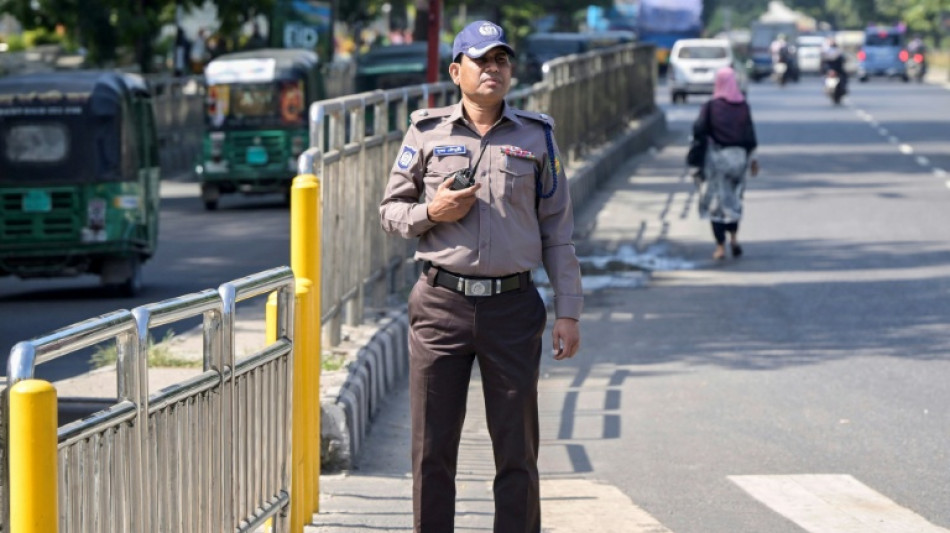
Bangladesh police hope new uniform repairs broken image / Photo: © AFP

 Spain coach blasts 'unacceptable' behaviour of Argentina after World Cup final

 India's youth-led 'Cockroach' movement holds new round of talks with govt

 Some 40,000 people evacuated due to wildfire in southwest France: minister

 Philippines says ship hit by Chinese water cannon at disputed reef

 Fires in Europe: latest developments
 Ukraine hits 'Russia's Amazon' warehouses outside St Petersburg

 Wrestling to become a man in Togo's ancestral rite of passage
 WAFCON favourites Nigeria eye World Cup slot and record prize money

 Socceroos star Volpato allegedly tests positive for cocaine

 Ukraine drone attack hits 'Russia's Amazon' warehouse
 US imposes new tariffs on 60 partners as Trump rebuilds trade agenda
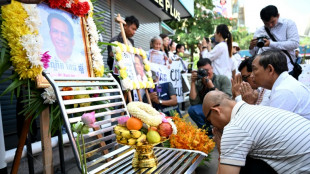
 Stocks suffer fresh blow as markets hit by perfect storm
 Trump under pressure from all sides over Chinese AI surge

 ICC member states decide fate of embattled prosecutor Karim Khan
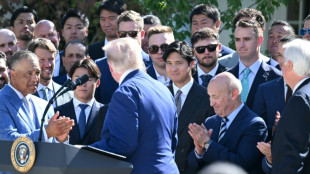 Dodgers return to Trump White House despite fan anger

 Lyles, Richardson ease into 100m semis at US athletics championships
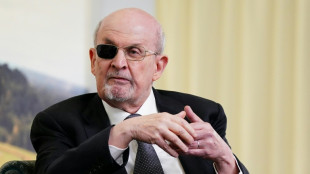 Salman Rushdie testifies at knife attacker's US terror trial

 World Bank confirms plan to phase out China lending by 2031
 US panel backs trendy peptides despite safety concerns

 Justice Dept withdraws NY Times subpoenas over Trump plane report

 Barcelona's De Jong returns from World Cup with torn ligament
 Albania police teargas protesters against Trump-linked resort

 US panel says to loosen restrictions on popular peptide despite safety concerns

 Verstappen swerves around future questions
 EU renews online child sex abuse detection powers
Bangladesh's police have unveiled new uniforms in a symbolic bid to signal reform and rebuild deeply eroded public trust, just weeks ahead of the first elections since a mass uprising.
The police force was cast into turmoil after the 2024 overthrow of the autocratic government of now-convicted fugitive Sheikh Hasina, which left at least 1,400 dead and thousands maimed -- many by police gunfire.
"Bangladesh Police have been facing an unprecedented crisis," police spokesman Sahadat Hossaine told AFP. "The policymakers suggested... that a new uniform may bring a positive change."
Police are now trading the familiar turquoise-and-blue uniforms for iron-grey shirts and chocolate-brown trousers.
Whether a new colour scheme can mend a shattered reputation remains doubtful.
"Whenever I see a policeman, I feel like biting his flesh off. I don't know if I'll ever get over this hatred," said Nazma Akhtar, 48, whose 17-year-old son Golam Nafeez was killed during the uprising.
Akhtar's son was shot, denied entry to a hospital, and died from blood loss on August 4, 2024.
"How can a new uniform change their attitude?" Akhtar added. "I saw them beating teachers just for demanding a pay rise."
The nation of 170 million people is expected to hold elections in February 2026, with the security forces critical to ensuring they are peaceful.
- 'Struggling' -
Former prime minister Sheikh Hasina was sentenced to death by a Dhaka court on Monday, for charges that included ordering the security forces to use deadly force against protesters.
Hasina's bid to cling to power failed after she ordered the army to crush the protests and they refused.
Vandalism and arson attacks in the chaotic aftermath of her fall targeted roughly 450 of the country’s 600 police stations, according to officials.
"They left the police stations immediately after the previous government stepped down, and now they are struggling to get back on their feet", Hossaine said.
Researchers have documented widespread brutality by police during the uprising.
That included the killing of unarmed teenage student Ashiqur Rahman Hridoy, who was "sandwiched between two groups of police and shot from point-blank range," Fawzia Afroz of Tech Global Institute policy group told AFP.
Around 1,500 police personnel now face criminal charges, mostly for murder, with dozens in detention. The former police chief, who pleaded guilty in the same trial as Hasina, was sentenced to five years.
Police say an estimated 55 senior officers, also wanted for murder, have fled to India.
But serving officers express their own frustrations: 44 officers were also killed during the unrest, yet the interim government has agreed "legal immunity" for protesters.
Sultana Razia watched as her husband, a police inspector, was beaten to death by a mob in the chaos after Hasina fled.
"He wasn't supposed to die this way," Razia said.
A mid-ranking officer speaking on the condition of anonymity told AFP that "police are also human beings".
- 'Political tools' -
The interim government, led by Nobel laureate Muhammad Yunus, formed a police reform commission, but progress has been slow.
Allegations of excessive force persist and public trust has fallen so sharply that in many areas mobs now routinely take justice into their own hands, often times abducting suspects and killing them.
"I don't see many changes," said Abu Ahmed Faijul Kabir of the human rights organisation Ain o Salish Kendra, noting that "around 28 people died in custody in the last 10 months".
Nearly 300 people were killed in political violence in Bangladesh in the year since the uprising, human rights group Odhikar said in November.
"Police were used as political tools by successive governments," said Alamgir Hossain, 60, a motor rickshaw driver.
"They never bothered about the law of the land," he added.
B.Baumann--VB