
North Korea using crypto, IT workers to dodge UN sanctions: report / Photo: © KCNA VIA KNS/AFP/File

 Malawi's fuel shortages, record prices deepen economic crisis

 Rubio hosts G20 ministers as Iran, Ukraine wars divide members

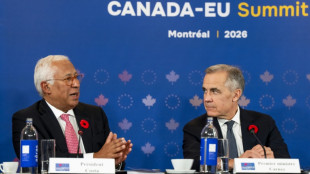 From minerals to AI, EU and Canada to forge new alliance

 Fire pollution killed 3,560 people in Indonesia in September: report

 Ian Wright and Jamie Carragher split on Liverpool-Arsenal prediction

 The Duskbloods delayed as Nintendo Switch 2 release moves to 2027

 Russia turns to NATO countries for prosthetics amid war-related shortages

 Researchers on island encounter giant spider legs emerging from a burrow

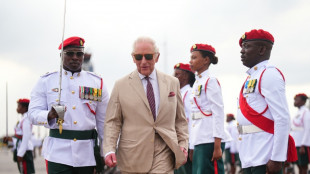 Britain's King Charles lands in ex-colony Guyana

 Arsenal assess Bukayo Saka fitness concerns before Liverpool meeting

 £10,000 garden project transforms a UK home into a miniature Greece

 Forest destruction tests Armenia-Azerbaijan peace push

 Deal still eludes nations on final day of UN nature talks

 Teen rallies take to the streets across Italy

 Netanyahu bloc finishes ahead in Israel vote, but well short of majority

 Rural US hospitals, collateral victims of Trump politics

 How Trump could interfere in US midterm elections
 As Republicans downplay abortion for midterms, four US states to vote

 No. 4 Indiana looks to revive offense against improving Minnesota

 Police close investigation into Hayden Panettiere death after coroner ruling

 Australian mushroom killer loses appeal, has sentence extended

 Lethbridge students learn how city transit and transportation systems work

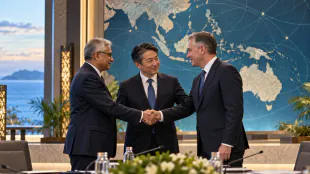 India highlights defence ties with Japan and Australia at Cebu meetings

 Horoscope for October 30, 2026: communication and patience shape the day

 Amazon cloud business accelerates but shares drop on profit miss

North Korea is circumventing UN sanctions by using cryptocurrency to trade raw materials and military weaponry, and by deploying large numbers of IT workers abroad to launder funds and generate income for Pyongyang, an international sanctions monitoring group reported.
Under leader Kim Jong Un, Pyongyang has ramped up cyber operations in recent years, turning hacking into a key source of foreign currency in the face of biting sanctions over its nuclear and weapons programmes.
The Multilateral Sanctions Monitoring Team (MSMT) found that North Korea's sophisticated cyber force had stolen at least $1.65 billion from January to September 2025, including $1.4 billion from crypto exchange Bybit in February.
That was in addition to North Korea's ill-gotten cryptocurrency gains of $1.2 billion in 2024, the monitoring group said in a report Wednesday.
Pyongyang funnels the funds into "the unlawful development of its WMD (weapons of mass destruction) and ballistic missile programs", it said.
The report's authors found that North Korean officials used a type of cryptocurrency called stablecoin "for procurement-related transactions, including the sale and transfer of military equipment and raw materials such as copper, which is used in munitions production".
The country further evaded UN sanctions by sending IT workers to at least eight countries.
Most went to China, but others were dispatched to Russia, Laos, Cambodia, Equatorial Guinea, Guinea, Nigeria and Tanzania.
MSMT also found that North Korea was planning to send "40,000 labourers to Russia, including several delegations of IT workers".
Under UN sanctions, North Korean workers are prohibited from earning money abroad.
North Korea has secured crucial backing from Russia in recent years, after sending weapons and thousands of North Korean troops to fight alongside Moscow's forces against Ukraine.
The MSMT also cited a 2024 report by 38 North, a specialist analysis programme run by the Stimson Centre think tank, stating that North Korean IT workers -- hiding their nationalities -- secured contracts to work on animation projects that were being steered by Japanese and US companies like Amazon and HBO Max.
An Amazon spokesperson contacted by AFP stressed that the company had never hired any such workers directly.
"We had previously worked with an animation studio that hired sub-contractors who were allegedly involved in the scheme, however they were not Amazon employees and didn't have access to internal systems," the spokesperson said.
HBO did not respond to an AFP request for comment.
The report said the North Korean animators also worked for companies such as Pyongyang's state-owned animation studio SEK -- previously reported to have assisted in Western projects such as 2007's "The Simpsons Movie".
Seoul's intelligence agency last year said North Korean operatives had used LinkedIn to pose as recruiters and approach South Koreans working at defense firms to obtain information on their technologies.
The MSMT, launched last October, monitors and reports violations of UN Security Council sanctions on North Korea, though it operates independently of the UN.
It comprises Australia, Canada, France, Germany, Italy, Japan, the Netherlands, New Zealand, South Korea, the UK and the United States.
W.Huber--VB