UN members to sign cybercrime treaty opposed by rights groups / Photo: © AFP/File

 'Like China': Cubans welcome reforms but exiles remain skeptical

 USA down Australia to reach World Cup knockout rounds

 Imperious Dupont guides record-breaking Toulouse to Top 14 final
 Venezuelan opposition figure heads to US after transition talks

 Canada star Kone to miss rest of World Cup after surgery: team

 Confident Fitzpatrick makes a run at another US Open title

 England captain Stokes strikes for Durham as Test recall looms

 Clark wants to win back fans as well as US Open title

 Clark leads as fellow major winners charge at US Open

 Ton-up Nicholls turns the screw for New Zealand against England

 Sun shines on jockey Lee at Royal Ascot

 Oil edges back up, shares steady after US-Iran talks postponed

 Europe swelters as more heat records set to tumble

 'There's no soul': Tony Leung weighs in on AI in filmmaking
 From Versailles to a Swiss mountain: a week of dizzying Iran diplomacy

 Coach tells S. Korea to move on fast with World Cup knockouts in reach

 Henry strikes as New Zealand strengthen grip against England

 England captain Stokes in action for Durham as Test recall looms

 Moutet fined over x-rated Queen's Club rant

 Outrage in Italy after Trump says Meloni 'begged' for photo op

 From birds to fish, how extreme heat causes wildlife to suffer

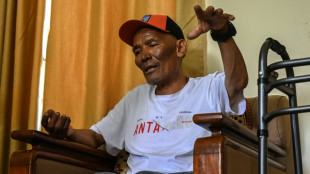 Trapped on Everest for days, Nepali survivor recounts escape

 Clark leads by three as US Open second round begins

 Fritz gets revenge on Shelton to reach Halle semis

 Heatwave hits more than half of France's population

Countries sign their first UN treaty targeting cybercrime in Hanoi on Saturday, despite opposition from an unlikely band of tech companies and rights groups warning of expanded state surveillance.
The new global legal framework aims to strengthen international cooperation to fight digital crimes, from child pornography to transnational cyberscams and money laundering.
Vietnam's President Luong Cuong has described the signing as a "historic milestone".
It sends "a strong message about our determination to fight cybercrime and build a world of peace, justice, and the rule of law, for the benefit of today's and future generations", he said last month.
The UN Convention against Cybercrime was first proposed by Russian diplomats in 2017, and approved by consensus last year after lengthy negotiations.
Critics say its broad language could lead to abuses of power and enable the cross-border repression of government critics.
"There were multiple concerns raised throughout the negotiation of the treaty around how it actually ends up compelling companies to share data," said Sabhanaz Rashid Diya, founder of the Tech Global Institute think tank.
"It's almost rubber-stamping a very problematic practice that has been used against journalists and in authoritarian countries," she told AFP.
- 'Weak' safeguards -
The convention will enter into force when ratified by 40 member states, following the signing ceremony in the Vietnamese capital attended by UN chief Antonio Guterres.
Vietnam's government said this week that 60 countries were registered for the official signing, without disclosing which ones.
But the list will probably not be limited to Russia, China and their allies.
"Cybercrime is a real issue across the world," Diya said. "I think everybody's kind of grappling with it."
The far-reaching online scam industry, for example, has ballooned in Southeast Asia in recent years, with thousands of scammers estimated to be involved and victims worldwide conned out of billions of dollars annually.
"Even for the most democratic states, I think they need some degree of access to data that they're not getting under existing mechanisms," Diya told AFP.
Democratic countries might describe the UN convention as a "compromise document", as it contains some human rights provisions, she added.
But these safeguards were slammed as "weak" in a letter signed by more than a dozen rights groups and other organisations.
- Tech sector -
Big technology companies have also raised concerns.
The Cybersecurity Tech Accord delegation to the treaty talks, representing more than 160 firms including Meta, Dell and India's Infosys, will not be present in Hanoi, its head Nick Ashton-Hart said.
Among other objections, those companies previously warned that the convention could criminalise cybersecurity researchers and "allows states to cooperate on almost any criminal act they choose".
Potential overreach by authorities poses "serious risks to corporate IT systems relied upon by billions of people every day", they said during the negotiation process.
In contrast, an existing international accord, the Budapest Convention on Cybercrime, includes guidance on using it in a "rights-respecting" way, Ashton-Hart said.
The location for the signing has also raised eyebrows, given Vietnam's record of crackdowns on dissent.
"Vietnamese authorities typically use laws to censor and silence any online expression of views critical of the country's political leadership," said Deborah Brown of Human Rights Watch.
"Russia has been a driving force behind this treaty and will certainly be pleased once it's signed," she told AFP.
"But a significant amount of cybercrime globally comes from Russia, and it has never needed a treaty to tackle cybercrime from within its borders," Brown added.
"This treaty can't make up Russia's lack of political will in that regard."
A.Zbinden--VB