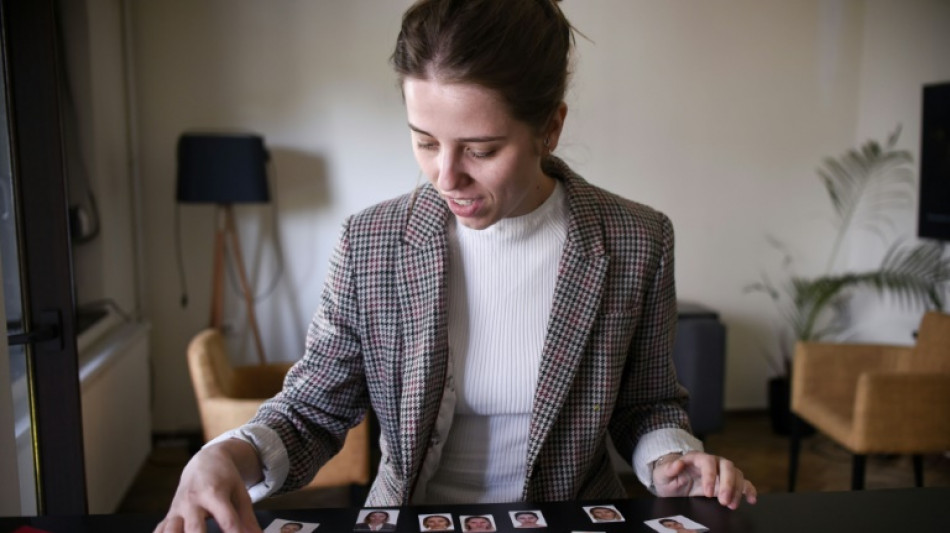
Kosovars tire of knocking at Europe's closed doors / Photo: © AFP

 Hong Kong's Robert Wun: the bold Millennial conquering Haute Couture
 IMF cuts 2026 world growth forecast, flags risks from new Mideast fighting
 Kostyuk sets up Wimbledon semi-final against Noskova
 Noskova reaches first Wimbledon semi-final
 Air Canada taps new CEO to replace chief who couldn't speak French
 Istanbul mayor ejected from court in corruption case
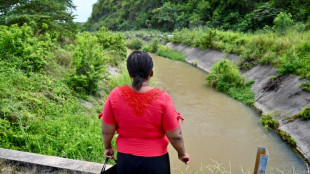
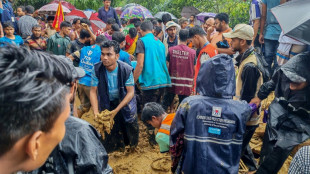 Landslide kills eight at refugee school in Bangladesh
 Cleary leads NSW past Queensland to regain State of Origin crown
 MEXC Adds Nine Ondo Tokenized Stock and ETF Trading Pairs Tied to AI Infrastructure Demand
 Oil prices surge, stocks slide as Trump says Iran ceasefire over
 Sunken wrecks, hot seas threaten fishermen on Italian isle
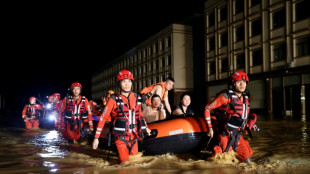 Rescuers search for survivors of China storms as super typhoon nears
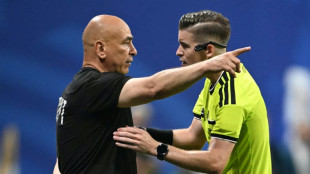 Egypt file complaint against referee after controversial World Cup exit
 Apple loses challenge against EU digital competition rules
 Trump says Iran ceasefire 'is over'
 Rescuers search for missing in China storms after 100,000 flee

 OpenAI to launch new model after US freeze
 UK museums at 'sharp end' of climate change challenge
 In Mauritania, Imraguen people's desert-ocean paradise under threat
 Iraq's holy cities host funeral processions for Khamenei
 Rescuers search for missing in China storms after 100,000 evacuated
 Ex-Australia cricketer MacGill loses appeal against cocaine conviction
 Oil prices extend rally as US strikes on Iran revive geopolitical fears
 Iraq's holy cities to host funeral processions for Khamenei
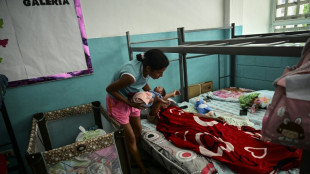 In Venezuela's quake ruins, a baby is born
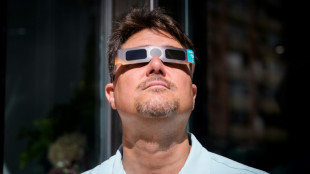
Of all the passports in the world, Kosovo's opens fewer doors than most, even the doors to other parts of Europe.
"It's a contradiction to be called European when you are not allowed to see, touch or travel around Europe," 27-year-old journalist Aulona Kadriu told AFP.
"I don't see why an entire population should be locked out and isolated."
Of the 199 countries ranked by the number of destinations their passport holders can visit according to the Henley index, only 10 offer fewer opportunities than Kosovo. The former province of Serbia languishes in the company of places like Afghanistan, Syria, Yemen and North Korea.
Kadriu gave up trying to travel within Europe for work or for leisure, because she found the hoops Kosovars have to jump through too frustrating.
The landlocked country's 1.8 million citizens are the only people in the Balkans to need a visa to do so, and that magic pass is tricky to obtain.
"It's beyond humiliation," she grumbled.
- 'EU reservations' -
Kosovo declared independence from Serbia in 2008 but is not universally recognised.
Five European Union countries are among the opponents, alongside Serbia itself -- with whom relations remain unstable -- and its Russian and Chinese allies.
So the tiny country applauded when the European Commission -- the EU's executive body -- decided in 2018 that Kosovars should be eligible to travel freely to all 26 countries in Europe's borderless Schengen Area.
But EU governments, who have the final say, have yet to follow suit and four years on, Kosovars still need visas and the queues to get them are as long as ever.
Pensioner Igballe Kryeziu hopes to visit her children in Germany, where around half the 800,000 Kosovars living abroad currently reside.
It has taken her five months and 200 euros ($210) in paperwork just to get a place in the queue outside the consulate.
Work and study permits are just as hard to come by.
Berlin's embassy in Pristina said it had received more than 100,000 requests in December and January alone. It only has capacity to issue 5,500 in a full year.
- 'Stick but no carrot' -
Local charities believe the hold-up is due to reserves on the part of EU heavyweights like France about Kosovo's ability to tackle corruption and organised crime.
More than 80 local NGOs wrote recently to French President Emmanuel Macron, whose country holds the EU's rotating presidency, urging him to end the "isolation of Kosovo citizens".
Talks between Pristina and Brussels about visa-free travel had dragged on for 10 years, they pointed out -- longer than it took neighbouring Croatia to go from applying to join the EU to actually becoming a full member.
Deputy Prime Minister Besnik Bislimi told AFP Kosovo had "done more than was asked of it" to meet the conditions imposed on it and the delay was essentially "due to the dynamics between different EU members".
Political analyst Donika Emini concurred.
"We've seen the stick but not the carrot," she said.
Architecture student Teuta Rexhaj, 22, had to say goodbye to her plans to study at Vienna University.
"It was a real blow," she told AFP. "I belong to a generation that has not been able to fulfil its European dream."
"When I see other young people from the Balkans travelling to Europe without any difficulty, I can't help thinking Kosovo is being discriminated against."
D.Schneider--BTB