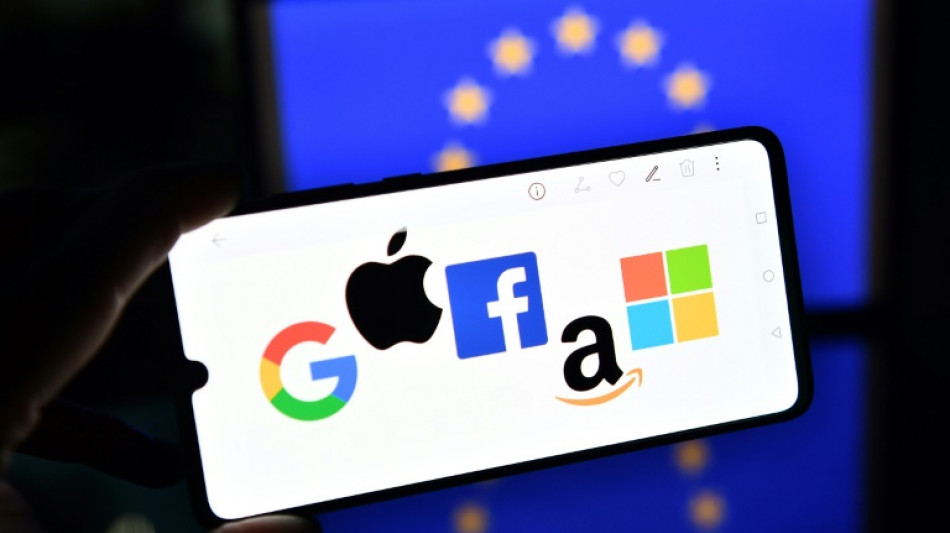
The European laws curbing big tech... and irking Trump / Photo: © AFP/File

 Trump admin finalizes reversal of US fuel economy standards

 US says no China arms sale plans after envoy cites Trump offer

 Dozens kidnapped in two weekend attacks in northern Nigeria
 Next stop the world: Pathirage wins Asian Games javelin gold

 Aster Launches Perpetual Grid Trading 2.0 with Up to 140,000 $ASTER Liquidity Mining Campaign

 Seoul says North Korean mines 'highly suspected' as cause of DMZ blast

 Russia pummels Kyiv in latest deadly daytime attack

 Wartime Ukraine works to keep its railways on track

 Boy among 3 dead in migrant Channel crossing accident: French authorities

 SGFX Creates a Standout Brand Experience at Forex Expo Dubai 2026

 Pope urges Europe to help combat 'deceit and lies' in international ties

 Injured Buttler to miss England ODI series in Pakistan

 Madrid housing protesters vow to maintain pressure on government
 In kayaks or waist-deep in floodwater, shoppers return to Bangkok markets

 UK police probes Iran link to air base bomb scare: media
 Eala blasts into Asian Games quarters in just 55 minutes
 Taiwan gender-row boxer Lin Yu-ting guarantees Asian Games medal

 Comedian on trial for allegedly insulting Erdogan in standup show

 More Asian Games transport woes as bus takes Pakistan to wrong venue

 Death toll in South Africa bar shooting rises to 18

 Aide to Venezuelan opposition leader returns from exile

 Messi and Alcaraz love it, now padel takes step closer to Olympics

 Tolls mount in Thailand, Myanmar floods

 Why India's opposition wants top poll official out

 PU Prime Strengthens UAE Momentum with Strong Showing at Forex Expo Dubai 2026

Fresh off a trade truce with Donald Trump, the EU is back in the US leader's crosshairs after he vowed to punish countries that seek to curb big tech's powers.
Brussels has adopted a powerful legal arsenal aimed at reining in tech giants -- namely through its Digital Markets Act (DMA) covering competition and the Digital Services Act (DSA) on content moderation.
The EU has already slapped heavy fines on US behemoths including Meta and Apple under the new rules, which have faced strong pushback from Trump's administration.
The bloc's trade chief Maros Sefcovic insisted last week that Brussels successfully "kept these issues out of the trade negotiations" with Washington -- and that the bloc's "regulatory autonomy" was not up for debate.
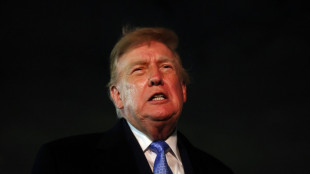
But while he did not explicitly name the EU, the US leader cast new doubt on the status quo Monday by threatening fresh tariffs on countries with regulations that sought to "harm" American technology.
Here is a look at the EU rules drawing Trump's ire:
- Digital Services Act -
Rolled out in stages since 2023, the mammoth Digital Services Act forces online firms to aggressively police content in the 27 countries of the European Union -- or face major fines.
Aimed at protecting consumers from disinformation and hate speech as well as counterfeit or dangerous goods, it obliges platforms to swiftly remove illegal content or make it inaccessible.
Companies must inform authorities when they suspect a criminal offence that threatens people's lives or safety.
And the law instructs platforms to suspend users who frequently share illegal content such as hate speech -- a provision framed as "censorship" by detractors across the Atlantic.
Tougher rules apply to a designated list of "very large" platforms that include US giants Apple, Amazon, Facebook, Google, Instagram, Microsoft and Snapchat.
These giants must assess dangers linked to their services regarding illegal content and privacy, set up internal risk mitigation systems, and give regulators access to their data to verify compliance.
Violators can face fines or up to six percent of global turnover, and for repeated non-compliance, the EU has the power to ban offending platforms from Europe.
- Digital Markets Act -
Since March 2024, the world's biggest digital companies have faced strict EU rules intended to limit abuses linked to market dominance, favour the emergence of start-ups in Europe and improve options for consumers.
Brussels has so far named seven so-called gatekeepers covered by the Digital Markets Act: Google's Alphabet, Amazon, Apple, TikTok parent ByteDance, Facebook and Instagram parent Meta, Microsoft and travel giant Booking.
In a bid to limit the ability of online giants to snuff out potential rivals, the rules require all buyouts to be notified to the European Commission, the EU's competition regulator.
Gatekeepers can be fined for locking in customers to use pre-installed services, such as a web browser, mapping or weather information.
The DMA has forced Google to overhaul its search display to avoid favouring its own services -- such as Google flights or shopping.
It requires that users be able to choose what app stores to use -- without going via the dominant two players, Apple's App Store and Google Play.
And it has forced Apple to allow developers to offer alternative payment options directly to consumers -- outside of the App Store.
The DMA has also imposed interoperability between messaging apps WhatsApp and Messenger and competitors who request it.
And it imposes new obligations on the world's biggest online advertisers -- namely Google's search engine and Meta's Facebook and Instagram -- by forcing them to reveal much more to advertisers and publishers on how their ads work.
Failure to comply with the DMA can carry fines in the billions of dollars, reaching 20 percent of global turnover for repeat offenders.
J.Sauter--VB