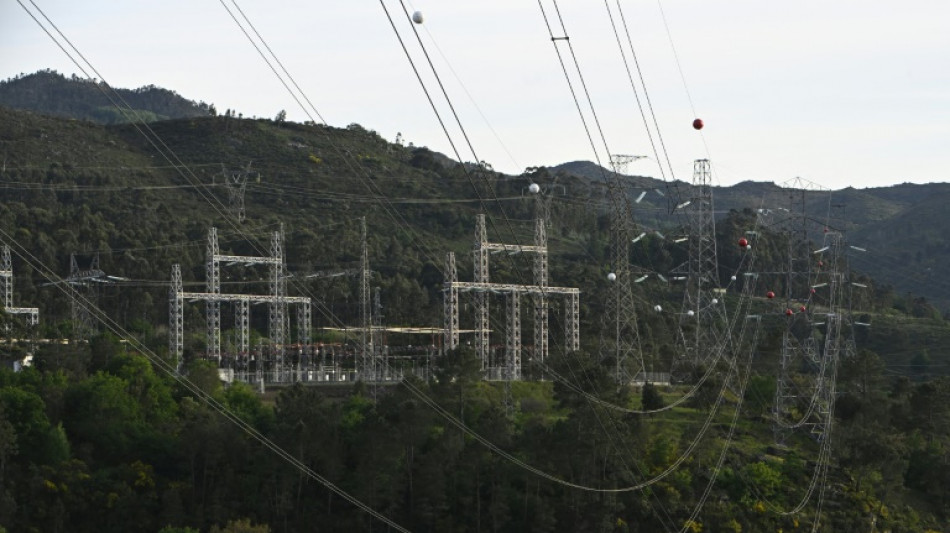
Interconnectivity: the cornerstone of the European electricity network / Photo: © AFP

 Drovix Launches In-House Multi-Asset Liquidity and Execution Stack for Sub-Millisecond Fills, Tighter Spreads
 'So bad it's good': rough animated film becomes surprise Chinese hit
 'I'll adapt': First pregnant candidate navigates French presidential race

 Hong Kong convicts Tiananmen vigil activists of inciting subversion
 The Hong Kong Tiananmen vigil activists convicted in national security trial

 Eel-powered Japan whizz-kid, 11, chases Asian Games history

 Asian markets extend rally as traders assess US Treasuries pledge

 Barcelona enter new era as Flick targets La Liga hat-trick

 Pogacar favourite for Vuelta with Grand Tour treble in sight

 Bangladesh coach Simmons wary of Australia backlash in second Test

 Hong Kong Tiananmen activists to receive national security verdict
 Who are the candidates vying to lead the UN?
 Swiatek into Cincinnati semis after Rybakina injury

 University suspends academic behind Jason Arday plagiarism charges

 Key European leaders demand Israel halt West Bank settlement project

 McIlroy bounces back to share BMW Championship lead

 Cobolli fueled by candy in sweet defeat of Paul
 Jailed Pakistan ex-PM Khan moved to hospital on court order: party

 Pogacar eyes 'missing' piece ahead of Vuelta return
 US, Canada 'very close' to trade deal, Ottawa says, as details emerge

 Ronaldinho returns in search of 'beautiful' 300th goal

 US pushes allies, China to back Trump's economic war on Iran
 Former NBA MVP Harden reportedly set to return to Cavaliers

 Brook makes Pakistan pay for drop as England dominate first Test
 MemeCore Arrives on Nasdaq Through $1 Billion Landmark Treasury Transaction
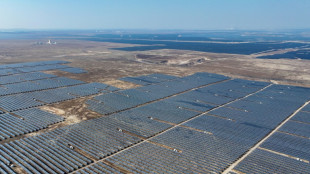
Interconnected electricity networks -- the cornerstone of the European system and designed to improve security of supply -- made it possible to contain the massive power outage on the Iberian peninsula.
"The grids are interconnected, which is common as it helps to manage the export and import of electricity, hence, improving the reliability of supply," said Onyema Nduka, senior lecturer in power sustainability at Royal Holloway University of London.
But he added: "While electricity outages are rare in European countries they are possible, as the events in Portugal and Spain have shown.
"Ideally, redundancies are built into the system such as having multiple supply points, backup generators sited at different locations, interconnected wires, cables, etc."
Grazia Todeschini, reader in engineering at King's College London, said Europe has "the largest synchronous electrical grids in the world", supplying over 400 million customers in 32 countries and most of the EU.
"This allows power exchange between countries but under very special and extreme situations it may mean that outages may propagate across different countries," she added.
That happened on Monday, when the outage in Spain also hit its neighbour Portugal.
The Iberian peninsula, situated at the edge of the European electricity network, is by its location an "electricity peninsula".
Spain and France, which are separated by the Pyrenees, have had an interconnection capacity of 2.8GW since 2015, with plans to increase that to 5 GW by 2028. Spain is also interconnected with Morocco via a 700MW line.
The stability of electricity networks "is related to a very close balance between electricity generation and demand", said Todeschini.
"Some measures exist to limit the impact of outages to small areas but when the power unbalance is too large, these outages may spread very quickly and very far."
- Extremely rare event -
According to French high-voltage network operator RTE, Spain saw a loss of 15GW of production in a matter of seconds, leading to a nationwide outage.
RTE immediately mobilised to help Spain via interconnectors between the two countries, allowing it to gradually input up to 2GW into the Spanish network depending on local demand.
To tackle such situations, RTE explained that protocols have been put in place, with several manual and automatic "defence barriers" implemented to handle all possible situations, from limiting the spread of an incident to restoring power to consumers in the event of a black-out.
On Monday, RTE activated automatic security measures which cut the interconnectors, isolating the Iberian peninsula and stopping the instability from spreading to central Europe, said Rystad Energy, which specialises in energy research.
"France's role in the crisis was critical," it added. "The sudden drop in Iberian demand forced the country to temporarily reduce generation output and re-route its energy flows," it added.
Notably, that included a shut-down of the Golfech nuclear power plant in southwest France at about the same time as the outage in Spain and Portugal.
"Once stability was partially restored to Spain, France resumed limited exports to assist with recovery," Rystad added.
On Monday, the Iberian network was automatically disconnected from the European network from 1038 to 1130 GMT, when the electricity line between France and Spain was restarted, RTE said.
The network then took several hours to be completely restored, area by area, in Spain and Portugal.
"What's certain is that cooperation and interconnections between France and Germany and between RTE... enabled and facilitated, through cooperation, the faster recovery of electricity consumption in Spain," said French energy minister Marc Ferracci on RTL radio.
R.Kloeti--VB