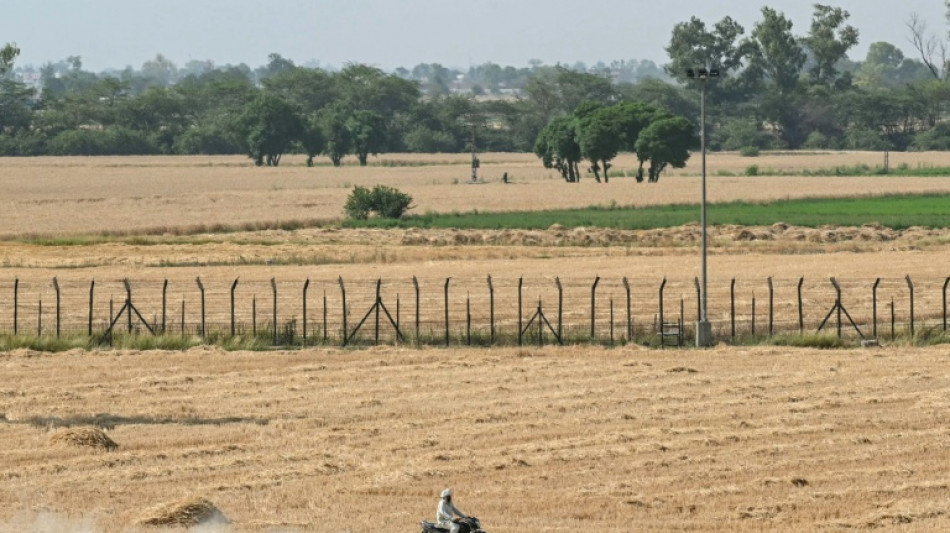
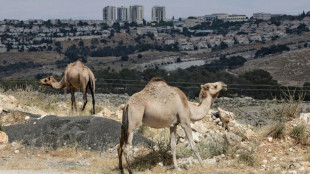
Villagers on India's border with Pakistan fear war / Photo: © AFP

 Iran president says time to end war while in position of strength

 Antonelli fastest in sole Dutch GP practice session

 2,500 dead and rising -- UN says DR Congo Ebola outbreak 'growing exponentially'

 England all out for 409, lead Pakistan by 238 runs in 1st Test

 Premier League returns with Arsenal eyeing title dynasty

 Bayern knew about Musiala's condition 'a long time ago' says Kompany

 Ex-Pakistan PM Khan taken back to jail after hospital checks
 Real Madrid star players are compatible: Mourinho

 Drovix Launches In-House Multi-Asset Liquidity and Execution Stack for Sub-Millisecond Fills, Tighter Spreads
 'So bad it's good': rough animated film becomes surprise Chinese hit
 'I'll adapt': First pregnant candidate navigates French presidential race

 Hong Kong convicts Tiananmen vigil activists of inciting subversion
 The Hong Kong Tiananmen vigil activists convicted in national security trial

 Eel-powered Japan whizz-kid, 11, chases Asian Games history

 Asian markets extend rally as traders assess US Treasuries pledge

 Barcelona enter new era as Flick targets La Liga hat-trick

 Pogacar favourite for Vuelta with Grand Tour treble in sight

 Bangladesh coach Simmons wary of Australia backlash in second Test

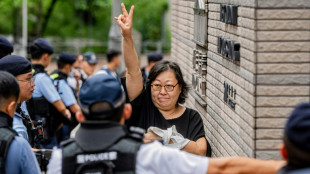 Hong Kong Tiananmen activists to receive national security verdict
 Who are the candidates vying to lead the UN?
 Swiatek into Cincinnati semis after Rybakina injury

 University suspends academic behind Jason Arday plagiarism charges

 Key European leaders demand Israel halt West Bank settlement project

 McIlroy bounces back to share BMW Championship lead

 Cobolli fueled by candy in sweet defeat of Paul

India's Daoke village is fenced from Pakistan on three sides and 65-year-old resident Hardev Singh, who has lived through multiple wars between the arch-rivals, knows the drill if another erupts.
"All women, children, cattle and most younger men moved back to safe shelters in 1999 and 1971," Hardev said, referring to two of the worst outbreaks of fighting between the neighbours.
"We couldn't go to our fields," he said, adding that it was only the village's elderly men who "stayed back to ensure that our homes were not looted".
Relations between the nuclear-armed neighbours have plummeted after India accused Pakistan of backing the deadliest attack in years on civilians in Indian-administered Kashmir on April 22.
Islamabad has rejected the charge, and both countries have since exchanged gunfire across the de facto frontier in contested Kashmir, diplomatic barbs, expelled citizens and ordered the border shut.
Residents of the frontier villages in India's Punjab state say nothing has changed on the ground yet -- but there is a growing anxiety about the coming weeks.
"The barbaric attack on the civilians in Kashmir was tragic, but no matter what, the lives lost are not coming back," Hardev said.
"Any war would push both our countries back by many years, and there would be an even bigger loss of human lives."
A border fence patrolled by troops slices in two the farmlands near Daoke, home to around 1,500 people.
Gurvinder Singh, 38, recalls the last major conflict in 1999.
Fighting then took place far from Punjab -- in the icy Himalayan district of Kargil -- but the sun-baked fields around his village did not escape unscathed.
"Mines were planted on our fields, and we could not work," Gurvinder said.
He hopes that, if the bellicose statements issued by leaders on either side do turn into military action, his village will be left alone.
"We feel that the actual conflict would happen only in the Himalayas," Gurvinder said, adding that his village is "normal right now".
- 'Not just us' -
In the nearby frontier village of Rajatal, between the Indian city of Amritsar and Lahore in Pakistan, residents remember the days when the golden farmland stretched without restriction.
The frontier was a colonial creation at the violent end of British rule in 1947 which divided the sub-continent into Hindu-majority India and Muslim-majority Pakistan.
Sardar Lakha Singh's memory stretches back to before the fence was erected.
"We used to go to the open ground on the other side to graze our cattle," 77-year-old Lakha said, sitting about 100 metres (328 feet) from fences topped with barbed wire.
Farmers can obtain special passes to go close to the border, including beyond the fence but still within Indian territory.
But they must always be accompanied by a soldier.
"We can't go there whenever we want," said farmer Gurvil Singh, 65. "This reduces the time we get to work on our fields".
Panic gripped border villages last week after rumours suggested farmers would be stopped from accessing fields too close to Pakistan.
Sikh elder Sardar Lakha Singh advised younger villagers to accept their fate and not to worry.
"Whatever is going to happen will happen anyway," he said.
"We didn't know when the 1965 war suddenly started, same in 1971 when the planes suddenly started crossing the border," the grey-beared farmer added.
"So, if it happens again, we don't need to worry in advance."
Gurvinder Singh, 35, said he tried to take the lesson to heart.
"It would be a high-tech war, and not an invasion or a battle of swords like the past," he said.
"When the situation worsens, it would be for the entire country -- and not just us."
F.Stadler--VB