-
 Fornaro Legal Releases Guidance to Help Businesses Maintain Clear Ownership Records During Growth
-
Bodies of four climbers found near Pakistan avalanche site: police

-
 Hamas agrees to disarm: what are the challenges ahead?
-
UK court dismisses challenge against new Chinese embassy in London

-
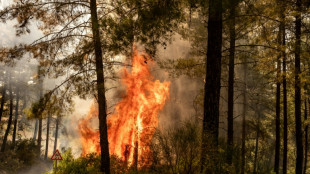 Turkey fights to last major blaze inland from Bodrum
-
Stock markets rally on tech rebound

-
 Japan probe made closest-ever asteroid flyby: space agency
-
Tyla drops Lagos show as South Africa, Nigeria row over immigration

-
 Wildberries: 'Russia's Amazon' targeted by Ukraine
-
BP seeks to sell North Sea business as UK faces drilling dilemma

-
 FIFA plan hit by senior advisor resigning, AFC opposition
-
Pro-Kremlin commentator denounces 'censorship' in France

-
 Kosovo war crimes trial opens against fugitive Serbs
-
AC Milan 'in tears' at death of Italian football legend Baresi

-
 Bodies of four climbers recovered near northern Pakistan avalanche site, police say
-
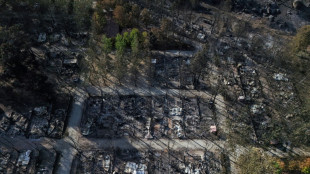
France, Spain assess scorched terrain as new wildfires threaten other regions
-
 Thousands cross into Spain's north Africa enclave in new migrant crisis
-
Нооша Аубель під тиском: мерія Потсдама між самостійними кроками та скандалом із дитячими садками

-
 Noosha Aubel under pressure: Potsdam City Hall caught between going it alone and the nursery scandal
-
Missing climber Nirmal Purja redefined mountaineering

-
 UK singer Boy George pulls out of musical after pro-Israel song backlash
-
British oil giant BP aims to sell North Sea business

-
 Chipmaker Kioxia reports AI-driven 45-fold surge in quarterly net profit
-
Sony hikes profit outlook on strong gaming earnings

-
 Wildfire rages on Crete as strong winds hamper firefighting
-
Baresi -- the 'Johan Cruyff of defenders'

-
 Hamas agrees to disarm under Trump plan, but no word from Israel
-
Legendary Italian football defender Franco Baresi has died: AC Milan

-
 Alonso says new Chelsea signing Lacroix has 'winner's mentality'
-
Drugged Malaysian pilot risks death penalty for smuggling in Indonesia

-
 US eyes European gas dominance through Balkans
-
World Cup must be kept out of private hands: Chelsea manager Alonso

-
 Sniffer dogs search mall wrecked after Japan quake
-
Greek visa scheme gives Turks easier entry to islands in EU

-
 Explosion at coal mine kills 34 in southern Pakistan
-
Ferrand-Prevot bids to defend Tour de France Femmes title

-
 Renowned Nepali climber among 10 missing after Pakistan avalanche
-
China factory activity slides as leaders seek spending boost

-
 Ukrainian drones send Crimea's tourism industry into freefall
-
Far right and far left battle for power in polarised Berlin

-
 Tech rebound fuels record-breaking rally in South Korean stocks
-
Hamas agrees to deal for disarmament, Israel's withdrawal from Gaza

-
 The last trio: S.Africa's zoo elephants await their fate
-
Cables and cooling bring AI windfall to Indian suppliers

-
 Venezuela transition talks set to kick off without Machado
-
Oil industry sees war windfall but girds for political blowback

-
 Anthropic's models gained unauthorized 'real-world' access during testing
-
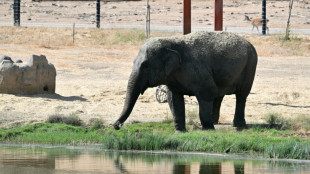
Spain safari park animals grazed calmly amid 'terror' of fire
-
 15 years in prison for father of US teenage school shooter
-
Casemiro keen to team with Messi at Miami

'Dangerous' Typhoon Nanmadol slams into Japan
Typhoon Nanmadol made landfall in southwestern Japan on Sunday night, as authorities urged millions of people to take shelter from the powerful storm's high winds and torrential rain.
The storm officially made landfall around 7 pm local time (1000 GMT) as its eyewall arrived near Kagoshima city, the Japan Meteorological Agency (JMA) said.
It was packing gusts of up to 234 kilometres (146 miles) per hour and had already dumped up to 500 mm of rain in less than 24 hours on parts of southwestern Kyushu region.
At least 20,000 people were spending the night in shelters in Kyushu's Kagoshima and Miyazaki prefectures, where the JMA has issued a rare "special warning" -- an alert that is issued only when it forecasts conditions seen once in several decades.
National broadcaster NHK, which collates information from local authorities, said more than seven million people had been told to move to shelters or take refuge in sturdy buildings to ride out the storm.
The evacuation warnings are not mandatory, and authorities have at times struggled to convince people to move to shelters before extreme weather.
They sought to drive home their concerns about the weather system throughout the weekend.
"Please stay away from dangerous places, and please evacuate if you feel even the slightest hint of danger," Prime Minister Fumio Kishida tweeted after convening a government meeting on the storm.
"It will be dangerous to evacuate at night. Please move to safety while it's still light outside."
The JMA has warned the region could face "unprecedented" danger from high winds, storm surges and torrential rain and called the storm "very dangerous."
"Areas affected by the storm are seeing the sort of rain that has never been experienced before," Hiro Kato, the head of the Weather Monitoring and Warning Centre, told reporters Sunday.
"Especially in areas under landslide warnings, it is extremely probable that some kinds of landslides are already happening."
He urged "maximum caution even in areas where disasters do not usually happen."
By Sunday evening, utility companies said nearly 200,000 homes across the region were without power.
Trains, flights and ferry runs were cancelled until the passage of the storm, and even some convenience stores -- generally open all hours and considered a lifeline in disasters -- were shutting their doors.
- 'Highest caution possible' -
"The southern part of the Kyushu region may see the sort of violent wind, high waves and high tides that have never been experienced before," the JMA said Sunday, urging residents to exercise "the highest caution possible".
On the ground, an official in Kagoshima's Izumi city said conditions were deteriorating rapidly by Sunday afternoon.
"The wind has become extremely strong. Rain is falling hard too," he told AFP. "It's a total white-out outside. Visibility is almost zero."
In Kyushu's Minamata city, fishing boats tied up for safety bobbed on the waves, as spray from the sea and bands of rain sluiced the boardwalk.
The storm, which has weakened slightly as it approached land, is expected to turn northeast and sweep up across Japan's main island through early Wednesday.
Japan is currently in typhoon season and faces around 20 such storms a year, routinely seeing heavy rains that cause landslides or flash floods.
In 2019, Typhoon Hagibis smashed into Japan as it hosted the Rugby World Cup, claiming the lives of more than 100 people.
A year earlier, Typhoon Jebi shut down Kansai Airport in Osaka, killing 14 people.
And in 2018, floods and landslides killed more than 200 people in western Japan during the country's annual rainy season.
Scientists say climate change is increasing the severity of storms and causing extreme weather such as heat waves, droughts and flash floods to become more frequent and intense.
H.Seidel--BTB